


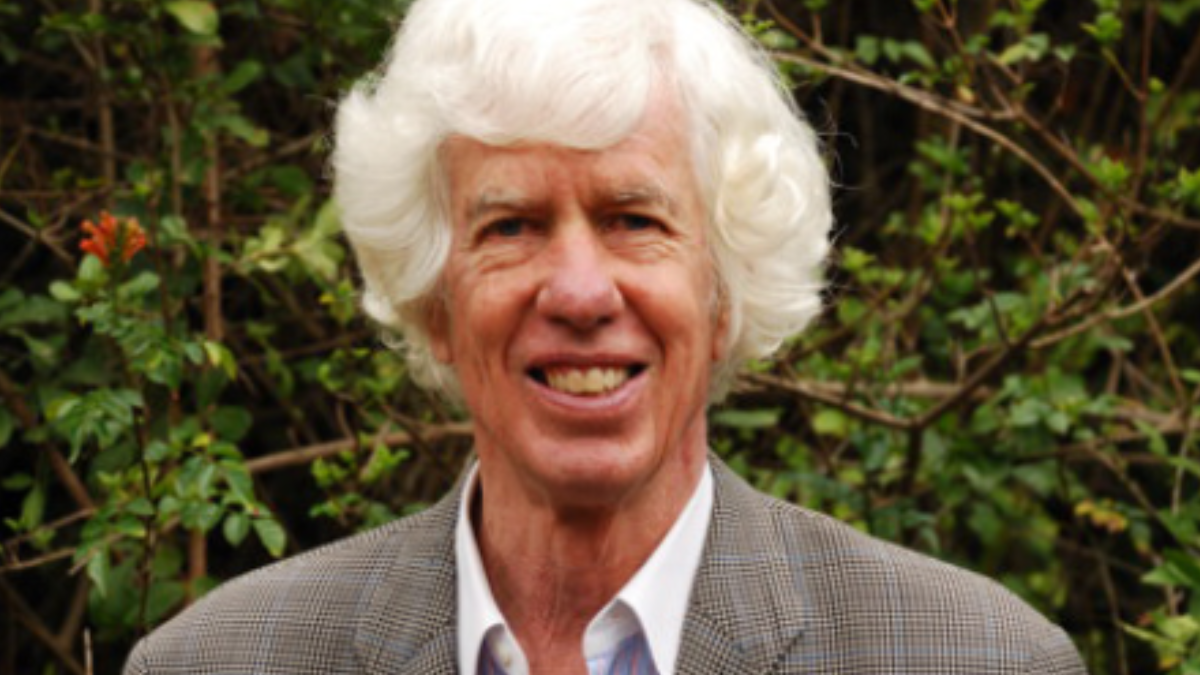

Nowadays, Esmond Bradley Martin is remembered more for the mysterious way he died than for the magnificent way he lived. But in the years since his tragic stabbing in his Nairobi home in 2018, it’s starting to seem increasingly plausible that Martin’s penchant for speaking up for the voiceless might have been why he was ultimately stabbed to death.
By 2018, Martin, 76, had already made himself a peer to people like Jane Goodall in the world of conservation. Born in New York but largely educated in England, he developed a worldview that far exceeded his education in geography. Martin’s life truly began in the late 1970s when he moved to East Africa — Nairobi, Kenya specifically — where he would become instrumental in slowing down the global ivory trade. But just when it seemed he had gone through the worst of it and won — battling politicians and hardcore smugglers — Martin was found mysteriously dead in his house in 2018, with few answers about who could have done it.
By the 1990s, Martin had styled himself as a sort of environmentalist James Bond. Most of his former colleagues remember him for his flamboyant style. Back then, he reportedly wore neatly tailored, colorful suits and posed as an ivory merchant while quietly mapping out and documenting the entire ivory trade network.
His efforts earned him a position as a UN special envoy, and his career had several major wins — including getting China to stop trading in rhinoceros horns in 1993. There were also losses, such as by the time he achieved that victory, the rhinoceros population in his adoptive home of Kenya had already fallen to near extinction levels. Still, Martin was well respected in his community by then, and no retribution was expected from his longtime foes in the ivory trade.
On February 4, 2018, Martin was found in his home stabbed in the neck. The local police immediately ruled it a botched robbery. As we know, the police don’t always get things right. Recent investigations by Al Jazeera have revealed that this account might not align with the evidence found at the scene.
For instance, nothing from Martin’s property was stolen. Multiple reports have since linked his death to criminal organizations that had long struggled to operate under his watch. In Kenya, the ivory trade has often been a criminal indulgence of those in power — all the way to the top of the government — leading many to believe that this might have been the case.
When reporters renewed their interest in the story, both the Kenyan police and the U.S. Embassy were asked about what might have happened, but they all remained silent. It’s quite ironic that a man who made a career out of speaking up for victimized animals ended up suffering a fatal fate — and nobody sought justice for him.
Currently, the case remains open. The police have made no progress in their quest for justice for Martin. But his work shall forever be immortalized in the conservation world.




Published: Oct 15, 2025 12:00 am