


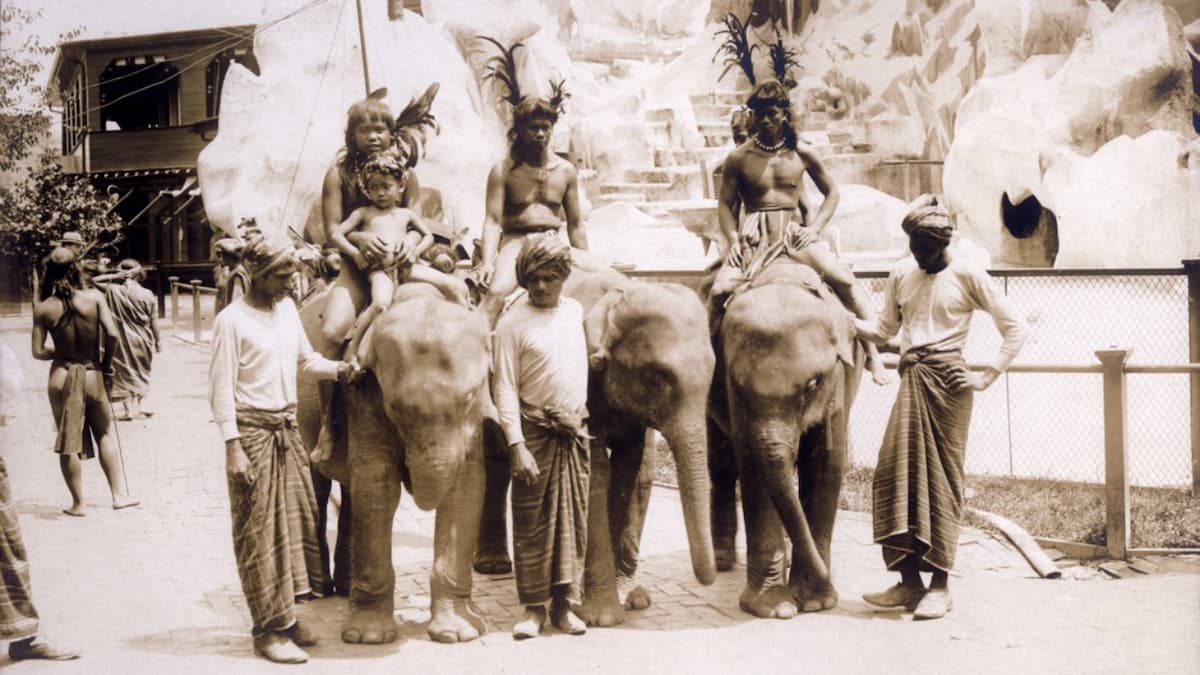

Colonial times were a dark period in history. It was a time when much of the western world treated people from foreign lands as less than human, even going as far as to take some of these people from their home countries and put them on display in “human zoos.”
These zoos were particularly popular during the 19th century, during a period when Europe had colonized most of the world. “Specimens” were brought to cities like London, Paris, and Berlin and put on display in enclosures or even cages, much in the way we see animals on display today.
What were the human zoos like?
People were curious about the different cultures and way of life from around the world and there was a desire to see it all in action. However, travelling to another continent was not exactly practical for the average person in the 1800s and so the people and culture were brought to them. Of course, it was a pale imitation, a simulacrum if you will, filled with stereotypes and false information that prioritized entertaining the masses rather than educating.
According to an article from the BBC, hundreds of thousands of people visited these human zoos during the height of colonial times. Inhabitants from foreign countries, mostly from Africa, were paid to live in recreations of their villages and act out war dances and religious rituals.
Of course, with todays modern lens it’s easy to call out the obviously racist practice, but back then people were downright ignorant. In fact, these human zoos were regularly visited by “researchers” who sought to validate their crackpot theories about different races.
No humanity in these zoos
Despite the name, these zoos demonstrated the lack of humanity the people running these operations had. The “specimens” certainly weren’t treated like humans. Disturbingly, the idea was incredibly popular with hundreds, if not thousands of these zoos popping up across Europe and international fairs and other events.
The U.S. wasn’t innocent either as American showman P.T. Barnum, (yes that P.T. Barnum) hosted public human exhibitions in the 1830s.
While this may seem like something from a less enlightened age, the last human zoo was actually displayed at the world fair in Belgium in 1958. According to The Guardian, three hectares of tropical gardens were put aside for Congolese men, women, and children to occupy and put on shows for onlookers day-after-day.
It’s been almost 70 years since the world’s last human zoo but few will acknowledge the racism which was perpetuated by colonist countries and in many ways still persists today. While these human zoos are a dark stain for many western nations, it’s worth remembering and learning from the mistakes made back then.









Published: Oct 30, 2025 11:18 am