


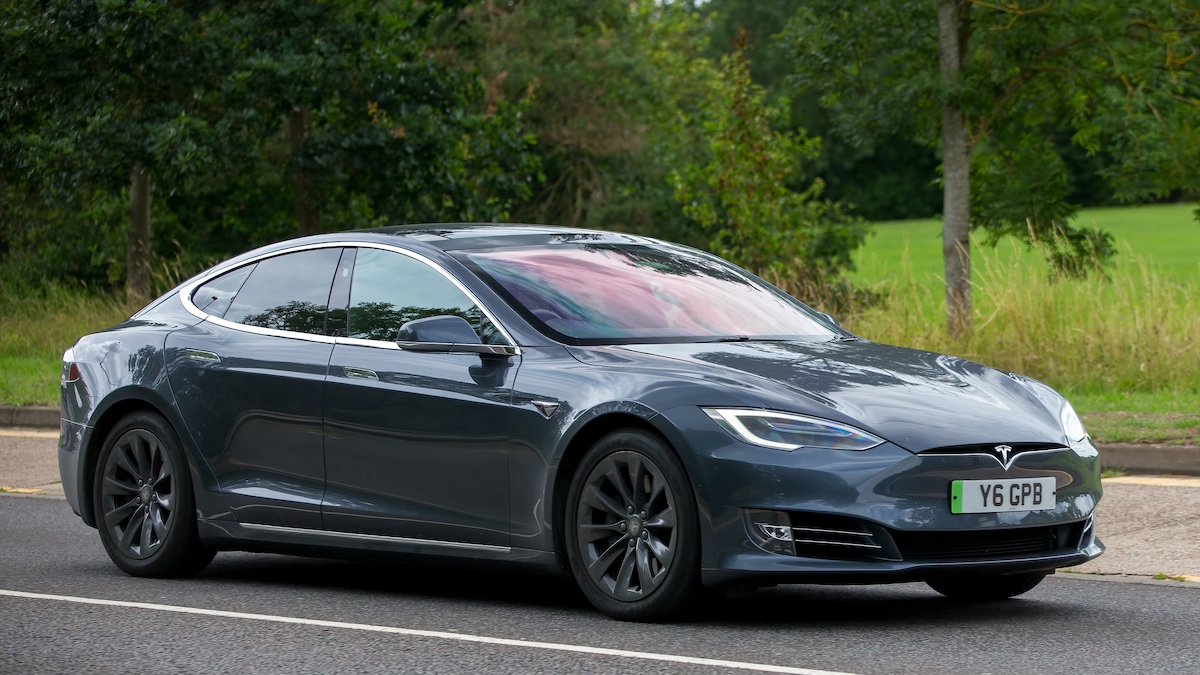

A new wrongful-death lawsuit filed in Wisconsin alleges that a crash involving a Tesla Model S in November 2024 turned fatal not because of the impact or ensuing fire, but because of alleged design defects that left occupants unable to escape.
The suit claims the vehicle’s door system and battery design choices “created a highly foreseeable risk” of entrapment in a fire. According to the complaint filed in Dane County, Wisconsin, the Model S went off a rural road, struck a tree, and burst into flames. All five occupants died.
The plaintiffs allege that once the lithium-ion battery pack ignited and the vehicle lost power, the electronic door handles failed, and the manual override was hidden and non-intuitive. One nearby 911 caller reportedly heard occupants screaming from inside the burning vehicle for minutes after the crash.
The lawsuit claims that the rear-seat occupants were especially vulnerable because the manual release was located under carpeting in the rear compartment, nearly impossible for crash victims to find in an emergency
Moreover, the complaint accuses Tesla of being aware of earlier fire-and-entrapment risks yet failing to adopt “known, feasible safety practices.”
Tesla design choices under scrutiny
At the heart of the allegations are two interlinked design elements: the electronic door-handle system and the battery pack/fire propagation protection. The Model S in question used electronically actuated door handles rather than purely mechanical ones. The lawsuit alleges that when the vehicle lost power during the crash, the electronic handles became inoperable, and rear-seat occupants were unable to access the obscure manual release.
On the battery side, the complaint claims that the 2016 Model S lacked sufficient fire-barrier materials, such as intumescent coatings, that later models included. The suit argues that Tesla omitted features that later became standard, indicating the company recognized the risk but delayed changes.
Not the first time
This Wisconsin case is the latest in a growing number of lawsuits alleging that Tesla vehicles’ design features contributed to fatal fires or entrapments. For instance, in Florida, a 2019 wrongful-death lawsuit claimed a Model S driver died because motorised door handles retracted and prevented timely escape during a fire.
Another similar case followed a crash of a Tesla Cybertruck and subsequent blaze in California in November 2024, which killed college students; there, the plaintiffs allege the victims survived the accident, but were trapped because of the door-handle design and lost battery power, per AP News.
Federal regulators are now investigating Tesla door-handle mechanisms under the oversight of the National Highway Traffic Safety Administration (NHTSA).
If the Wisconsin lawsuit succeeds, Tesla could be forced to reevaluate core design features, including door mechanisms, manual-release accessibility, and the fire-protection systems built around its battery packs.
More broadly, the case highlights a mounting concern with electric vehicles: When high-voltage battery fires cause sudden power loss, the electronic safety systems that depend on that power can fail, leaving occupants trapped in crashes that might otherwise have been survivable.
Tesla has repeatedly asserted that its vehicles are statistically less likely to catch fire than traditional gas-powered cars. But this case shifts the conversation from fire frequency to fire survivability, or whether drivers and passengers can safely escape when fires do occur. The plaintiffs contend that in this Model S crash, Tesla’s design decisions transformed a potentially non-lethal accident into a fatal inferno.





Published: Nov 6, 2025 02:18 pm