


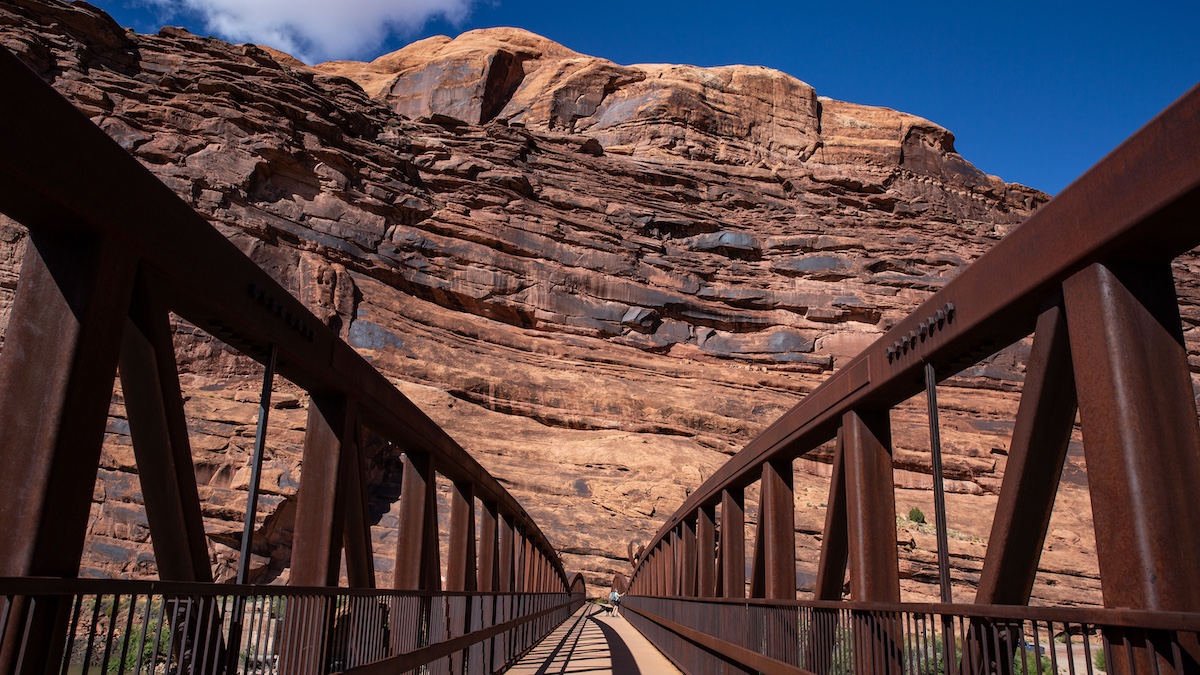

Every kid worries about quicksand, that sticky stuff in cartoons and adventure movies that swallows heroes whole.
Reality, however, is far less dramatic and far rarer, except for one experienced backpacker, Austin Dirks, whose weekend hike through Arches National Park on December 7, 2025, turned into a real-life quicksand nightmare.
The quicksand incident
Dirks, 33, from Glenwood Springs, Colorado, set out on a 20-mile section of the Hayduke Trail, camping on BLM land near the edge of Arches National Park. Before dawn the next day, he descended into Courthouse Wash, where shallow water trickled over sand that appeared solid ground in the cold morning air.
“My left foot dropped to the ankle with no warning,” Dirks wrote in a detailed Reddit post about the incident. “I shifted my weight to the right, and that leg went to the knee immediately.” What he first dismissed as normal mud quickly proved far worse. “My right leg was fixed in place as if set in concrete,” he wrote.
Attempting self-rescue, the hiker dug at the sand with trekking poles, only to watch the stream instantly refill any hole with sand and tiny stones. “After thirty minutes of digging and flailing, I had made no progress at all. My fingers were numb. The water kept moving around my leg, cold as ice,” he said.
The dramatic rescue
With temperatures in the upper 20s, Dirks realized he couldn’t free himself and made a difficult choice: he contacted authorities using his Garmin satellite messenger, a crucial decision, since there was no cell service in the narrow canyon.
Grand County Search and Rescue (GCSAR) responded, launching a drone to locate him and identify a route through the unstable terrain. A park ranger offered a shovel from safe ground, and within minutes, a full rescue team arrived with ladders, boards, and additional tools to distribute weight across the soft substrate.
When rescuers finally freed his leg, Dirks reported that his shoe almost tore off but held, and his leg was numb, only regaining feeling after being wrapped in heated blankets and warm packs by EMS personnel. He ultimately hiked out under his own power, declining help to carry his pack “mostly out of pride.”
Dirks was emphatic in his gratitude: “The National Park Service, Grand County Search and Rescue, EMS and the Garmin dispatchers did everything right.” Without them, he said, “I would have been stuck there until nightfall. … I owe them more than thanks.”
He shared the exact coordinates of the quicksand pit and a clear warning to others: “Quicksand is real. I didn’t believe it before today. It does not care how experienced you are. It only cares that you stepped in the wrong place at the wrong time.”
Quicksand: rare, but more than a childhood phobia
Despite what many imagine, quicksand seldom acts like a bottomless trap from movies. Experts note that due to the physics of buoyancy, most people won’t sink beyond their waist, and the primary dangers stem from being unable to escape, especially in cold temperatures or remote areas.
Quicksand in Arches is extremely rare. Park rangers and rescuers recall only a handful of similar incidents, including one in 2014 involving a hiker stuck for over 13 hours in the same drainage. “This is rare,” one search and rescue commander told Utah news outlet, KSL, noting most calls in the park involve falls or heat-related issues, not quicksand. But as Dirks’s morning taught him, even the most seasoned hikers can encounter the unexpected beneath seemingly solid earth.




Published: Dec 11, 2025 02:02 pm