


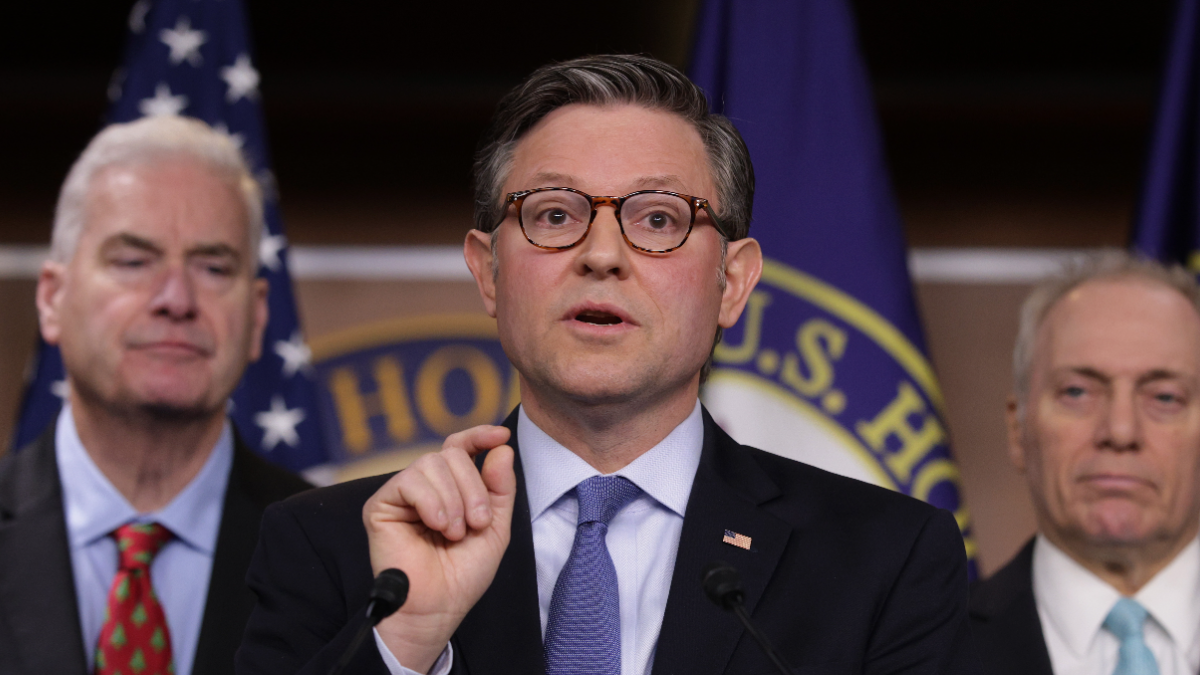

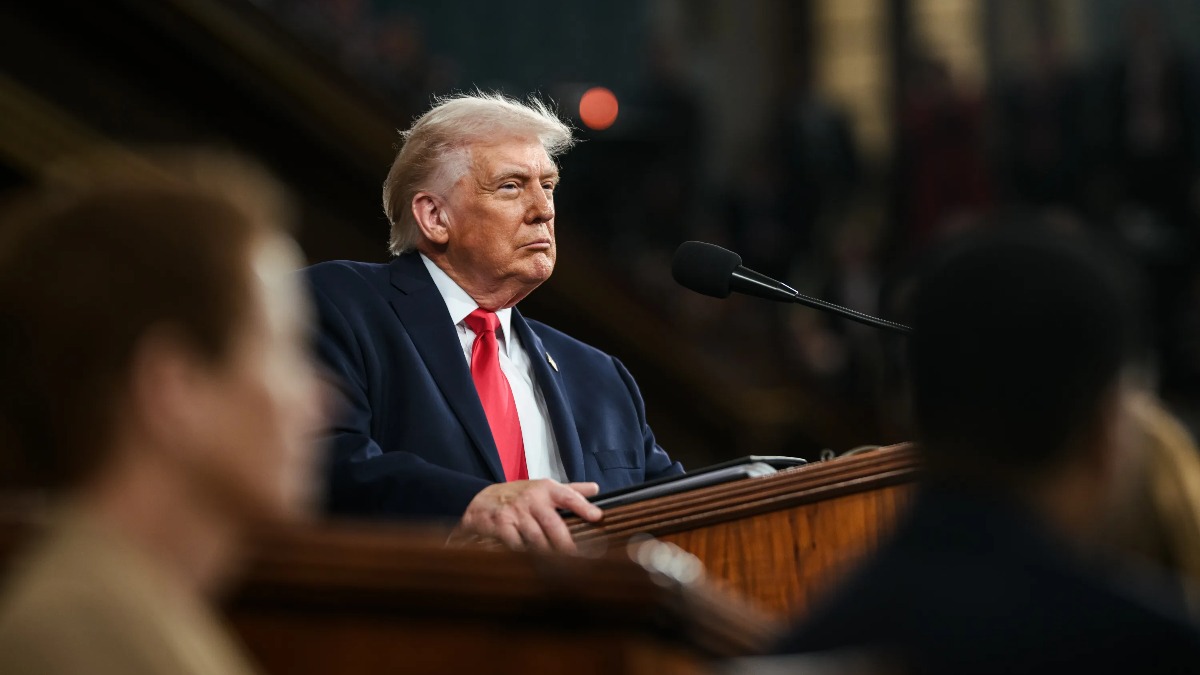
Donald Trump didn’t hold back his anger this week, demanding that five Republican senators who defied him on a critical war powers resolution should never be elected to office again.
The controversy stems from a bipartisan resolution introduced by Senator Tim Kaine, a Democrat from Virginia, designed to curb the president’s ability to pursue further military involvement in Venezuela. Five members of the GOP broke ranks from the Republican-controlled Senate, which usually acts as a reliable partner in advancing President Trump’s legislative agenda.
Senators Susan Collins of Maine, Todd Young of Indiana, Lisa Murkowski of Alaska, Josh Hawley of Missouri, and Rand Paul of Kentucky all threw their support behind the measure. For a president who expects loyalty even when he abuses the military for oil, this kind of public rebuke is clearly unacceptable, especially on a matter concerning foreign policy and military power.
Either you’re on team Trump or you’re out of the game
Trump took to Truth Social to express his outrage. He wrote that “Republicans should be ashamed of the Senators that just voted with Democrats in attempting to take away our Powers to fight and defend the United States of America.” He didn’t stop there, naming the five senators specifically: “Susan Collins, Lisa Murkowski, Rand Paul, Josh Hawley, and Todd Young should never be elected to office again.”
He claims this vote “greatly hampers American Self Defense and National Security, impeding the President’s Authority as Commander in Chief.”
But what exactly was the senators’ rationale for voting against the administration? The five Republicans explained that while they fully supported the initial mission, codenamed Operation Absolute Resolve, which successfully captured former Venezuelan President Nicolás Maduro, they wanted Congress to have a voice in any subsequent, long-term military commitment. This is a classic separation of powers argument.
The lawmakers had received briefings throughout the week from top administration officials to lay out the potential next steps, but clearly, those briefings weren’t enough to sway these five Republicans.
Senator Collins, facing a tough re-election battle back in Maine, explained her position clearly in a statement released before the vote. She stated that after the successful seizure of Maduro, “the circumstances have now changed.” She added,
“While I support the operation to seize Nicolás Maduro, which was extraordinary in its precision and complexity, I do not support committing additional U.S. forces or entering into any long-term military involvement in Venezuela or Greenland without specific congressional authorization.”
That’s a fair point. If the initial objective is complete, Congress should definitely weigh in before the U.S. gets bogged down in a potentially endless conflict or starts committing troops to new areas like Greenland.
Trump, however, fundamentally disagrees with the premise that Congress has this authority in the first place. He rejected the legislative branch’s attempt to use the War Powers Act to control his actions. The president called the act “unconstitutional, totally violating Article II of the Constitution, as all Presidents, and their Departments of Justice, have determined before me.” He’s arguing that as Commander in Chief, his authority is absolute and shouldn’t be constrained by a resolution. You know, so he can keep doing whatever he wants despite laws forbidding it.






Published: Jan 9, 2026 09:22 am