


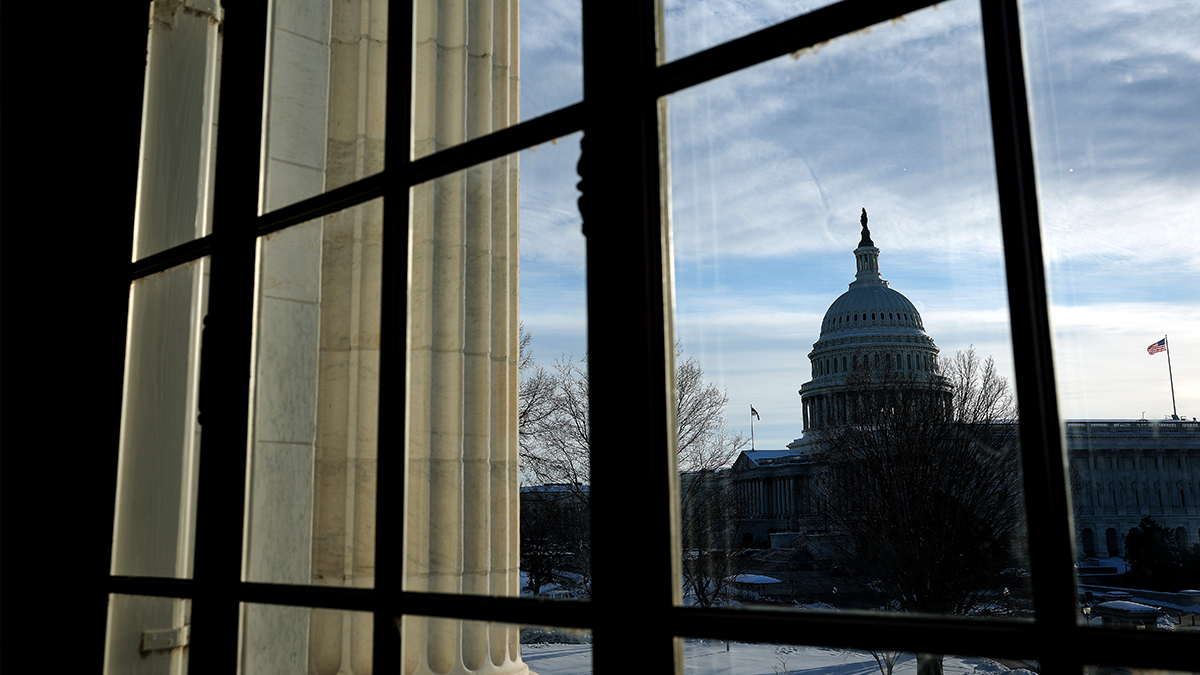

The U.S. government has officially entered a partial shutdown early Saturday morning after lawmakers passed an edited Federal Funding package. President Trump struck a last-minute deal to fund the majority of federal operations. However, the Senate is now locked in a debate over new limits on the Department of Homeland Security (DHS).
Newsweek reported that the Senate passed a massive $1.2 trillion funding package in a 71-29 vote. That bill keeps the vast majority of the federal government running smoothly through the end of September. That bill only got through because the White House agreed to temporarily separate DHS funding from the main package.
Instead of getting the full September funding, DHS is only funded at its current level for a short two-week window. Lawmakers are supposed to use that time to debate new oversight and accountability about immigration enforcement. Unfortunately, since the House is not scheduled to return until Monday, that brief lapse in funding became unavoidable.
This sticking point is being heavily driven by public sentiment
Democrats are demanding greater accountability for immigration enforcement following some truly unacceptable, high-profile incidents, the deadly shootings of two American citizens in Minneapolis this month: Renee Nicole Good and Alex Pretti. Their concerns are exacerbated by the conflict between DHS statements and video evidence following both incidents, showing a concerning lack of transparency.
Senate Minority Leader Chuck Schumer made it clear that Democrats need legislation to “rein in” ICE and end the violence. Their demands aren’t radical, either; they’re basic standards we expect from law enforcement. They include ending “roving patrols,” requiring tighter warrant standards for arrests, and making sure agents wear identification and body cameras.
President Trump took to Truth Social, urging both parties to support the bill and stressing that “the only thing that can slow our Country down is another long and damaging Government Shutdown.” Meanwhile, House Speaker Mike Johnson told House Republicans he hopes to pass the bill quickly on Monday evening using a fast-track process. This measure requires a two-thirds vote to suspend the rules, but it lets him avoid needing unified Republican support.
Officials aren’t expecting this brief shutdown to cause significant disruption to the affected departments. Federal employees in essential roles, like air traffic controllers, report to work and get paid after the government officially reopens. Nonessential workers will be furloughed but get backpay. This whole situation comes two months after the longest government shutdown in U.S. history, 43 days over expiring health care subsidies. Emotions ran high then, prompting some GOP senators claim that Democrats wanted free healthcare for immigrants.
So, who is affected right now? Funding expired for several key departments, including Defense, Education, Health and Human Services, Labor, and Transportation. Thankfully, many other crucial agencies are already funded through September in separate bills, including the Department of Veterans Affairs, NASA, the Department of Justice, and the Food and Drug Administration.









Published: Feb 1, 2026 01:39 pm