




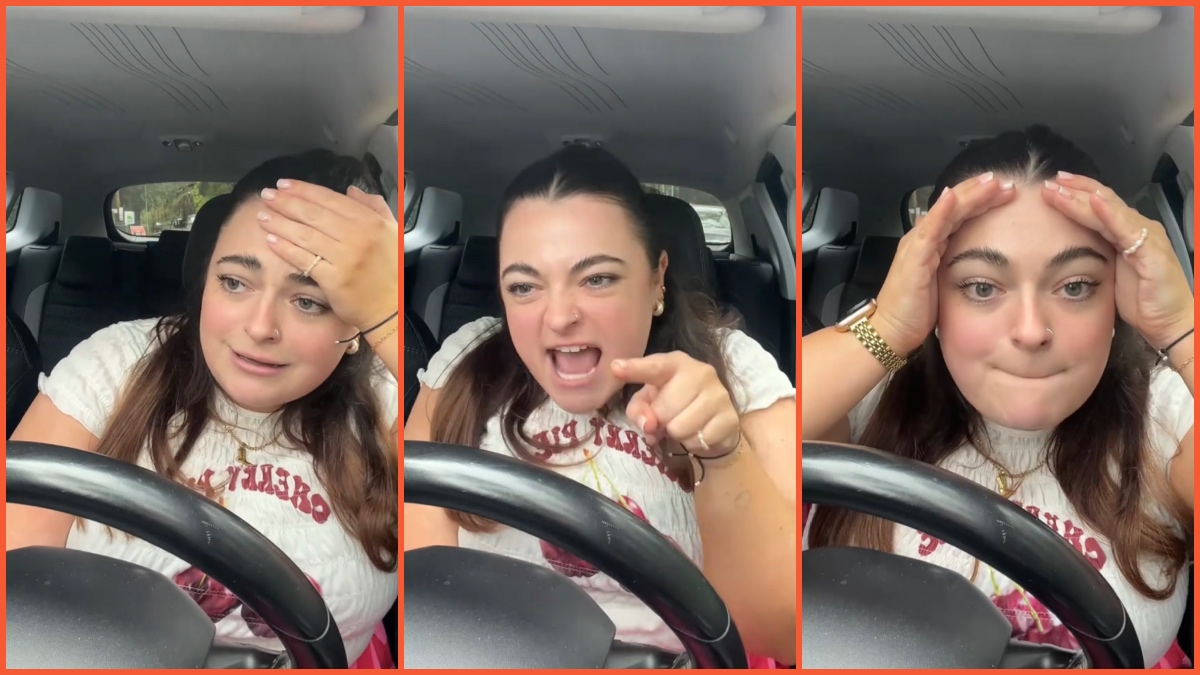
A content creator at LaGuardia Airport recently shared a video that went viral after she paid for an Uber Black ride but got a Tesla instead. The traveler, Valentina, who posts as @sweetportfolioprivate online, recorded the moment she decided to cancel the ride right away. She had just landed and chose to pay extra for the premium Uber Black service, which is supposed to come with a high-end vehicle, more space, and a comfortable ride.
In the TikTok video, which got more than 516,000 views, Valentina filmed the pickup area at the airport. She first showed a large, fancy black Chrysler SUV parked nearby, the type of car many people expect with premium Black service. But that wasn’t her ride. According to Motor1, instead, a black Tesla showed up. Her caption read, “I’m gonna need some nausea medicine.”
That’s a strong reaction, but many travelers understand why some people feel this way. If you’re paying extra money for luxury and comfort after a long flight, you expect a certain quality of ride. For many people, getting a Tesla feels like a downgrade, not an upgrade.
Tesla’s design features create real motion sickness problems for passengers
It turns out Valentina’s reaction isn’t just about personal taste. There’s a real, scientific reason why Teslas and other electric vehicles cause motion sickness in some passengers. This is a big problem for any premium transportation service that claims to focus on passenger comfort.
The biggest reason behind the nausea is something called regenerative braking. This system uses the car’s movement energy to slow down and then turns that energy back into electricity to charge the battery. While this is great for saving energy, the downside is often a jerky, unnatural driving feel that regular car passengers aren’t used to.
Dr. Monya De explained that this braking system “can be jerky and unfamiliar to people who are used to a different kind of car motion.” It’s not just the braking either. Many car makers purposely set up the controls in electric vehicles to be very jumpy, which shows off the car’s quick, powerful speed.
Ed Kim, president and chief analyst of AutoPacific, noted that while this setup highlights performance, “the side effect is that they can lurch and make some occupants’ car sick.” Vehicle safety concerns aren’t limited to motion sickness, as other incidents have shown serious dangers with SUV passengers.
Another major factor making these rides uncomfortable is the silence. While Tesla markets its quiet motor as a luxury feature, the lack of engine noise actually makes motion sickness worse. In a regular gas car, your inner ear and your eyes get signals from the engine sound, which tells your brain you’re speeding up, allowing you to expect the movement. In an electric vehicle, that sound is gone.
Dr. D.J. Verret, an ear, nose, and throat doctor, pointed out this sensory problem. He said, “In combustion cars, you hear the engine revving and know someone is stepping on the accelerator. The car moves forward. In an EV, the auditory and visual inputs don’t fit the model that you are actually moving.” That sensory mismatch is exactly what causes queasiness. Luxury SUVs have become a status symbol for many, even attracting unusual attention from mysterious black SUVs in some cases.






Published: Feb 6, 2026 01:34 pm