


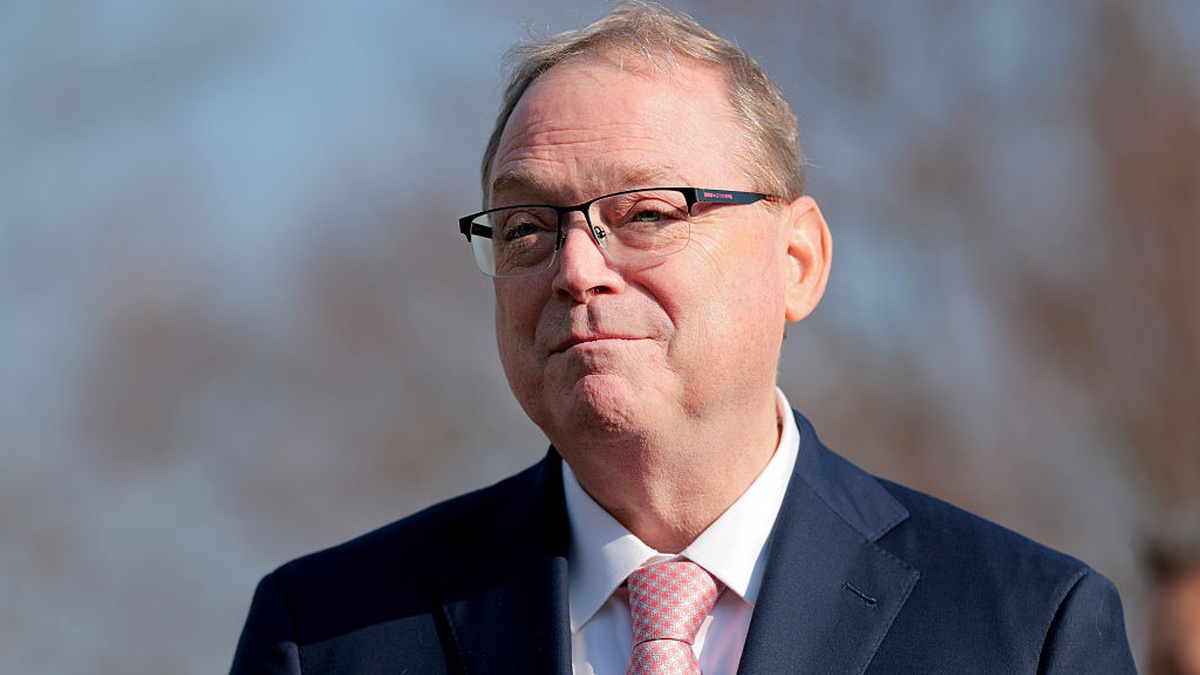

Kevin Hassett, who heads the White House’s National Economic Council and serves as President Donald Trump‘s top economic adviser, is demanding that the Federal Reserve punish its own researchers after they published a study critical of tariffs. Hassett called the New York Fed’s study an “embarrassment” and said it was based on analysis that wouldn’t pass a first-semester economics class.
According to The Washington Post, the dispute started after the New York Fed released a study, finding that U.S. companies and consumers bore almost 90 percent of the economic burden from tariffs in 2025. The researchers wrote, “Our results show that the bulk of the tariff incidence continues to fall on U.S. firms and consumers,” adding that their findings align with other studies on U.S. import prices.
Hassett completely disputes these findings, arguing that U.S. consumers are actually better off because of the tariffs. He believes the Fed’s study failed to account for changes in import volumes and potential wage increases for American workers, stating, “If we bring the stuff home, create the demand at home, then that will hurt China and drive up wages of the U.S., and American consumers will be better off.”
The Trump administration has a clear pattern of going after economic data and institutions that contradict its views
This is not the first time the Trump administration has targeted the Federal Reserve or economic data it disagrees with. President Trump has repeatedly criticized Fed Chair Jerome H. Powell for not cutting interest rates more aggressively.
Back in August, Trump called for Goldman Sachs to replace its top economist after the bank reached a similar conclusion to the New York Fed, stating that U.S. firms and consumers would bear most of the tariff costs. The administration also fired the head of the Bureau of Labor Statistics that same month following weak labor market news.
The Justice Department is currently investigating whether Powell misled the Senate during testimony over the summer regarding a $2.5 billion renovation of the Fed’s headquarters. Powell has strongly pushed back against the probe, suggesting it is a pretext to undermine the central bank’s independence.
This kind of political pressure on institutions is part of a broader pattern, a Trump-appointed judge recently blocked a politically charged trial in a separate legal dispute. The New York Fed spokeswoman declined to comment on Hassett’s remarks.
U.S. Trade Representative Jamieson Greer also weighed in on the tariff debate just a day before Hassett’s comments, arguing that the administration’s tariffs are not regressive and do not disproportionately harm poorer consumers.
Greer said, “Most consumption in America is done by the wealthiest people. So the idea it’s somehow regressive is just wrong.” The administration has also faced pushback in other areas, including a court order restoring a slavery exhibit after a judge questioned the move to erase historical records.
Hassett had been considered a top contender to succeed Powell when the Fed chair’s term expired in mid-May. The criminal probe against Powell, which became public last month, disrupted what had been a lengthy selection process for the next Fed Chair.
President Trump ultimately chose Kevin Warsh, a former Federal Reserve governor, as his pick to replace Powell. However, whether that nomination will move forward remains uncertain as long as the criminal probe remains active.









Published: Feb 19, 2026 02:58 pm