


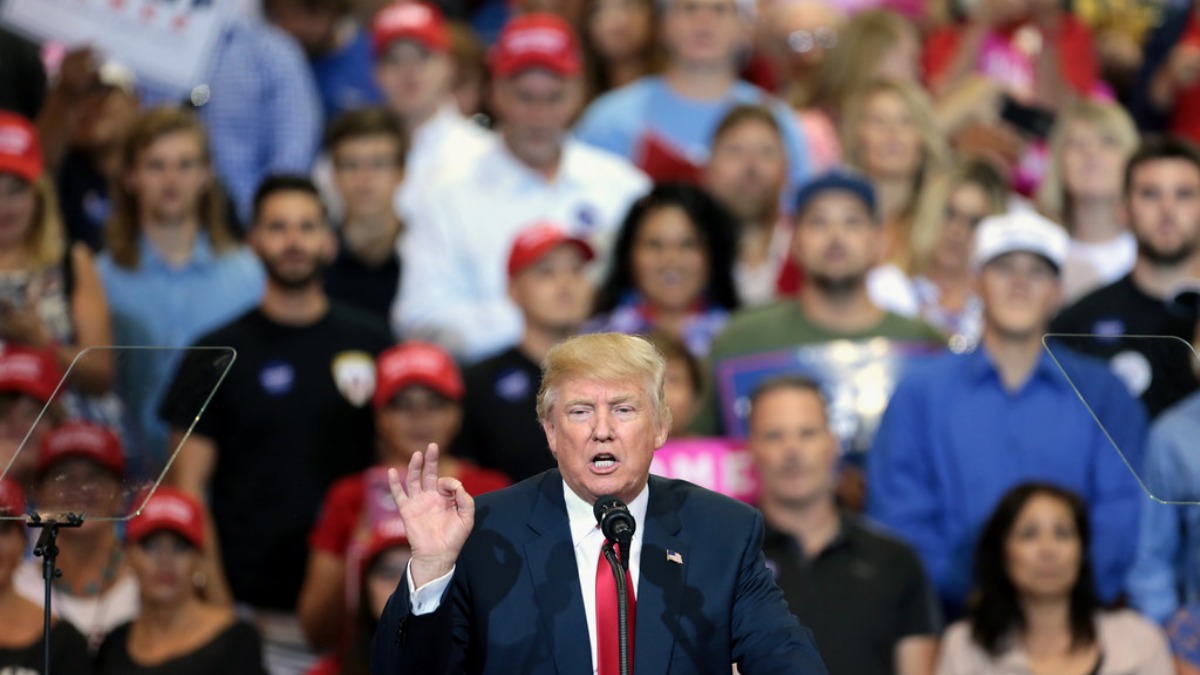

America’s top intelligence officials have told Congress that Iran‘s nuclear program has been “obliterated” and does not pose an “imminent” threat to the United States. This testimony directly contradicts President Donald Trump‘s stated reasons for launching Operation Epic Fury, a joint American-Israeli military offensive against Iran. The statements raise serious questions about the factual basis for the military action.
The Senate Intelligence Committee hearing took place on Capitol Hill. Director of National Intelligence Tulsi Gabbard and CIA Director John Ratcliffe appeared before senators, along with FBI Director Kash Patel, DIA Director Lt. Gen. James Adams, and Acting NSA Director Lt. Gen. William Hartman. Together, as The First Post reports, their assessments painted a very different picture from what the administration had previously told the public.
Before the operation began, President Trump had claimed that Iran was only weeks away from building a nuclear bomb, calling it an “imminent” threat to the United States. This claim was a central part of the administration’s justification for launching Operation Epic Fury. However, the intelligence chiefs directly contradicted this at the hearing.
Trump’s intelligence chiefs undermined the core justification for attacking Iran
Both Gabbard and Ratcliffe stated clearly that Iran’s nuclear program has been “obliterated” and has not resumed any activity. They also said that Iran’s missile program remains nearly a decade away from being able to harm the United States. These assessments directly undercut the idea that Iran posed any immediate danger to American security.
The intelligence directors were clear that Iran does not pose an “imminent” threat to the United States. This matters greatly because the idea of an “imminent” threat is often used as a legal and political reason to justify preemptive military action. Senator Lindsey Graham has also weighed in on the broader Iran situation, and you can read about Graham’s stance on invading Iranian territory to understand where key Republican voices stand.
Their testimony essentially rejected the administration’s main reason for attacking Iran and pointed to a lack of factual evidence supporting the claims that led to Operation Epic Fury. A military operation of this scale would normally be backed by strong intelligence, but this testimony suggests that was not the case here.
Despite directly contradicting the president’s earlier statements, Gabbard and Ratcliffe still tried to defend Trump’s actions during the hearing. They found themselves in the difficult position of publicly refuting the factual basis for the operation while still supporting the commander-in-chief. Trump’s legal and political troubles are not limited to foreign policy either, as a federal prosecutor controversy in New Jersey has put his administration under further scrutiny.
The gap between what Trump told the public and what his own intelligence chiefs told Congress is now a matter of official record. The political and legal implications of this contradiction are likely to be debated for a long time to come.








Published: Mar 19, 2026 09:53 am