


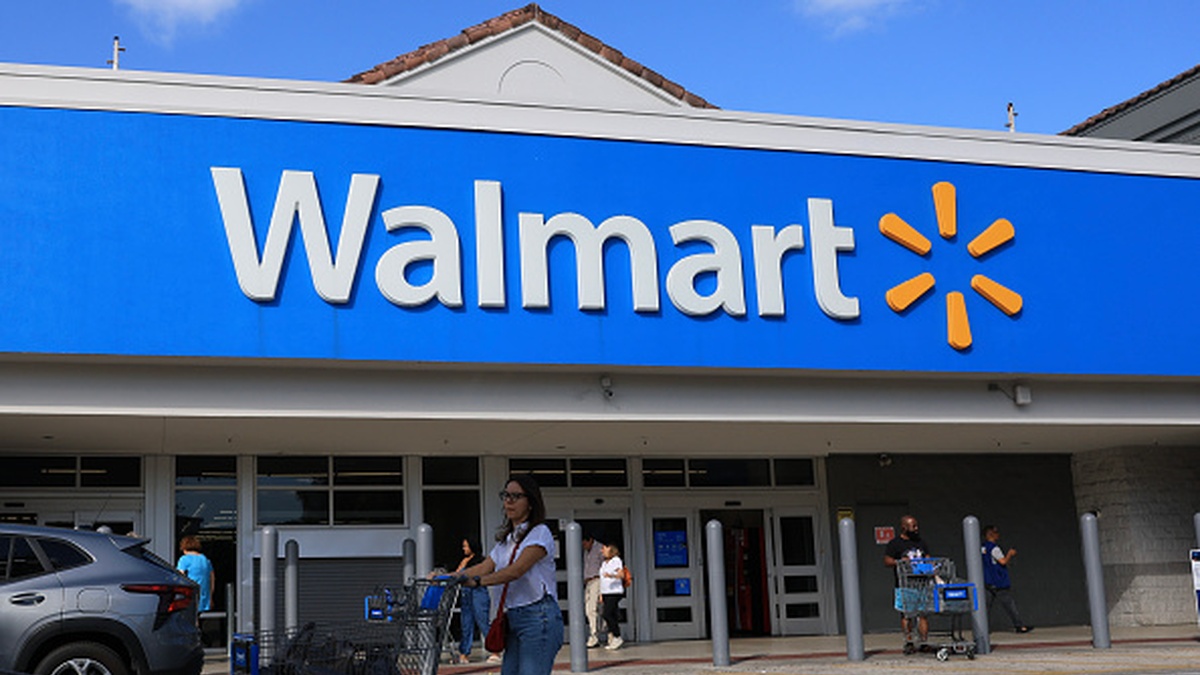

Walmart has announced that digital price labels will soon replace paper shelf tags across its U.S. stores, transforming how prices are updated and potentially how often they change.
The retail giant plans to install digital shelf labels in all of its U.S. stores by the end of 2026, with thousands of locations already using them, according to Grey Journal. The digital shelf labels are designed to improve efficiency, reduce pricing errors, and help employees restock shelves and fulfill online orders more quickly. The labels are electronic displays that can be updated remotely from a central system, allowing prices to change in minutes instead of by employees manually replacing paper tags. Workers can use a mobile app to update prices or locate items, and the labels can be updated across an entire store at once.
As of early 2026, roughly 2,300 Walmart stores had already installed the digital labels, with nationwide rollout continuing through 2026.
Walmart says tags will improve accuracy and efficiency
Walmart says the system is meant to improve accuracy and efficiency. But the technology has caused concern among shoppers and lawmakers who worry it could enable “dynamic pricing,” sometimes called surge pricing.
Adding to the concern, in March 2026, reports surfaced that Walmart secured two U.S. patents for systems using machine learning to automate pricing decisions. While Walmart insists these are for “markdowns,” it has led to “dynamic pricing” fears.
Surge pricing is a pricing strategy in which prices increase based on demand, time of day, weather, or other factors, similar to airline tickets or ride-share fares. With digital labels, retailers could theoretically raise prices quickly without needing employees to change tags manually.
Walmart has denied plans to use surge pricing in stores, but critics say the technology makes it easier to change prices more frequently.
“‘Digital’ price tags should be regulated”
Online discussions show how concerned some shoppers are about the possibility. One Reddit user wrote: “‘digital'” price tags should be regulated like the digital billboards for gas stations, price can’t be updated more than x a day and the price at the tag is what you pay.
Another user responded,”Most places I am familiar in the US already have laws on the books that prices have to scan the tag price. You do make an interesting point that such digital tags open the door to dramatically more frequent price changes although I haven’t seen any of the retailers that have used them engaging it yet although I imagine it is only a matter of time.”
A third commenter referenced Michigan’s pricing law: “Michigan still has a law on the book, if the scanner rings up higher than displayed price and cashier doesn’t catch the error, the store has to issue refund the difference plus 10x difference up to $5.”
Laws that may limit dynamic pricing
As it stands, there is no single federal law that specifically bans dynamic pricing in retail stores, but pricing accuracy and consumer protection laws are typically handled at the state level. Many states have “scanner accuracy” laws requiring stores to charge the shelf price if an item scans higher at checkout.
Michigan remains a critical battleground for consumer rights due to its “Scanner Reform and Modernization Act.” This long-standing law requires retailers to display prices clearly. Meanwhile, lawmakers in several states — including New Jersey, New York, and Minnesota — are considering or passing laws targeting algorithmic or dynamic pricing tied to digital shelf labels and consumer data.
In late 2025, Michigan’s Attorney General issued warnings to several retailers — not just Walmart — reminding them that digital tags do not exempt them from the act.
At the federal level, some lawmakers have also proposed legislation to limit digital price labels in large grocery stores due to concerns about price manipulation.
What shoppers should expect
For now, the biggest visible change will be electronic price tags replacing paper labels on store shelves. Prices may still change at the same frequency as before — weekly or during sales — but the technology makes it possible for prices to change much faster.
Whether prices actually change more often will likely depend on future laws and regulations surrounding dynamic pricing in retail stores. Until then, the shift to digital shelf labels is expected to continue across Walmart stores nationwide through 2026.






Published: Mar 31, 2026 08:09 am