


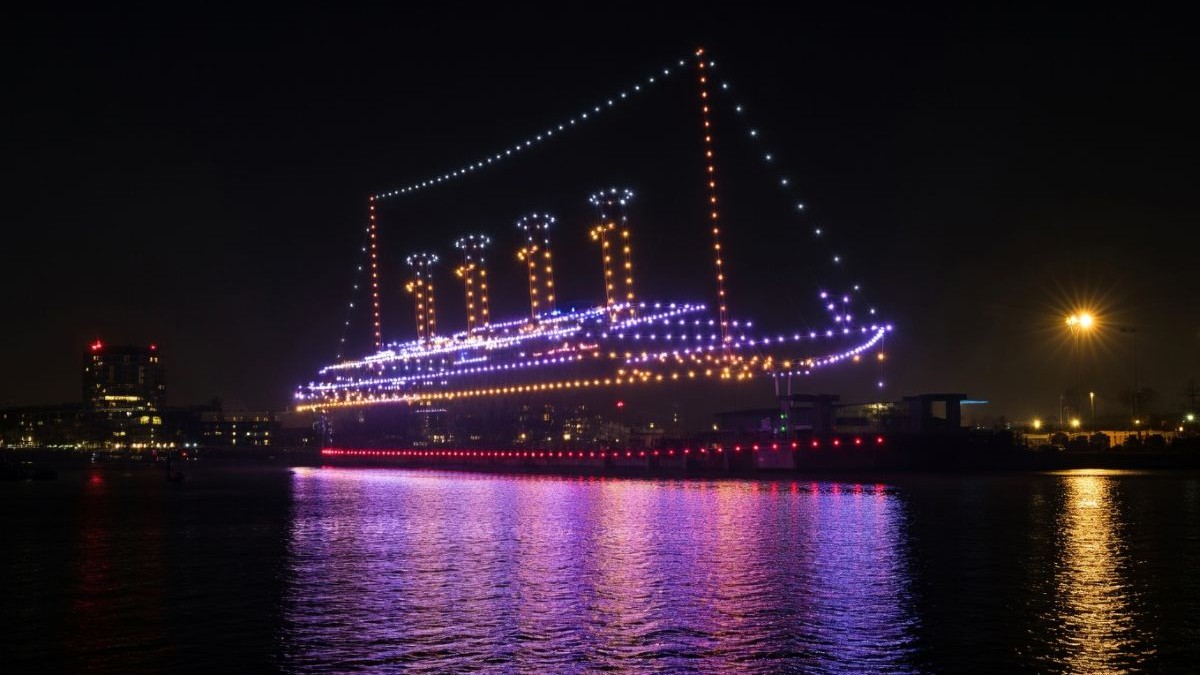

RMS Titanic is exactly where it’s been for the last 114 years, gently rusting on the North Atlantic seabed, 12,500 feet below the ocean’s surface. And yet, in Belfast, Northern Ireland, this week, onlookers were treated to the ghostly sight of the most famous oceanliner in the world once again leaving the docks in which it was constructed.
This was an eye-catching part of a drone display to mark the arrival of the BBC’s ‘Made of Here’ campaign, designed to pay tribute to cities across the UK that have inspired key BBC programming. The Titanic display was inspired by the recent four-part factual series Titanic Sinks Tonight, which takes audiences through every minute of the sinking, with actors recreating the testimonies of the survivors.
114 years on, Belfast witnesses a full-scale drone Titanic depart into the night…a powerful tribute.#titanic #rmstitanic pic.twitter.com/sWc840GNmg
— Titanic New York (@TitanicNewYork) April 2, 2026
The drone display itself featured around 950 individual drones, programmed to assume the exact dimensions of the Titanic, and was broadcast on April 2 at 8 pm UK time, the same time and date the real Titanic set sail from Belfast in 1912.
It’s a truly eye-catching sight, with the drones doing an uncanny job of mimicking the physical ship. Of course, the illusion is broken by being able to see right through it, but this only cranks up the spooky factor.
Unsinkable in the imagination, at least
Despite the sinking taking place well over a century ago, and everyone – even those who were newborn babies at the time – being long dead, Titanic lingers in the imagination. Much of that’s down to James Cameron’s 1997 movie, but there’s a magnetic pull to the disaster that keeps drawing people in.
Usually, this is a simple passing interest in the stories of those on board, or in the engineering flaws that sank the “unsinkable ship”. Other times it’s considerably more serious, like the Oceangate Titan submersible implosion that claimed the lives of five people, including the sub’s designer, Stockton Rush.
Titanic itself will remain on the ocean floor long after anyone reading this is alive. Even so, each day the wreck becomes more unrecognizable as bacteria and archaea gradually consume the metal hull and convert it into rust that slowly drifts away. As of writing, the bow of the ship is still broadly structurally intact, but it’s estimated that it may collapse on itself sometime in the 2040s-2050s.
But while it might not be recognizable, the bulk of the iron in the bow won’t be fully consumed for around 400 years, sometime in the 25th century. Even then, elements like the bronze propellers won’t decay in the same way and may remain on the ocean floor for tens of thousands of years into the future.
All of which means Titanic may still be attracting curiosity into the distant far future, with potential future archaeologists puzzling over these gigantic propellers in the same way we try to imagine how Stonehenge or the pyramids were constructed.
Either way, this drone display briefly brought the Titanic back to life. I’d have loved to have seen it in person, so here’s hoping this dazzling spectacle can be recreated in other cities.








Published: Apr 3, 2026 06:00 am