


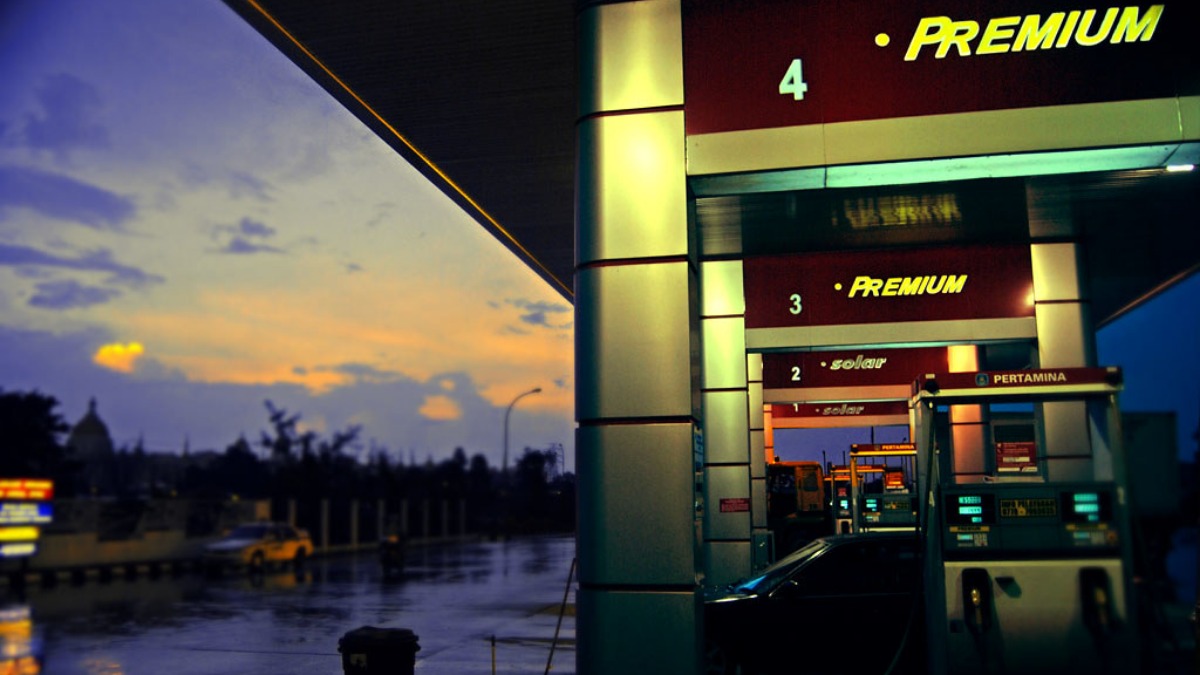

Trump’s war in Iran has changed how many Americans go about their daily lives. With the national average edging closer to $5 a gallon, gas prices are now among the highest in recent history. One driver from Seattle shared that she has no choice but to head north of the city to the Tulalip Reservation just to access relatively cheaper fuel.
Junelle Lewis, a Seattle resident, revealed that at the Tulalip market, gas is priced at $4.84 a gallon — about 75 cents less than what she would typically pay closer to home. Lewis told AP, “I purposely drove here just for the gas.” She continued, “Gas is ridiculous. But honestly, over the years, this gas station specifically has been cheaper than a lot around here — probably the cheapest.”
Across the country, Native American reservations in states like California, Oklahoma, New Mexico, New York, and Washington have seen an influx of drivers seeking out tribally owned gas stations. Thanks to state tax exemptions, these stations are able to offer lower prices. For many, the savings are enough to justify driving up to half an hour out of their way just to fill up.
Current prices are a far cry from the $2 per gallon that Donald Trump promised during his campaign. But with the conflict in Iran shifting from direct military confrontation to economic pressure on both sides, there’s no easy path out of the situation which is driving up the cost of living.
There are nearly 500 tribally owned gas stations across the United States. California alone has 55, with many offering prices about 60 cents lower than nearby stations, where gas is hovering around $5.09. In New Mexico, residents have been making trips to the Mescalero Apache Reservation, where prices have reportedly dropped as low as $3.79 per gallon.
“I purposely drove here just for the gas.”
The actual savings from these trips can be relatively small, but they highlight just how tight household budgets have become. Different types of drivers are feeling the strain. Diesel, for instance, has climbed to a national average of $5.65, forcing people to rethink how they manage their daily routines. Todd Hall of Paden, Oklahoma, told The Syracuse that things are currently “terrible.” To fill up, he now drives about 30 miles west to the Citizen Potawatomi Nation — and still ends up spending around $90.
Even electric car owners aren’t immune to the shift. One driver said, “Yeah, well, my electric car just got totaled. So this sucks. This is new. It’s either Costco or looking wherever’s cheap, like the rez. So here we are.”
Tribally owned businesses, including these gas stations, have become a key way for Native American communities to reinvest in their economies. Some tribal casinos have even expanded into full resorts with attached gas stations — often referred to as “gasinos” — helping draw in steady traffic. But for some customers, it’s not just about the prices or the convenience. As one regular put it, “I like the way the tribe operates. And the price is good too.”





Published: Apr 14, 2026 11:10 am