


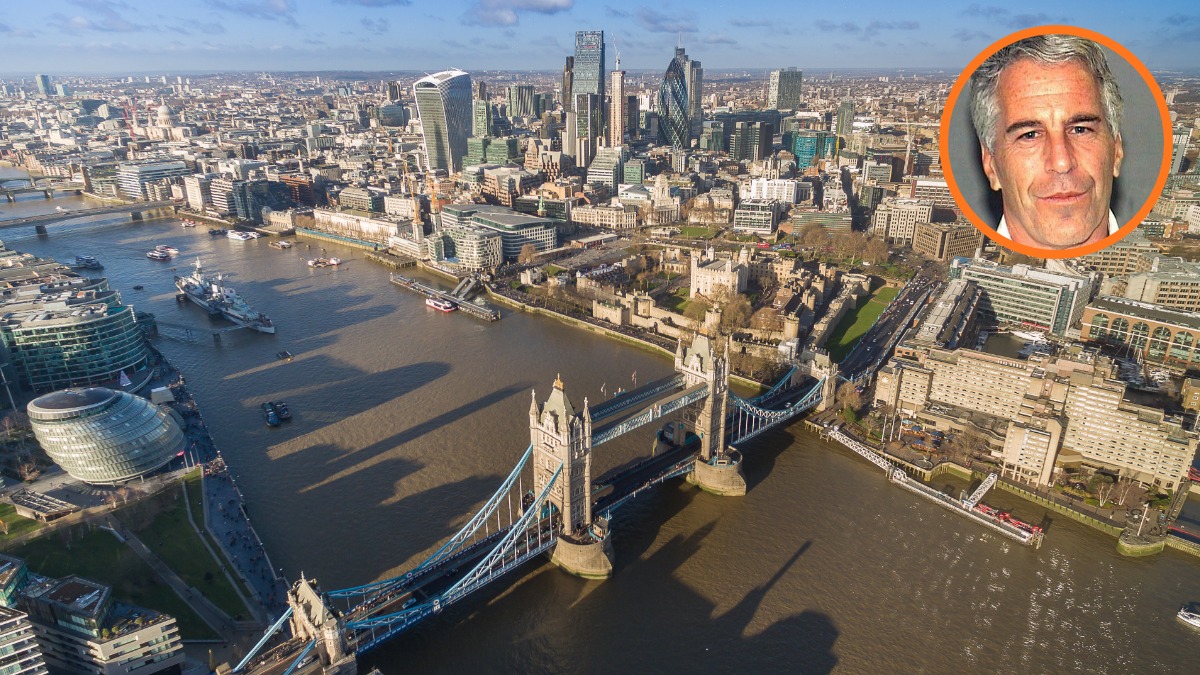

Jeffrey Epstein managed an extensive network of London flats to house victims of abuse, all while operating in plain sight for years after the Metropolitan Police decided against launching an investigation into his activities. New evidence from the Epstein files, including emails, bank records, and receipts, confirms the financier maintained four separate properties in the affluent borough of Kensington and Chelsea.
Per BBC, the scale of this operation is much larger than previously known, involving a steady stream of young women brought to the UK from Russia, Eastern Europe, and other locations. Many of these individuals were transported between London and Paris via the Eurostar.
Records show that Epstein purchased at least 53 tickets for these journeys between 2011 and 2019. Notably, 33 of those tickets were bought after Virginia Giuffre filed a complaint in 2015 alleging she had been a victim of international trafficking to London. In the final six months of his life, Epstein used the Eurostar to move women 10 times, with one trip occurring just 16 days before his arrest.
The files are a horror that keeps on giving
It’s frustrating to see how much of this was documented while the Metropolitan Police maintained that they followed reasonable lines of inquiry. While the force claims it interviewed Giuffre multiple times and cooperated with US authorities, the records suggest significant missed opportunities.
By early 2020, a second woman had complained to the Metropolitan Police about abuse in the UK, yet it remains unclear if any action was taken. Furthermore, British authorities were aware by 2020 that Epstein had been renting these specific flats.
Human rights lawyer Tessa Gregory expressed that she was staggered by the lack of a UK investigation. She noted that the state holds a positive legal obligation to conduct an effective and independent inquiry when credible allegations of human trafficking emerge.
Kevin Hyland, the first Independent Anti-Slavery Commissioner and a former senior detective with the Metropolitan Police, echoed this sentiment. He pointed out that investigators could have easily tracked credit cards and IP addresses of those booking tickets for groups of single women. Hyland stated, “People are outraged that somebody came forward and said, ‘I was trafficked by this man’, and yet he was just allowed to carry on.”
The files reveal that Epstein was deeply involved in the daily lives of these women. In one 2019 exchange, he messaged a young Russian woman living in one of his London flats. When she asked who the good-looking man in a photo was, Epstein replied that it was her landlord, adding that unlike most landlords, he pays rather than collects rent.
He even paid for at least five women to study at English language colleges in London. However, the conditions were often poor, with women sometimes forced to sleep on sofas. When they complained, Epstein frequently responded with anger. In one instance, he called a woman a “brat who has yet to accept responsibility” and used profanity to describe her behavior.
The Metropolitan Police have stated they remain fully engaged in assessments following the release of the Epstein files, particularly regarding whether London airports were used for sexual exploitation. However, they did not directly respond to the findings regarding the London flats and the Eurostar records.
As survivors and legal experts continue to call for a statutory public inquiry, the evidence makes it clear that Epstein’s operation in the UK was far more entrenched than authorities previously acknowledged.





Published: Apr 27, 2026 08:22 am