


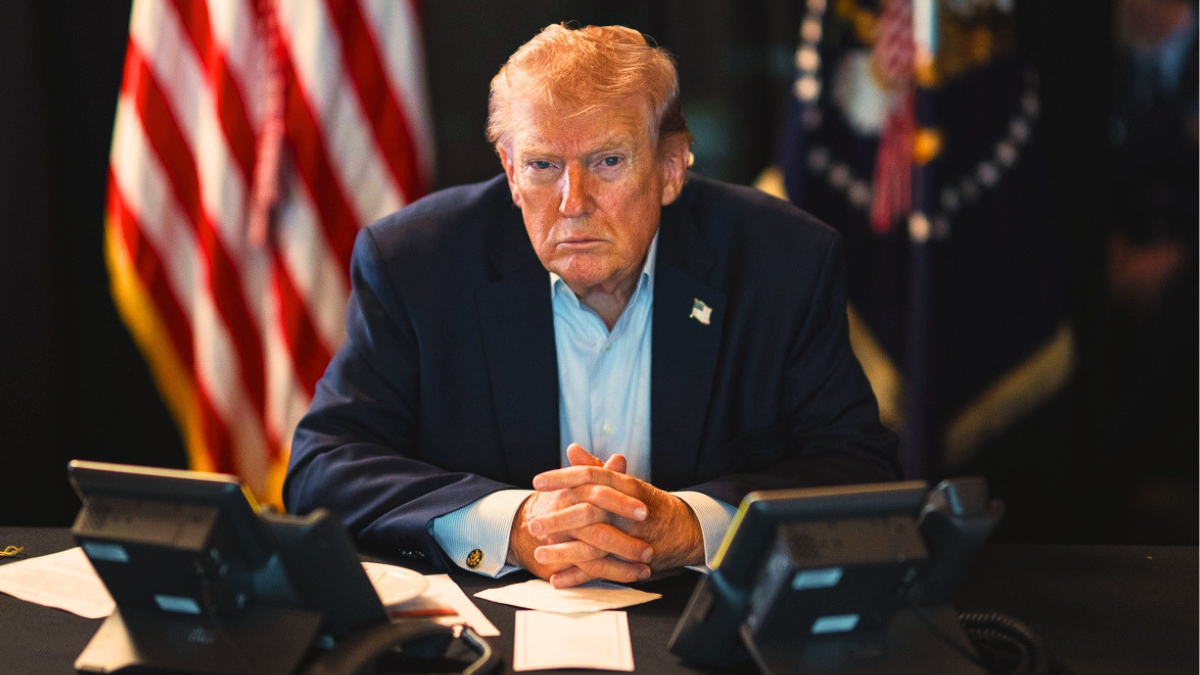

A brief exchange between President Donald Trump and King Charles III during the monarch’s U.S. state visit included alarming statements from Trump about a global conflict, according to a forensic lip-reader’s interpretation.
Nicola Hickling, a forensic lip-reading analyst cited by the New York Post, reviewed footage from the White House portion of the visit and offered an interpretation of what she believes was said between the two leaders.
Hickling’s account suggests Trump raised concerns about violence in Washington and escalating tensions with Russia, while King Charles III appeared cautious and unwilling to engage directly on sensitive geopolitical claims.
According to Hickling, Trump initially referenced a recent security incident near a White House event, saying in part, “This shooting…” likely meaning at the White House Correspondents’ Dinner over the weekend preceding the King’s arrival on Monday, April 27.
King Charles III reportedly responded in a restrained manner, with Hickling interpreting his reply as an effort to avoid prolonged discussion of the incident.
Trump: “He wants war”
The exchange then shifted, according to Hickling’s reading, toward international affairs. She told the Post that Trump appeared to say, “So right now, I am talking to Putin. He wants war,” followed by a more alarming statement. Hickling interpreted Trump as adding, “I’ve got a feeling … if he did what he said, he will wipe out the population.”
King Charles III, according to the same analysis, responded with measured caution. Hickling said she believed the monarch replied, “We will discuss that later,” signaling an intent to defer or redirect the conversation rather than engage in speculative or escalating dialogue.
Hickling also interpreted the King as saying, “I’d rather not stand about here too long” and “I feel I shouldn’t be here.”
The White House and Buckingham Palace have not publicly confirmed or commented on the specific wording attributed to the exchange.
King Charles III’s visit to the U.S.
The reported interaction occurred during a high-profile state visit intended to reinforce the long-standing alliance between the United States and the United Kingdom on the occasion of the U.S.’s 250th anniversary. King Charles III’s trip included ceremonial events at the White House, formal diplomatic meetings, and a historic address to Congress, part of an effort to emphasize shared political, economic, and security priorities between the two nations.
The visit has been closely watched for both its symbolism and its informal moments. Trump and King Charles III were observed exchanging pleasantries during public appearances.
Hickling’s interpretation has added a layer of intrigue to the visit by suggesting that, behind ceremonial diplomacy, the two leaders briefly touched on topics involving war, international escalation, and civilian risk on a large scale.
While forensic lip reading is not considered definitive evidence of spoken dialogue, it has increasingly been used in media coverage to reconstruct conversations from public events where audio is unclear or unavailable. Experts caution that such readings can be influenced by visual ambiguity and should be treated as interpretive rather than authoritative.
Still, the language attributed to Trump in Hickling’s analysis, particularly references to a potential conflict involving “the population,” seems credible. As does King Charles III’s approach, as characterized in the same interpretation, reflects the traditional role of the British monarch in maintaining political neutrality while engaging in ceremonial diplomacy, especially during state visits designed to reinforce international partnerships rather than negotiate policy.




Published: Apr 30, 2026 08:36 am