


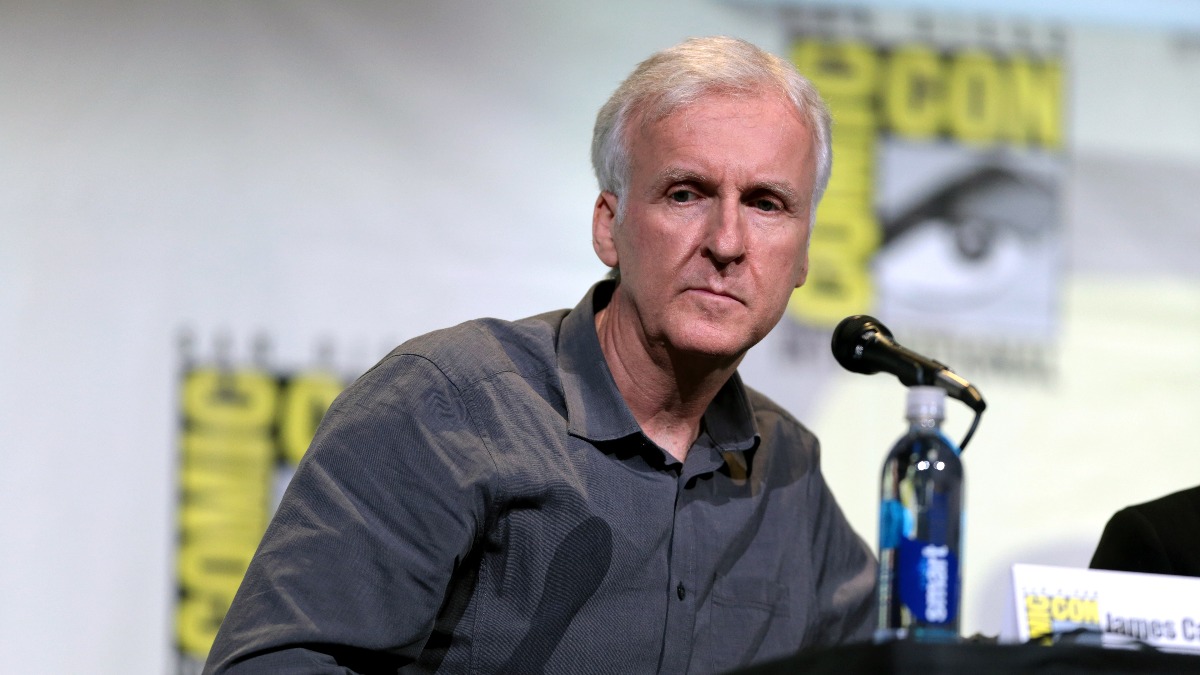

Actress Q’orianka Kilcher has filed a lawsuit against director James Cameron, claiming he used her likeness to build the Avatar franchise without giving her any compensation or credit. The lawsuit claims that Cameron used her biometric identity to create the character Neytiri, who is played by Zoe Saldana in the films.
According to The Independent, the case centers on a photograph of Kilcher from her role as Pocahontas in the 2005 film The New World. According to the lawsuit, Cameron allegedly saw a photo of the then 14-year-old actress in the LA Times and used it as the basis for sketches and designs that eventually became the look for the Na’vi character. Kilcher says she had no idea she had inspired the character until she ran into Cameron at an event in 2010.
At that meeting, Cameron reportedly told her he had a gift for her at his office. That gift turned out to be a signed sketch of Neytiri, along with a note that read: “Your beauty was my early inspiration for Neytiri. Too bad you were shooting another movie. Next time.” The lawsuit notes that despite her agent trying to secure her a role in the franchise, she was never actually offered one.
Cameron’s own words appear to confirm the connection, strengthening Kilcher’s case
The legal documents argue that Cameron used a young Indigenous girl’s identity to launch a record-breaking franchise through deliberate commercial acts. The lawsuit also points out that while the Avatar films branded themselves as being sympathetic to Indigenous struggles, the production was quietly exploiting a real Indigenous youth behind the scenes without her knowledge or consent.
Cameron has built one of the most lucrative careers in Hollywood history, and you can read more about how Cameron accumulated his massive wealth to understand the scale of the empire Kilcher claims to have contributed to.
Kilcher spoke about the situation in a public statement. “When I received Cameron’s sketch, I believed it was a personal gesture, at most a loose inspiration tied to casting and my activism,” she said.
She added, “Millions of people opened their hearts to Avatar because they believed in its message and I was one of them. I never imagined that someone I trusted would systematically use my face as part of an elaborate design process and integrate it into a production pipeline without my knowledge or consent. That crosses a major line. This act is deeply wrong.”
The lawsuit also cites evidence that Cameron himself acknowledged the connection. In a past interview, he reportedly admitted to the source of the character’s design, stating: “The actual source for this was a photo in the LA Times, a young actress named Q’orianka Kilcher. This is actually her…her lower face. She had a very interesting face.”
Cameron is known for pushing boundaries in unusual ways, including his record-breaking solo dive to the ocean floor, which speaks to the kind of driven personality at the center of this lawsuit.
Kilcher is now seeking compensatory and punitive damages, as well as the disgorgement of profits tied to the use of her likeness. She is also asking for injunctive relief and a corrective public disclosure.
The case raises serious questions about identity, consent, and intellectual property in big-budget filmmaking, and how much protection individuals have when their image is used without permission.






Published: May 7, 2026 02:46 pm