


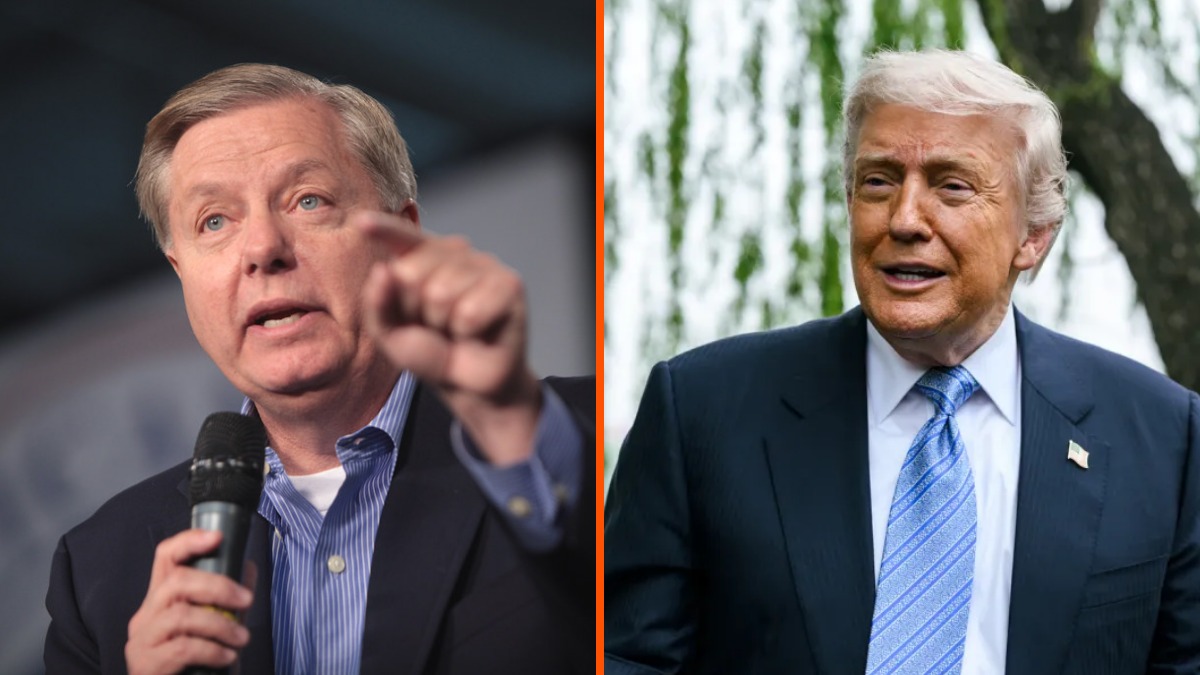

Sen. Lindsey Graham recently stepped into the spotlight to defend President Trump’s controversial stance that he doesn’t think about Americans’ finances “even a little bit.” Per The Hill, Graham compared the current situation in Iran to a pivotal moment in history, World War 2. He characterized the president’s actions as his own personal “Churchill moment.”
Graham argued that “When Churchill came into power, he promised ‘blood, sweat, toil, heartache, until we deal with the Nazis, who are an existential threat to the British way of life.’ And if Hitler had taken charge of the planet, it would have been the darkest hour in humanity.” The senator argued that the potential for Iran to obtain a nuclear weapon represents a similar, dire threat to global stability.
“I believe Iran wants the nuclear weapon. They would use it. So does President Trump. And they would use it for their religious agenda. They would destroy the Jewish state. They would eventually hold us hostage.” As such, even with the cost of gas, “The biggest threat to the hostility in the world is a nuke-armed Iran. And whatever price we have to pay, we will pay. What did Churchill say? Whatever price we have to pay to beat Hitler, we will pay. Same with Iran”
The problem is, Hitler and Iran aren’t really the same
Graham’s defense comes right on the heels of Trump doubling down on his own remarks. When he was shown a clip of his previous comments, he stood by his words: “That’s a perfect statement. I’d make it again.”
According to NBC News, the president has been clear that his sole focus is on preventing Iran from becoming a nuclear power. Thus, short-term pain for the public is an acceptable price
The economic reality is certainly hitting home for many people. Since the United States and Israel began strikes on Iran in late February, gas prices have climbed significantly. Data from the American Automobile Association shows that the national average has risen to more than $4.50 a gallon, a massive 50 percent jump since the conflict began.
The closure of the Strait of Hormuz, which is one of the world’s busiest waterways for oil tankers, has been a major driver of this spike. While the president has suggested that gas prices will drop once the blockade is resolved and oil-laden boats can move freely again, the current situation has left many feeling the pinch at the pump.
The tension between national security goals and personal economic anxiety is palpable. A recent CBS News/YouGov poll highlights a growing divide between the government and the public.
According to The Hill, the data shows that 44 percent of respondents view their own personal financial situation as fairly bad or very bad. Even more telling is that 57 percent of those polled believe that the president’s policies are making them financially worse off.
This creates a difficult political environment, especially as Republicans work to defend their slim majorities in the upcoming midterm elections. House Speaker Mike Johnson has acknowledged these economic struggles, noting that the trouble at the Strait of Hormuz is directly impacting the cost of goods and transportation to grocery stores.
Despite the political fallout, the president remains steadfast. He has explicitly stated that he is not going to let the upcoming elections determine his strategy regarding Iran. He views the nuclear threat as the only thing that matters, and he has even encouraged further military action.
Sen. Graham echoed this sentiment, suggesting that the president should look at reducing Iran’s military capability even further. “And I would also keep the embargo on to weaken their economy. And I’d let the Iranians know, ‘If you keep terrorizing the region, Kharg Island, which is your source of revenue, will be in play.’ I think that would be the smart next play,” he stated
It’s a fascinating, if not stressful, time in global politics. While historical comparisons to Churchill might resonate with some supporters, the clear disconnect between the administration’s laser-focused foreign policy and the daily financial anxieties of the average citizen is growing wider.
As the conflict nears its fourth month, the pressure on both the administration and the economy continues to mount. Whether this strategy will pay off as the president hopes, or if the economic toll will become too heavy for the public to bear, remains the biggest question.







Published: May 19, 2026 02:37 pm