


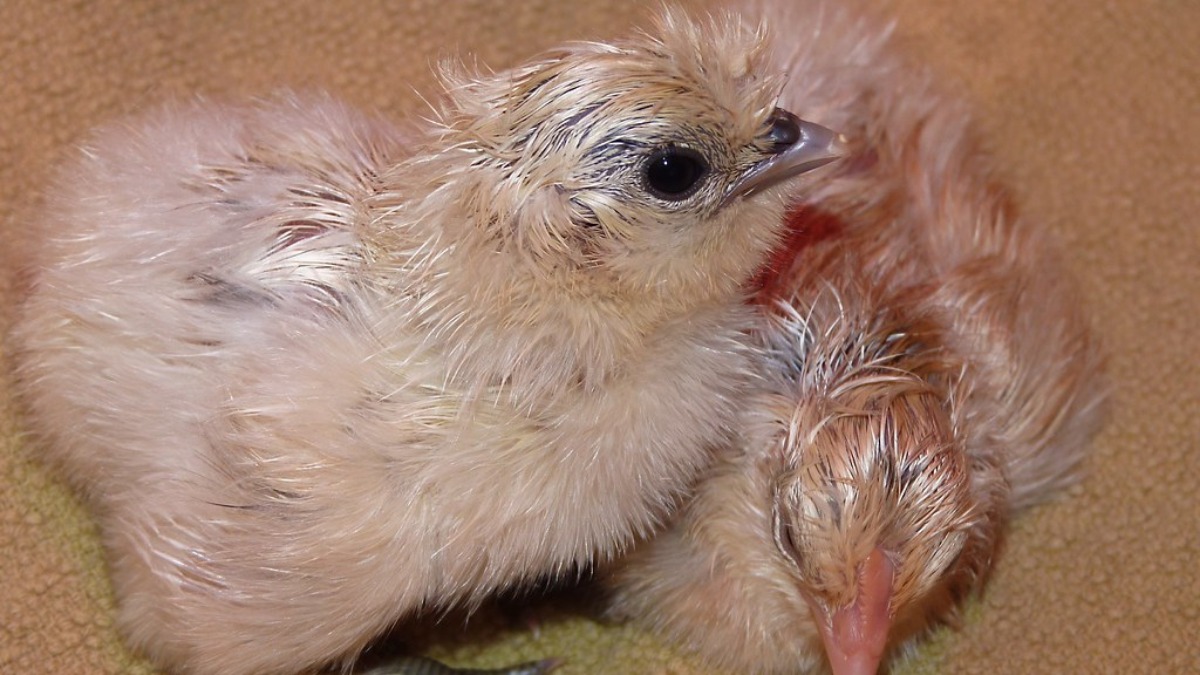

Colossal Biosciences just handed us a 3D-printed answer to the age-old ‘chicken or egg’ question. The Biotech company that’s been chasing headlines with its “de-extinction” projects has successfully hatched 26 live chickens using an artificial egg system. So, at least here, the artificial egg came first.
The eggs, which look like a cross between a dishwasher filter and a high-end Bluetooth speaker, could be the key to bringing back extinct birds like the dodo and the giant moa.
Colossal Biosciences has spent years trying to convince the public it’s the real-life version of Jurassic Park, minus the rampaging dinosaurs. Back in April 2025, the company made waves by claiming it had “brought back” the Game of Thrones-style dire wolves, a claim that turned out to be more about genetic modification than actual resurrection.
As Vice pointed out, it’s more like genetically engineered cosplay, which is impressive, but not quite the sci-fi revival the headlines suggested. Still, the company isn’t giving up on its mission to recreate species that vanished centuries ago. Now, it’s tackling the dilemma head-on by redefining gestation.
The tech is super valuable, which makes me think that the de-extinction is just a way to get us to pay attention. It’s working
The artificial egg system is a rigid outer shell with hexagonal honeycomb cutouts, designed to mimic the structure of a natural eggshell. Inside, a permeable membrane regulates oxygen flow, just like the real thing.
Scientists admit that it isn’t a perfect replica since it’s missing some key components, like the temporary organs that nourish and stabilize a growing chick, but it’s close enough to hatch healthy chickens. Per Fortune, Colossal’s CEO Ben Lamm called it a way to “make something that nature has done a pretty good job of developing and make it better and scalable and even more efficient.”
The technology isn’t entirely new. Researchers have experimented with transparent eggshells and plastic films in the past, but Colossal’s version is a step forward. To hatch the chicks, scientists poured fertilized eggs into the artificial system, added calcium (normally absorbed from the eggshell), and monitored the embryos’ development in real time.
The result? Twenty-six fluffy, peeping chicks, ranging from a few days to several months old. It’s a proof of concept, but one that could have big implications for conservation.
The real test, though, will be using this tech to resurrect extinct birds. Colossal is eyeing the dodo and the giant moa, a towering bird from New Zealand that once stood taller than an NBA player. The moa’s eggs are 80 times the size of a chicken’s, which means no living bird could carry them. That’s where the artificial egg comes in.
Theoretically, dodo embryos could be grown from genetically edited Nicobar pigeon cells, while moa embryos could come from modified emu cells. However, even if Colossal pulls it off, scientists warn there’s a long road ahead.
For starters, the company needs to compare ancient DNA from well-preserved moa bones to the genomes of living bird species. It also needs a bigger eggshell. Lamm admitted they didn’t want to wait until they were ready to birth a giant moa to start working on the engineering challenges.
“We actually wanted to start working on the surrogacy and birth now,” he said. But even if they succeed in creating a bird that resembles the moa, there’s another hurdle: where would it live? The landscape of New Zealand has changed dramatically since the moa’s extinction, and reintroducing a species into an unfamiliar environment could be a disaster.
Some scientists are skeptical of the whole de-extinction mission. Evolutionary biologist Vincent Lynch from the University at Buffalo called the artificial egg system “impressive,” but pointed out it’s not a true artificial egg. “They might be able to use this technology to help them make a genetically modified bird, but that’s just a genetically modified bird. It’s not a moa,” he said.
Others, like bioethicist Arthur Caplan, question whether the effort is worth it. “The big challenge is, what environment is this animal going to live in?” he asked. Caplan and others argue that conservation efforts might be better spent on preserving endangered species, such as the Gulf of Mexico’s Rice’s Whales, rather than trying to bring back ones we’ve already lost.
Nicola Hemmings, a bird reproductive biologist at the University of Sheffield, echoed that sentiment. “My personal interests lie more in preserving what we’ve got than trying to bring back what is already gone,” she said. Still, she acknowledged that the artificial egg tech could have applications beyond de-extinction. It could help conservationists breed endangered birds and reptiles, giving them a new tool to fight extinction.







Published: May 26, 2026 06:42 am