


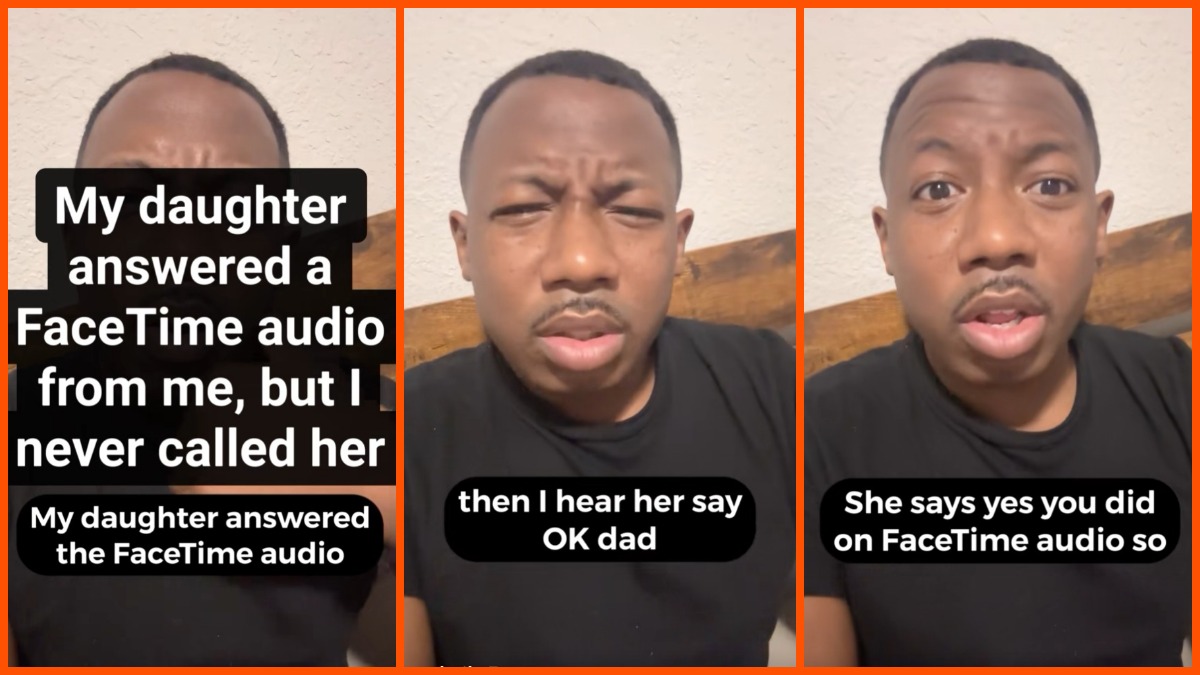

Peter Butler, a user on TikTok known as @voycebutler3, recently shared a harrowing experience from his home in Houston, Texas, that highlights just how dangerous AI voice cloning has become. In a video that has racked up 17.8 million views, he explained a situation that he believes should serve as a massive wake-up call for every parent.
Butler said that one evening, at 6:00 PM, he was in his kitchen while his daughter was in the next room using her iPad. Everything seemed perfectly normal until he heard her say, “Okay, Dad, I’m coming right there.” Confused, Butler walked into the room and asked, “Come where? I asked her who are you talking to?” His daughter looked at him in confusion and said, “You just called me.” Butler insisted he hadn’t, but she was adamant. “Yes, you did. On FaceTime audio.”
Butler stated that his phone was sitting on the counter, untouched. He grabbed his daughter’s iPad to check the call log, and there it was, a “FaceTime audio from dad” that lasted 12 seconds. As he dug deeper, he realized, “It’s not my contact, it’s some random email address under my name.” He said, his daughter then told him, “It sounded just like me, same voice, same tone.” The caller had told her to “come to the front door” and claimed, “I forgot the groceries.”
Butler’s daughter simply heard someone she trusted, but he realized how dangerous it was
Butler realized, “that’s somebody using my voice on FaceTime audio call to try to get my daughter to open that door.” He emphasized that the situation was different from other threats because it used technology to bypass a child’s natural defenses. His immediate reaction was to set a hard rule: “We got a code word now. You can’t move, you don’t do anything. You don’t open nothing, you don’t respond.”
The reaction on TikTok was one of concern. Users like Heather Rose commented, “And people want to argue that AI isn’t a threat to us all,” to which Butler replied, “That’s what I’m saying but people think I’m just saying a fake story when I’m really not.”
Others, like Yeezy89, agreed that a “Code word is a great idea,” while Jarata Jaffa urged Peter to “Contact THE FBI! THATS SO SERIOUS!” The sentiment was echoed on Instagram, where users like Eileenferenzi warned, “Omg please don’t take your eyes off your daughter. She might be targeted. Please keep her safe.”
\As written by CyberGuy for Fox News, AI can now clone a person’s voice using as little as three seconds of audio, which can be pulled from a video on social media or even a simple voicemail. Once the AI has that sample, it can reportedly replicate tone, speech patterns, and accents with terrifying accuracy. In 2025, AI scams saw a massive surge of 1,210%, and experts suggest that global losses could hit $40 billion by 2027.
The danger isn’t just in the voice cloning itself, but as CyberGuy noted, in the preparation. Scammers often use data broker websites to map out family networks, finding phone numbers, names, and addresses. They reportedly identify vulnerable targets and then use the cloned voice to create a sense of panic. They noted that because the voice sounds so much like a loved one, the victim’s rational brain often shuts down.
To stay safe, CyberGuy says that it is vital to be proactive. Setting a family code word is one of the most effective ways to verify a caller’s identity during a potential emergency. Furthermore, they suggest we always follow a strict callback rule. If you receive a call from a loved one claiming to be in trouble, hang up and call them back at their known number. Never wire money, use gift cards, or hand cash to a courier based solely on a phone call.
As Butler reminded his viewers, the goal of these scammers is to create enough urgency to stop you from thinking clearly. This is something TikToker Captaindarebear experienced firsthand when he received an AI call from his ‘sister’ saying the Cartel had kidnapped her. This specific scam is just as terrifying and insidious as romance scams. A Maryland man just realized his mother is trapped in one and has been using tough love to try to make her realize the truth.






Published: Jun 16, 2026 09:25 pm