


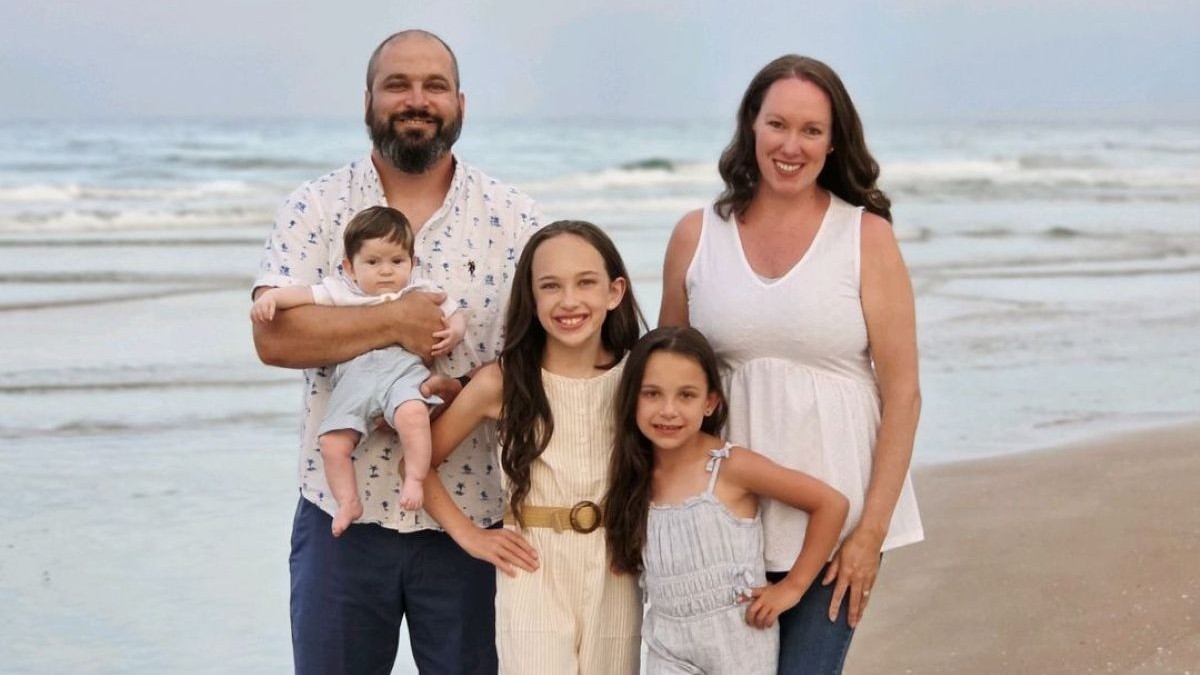

A Cincinnati mother is navigating a life-altering diagnosis for her young son after noticing he stopped growing at just four months old.
According to Newsweek, Jessica Clifton-Enge described her pregnancy with her son, James, as “amazing,” especially in contrast to the difficult pregnancies she had while carrying his older sisters. However, the path changed the moment James arrived in December 2025.
“Shortly after birth, James was rushed to the NICU, where he stayed for 23 days because his glucose was severely low,” Clifton-Enge explained. During that initial stay, doctors reportedly identified that James had a rare condition known as hyperinsulinism, which caused his pancreas to produce excessive insulin and led to dangerously low blood sugar levels. The family hoped this would be a hurdle they could overcome with careful monitoring and medication.
“We had to check his glucose and give him special medication, and hoped he’d one day grow out of the condition,” Clifton-Enge told Newsweek. Unfortunately, by April, it became clear that James was not meeting standard growth milestones. This led to multiple visits to Cincinnati Children’s Hospital, where further testing finally revealed that his kidneys were not functioning as they should.
A genetic test revealed his fate
The subsequent genetic testing brought a rare diagnosis. Despite having undergone genetic screening before starting their family, they learned that James had cystinosis, a rare genetic disorder that affects roughly one in 200,000 children. As outlined by the Cleveland Clinic, cystinosis is a condition where an amino acid called cystine builds up within the body’s cells.
Over time, the clinic notes that this excess cystine forms crystals. They accumulate and cause significant damage to organs and tissues, most notably the kidneys and eyes. The condition is inherited in an autosomal recessive pattern. Thus, both biological parents must carry the mutated gene for a child to be affected.
“Cystinosis is so rare it’s not included in basic genetic testing, which is why my husband and I never knew we were both carriers,” Clifton-Enge mentioned to Newsweek. The reality of the diagnosis is heavy, as the disease can also impact the brain, muscles, liver, thyroid, and pancreas. While there is no cure, managing the condition is a lifelong commitment. It will require strict adherence to medication and regular monitoring.
In the meantime, James reportedly follows a regimen of supplements. This includes supplements for phosphorus, potassium, and Vitamin D to combat the weakness and brittleness the disease can cause in his bones and muscles. He also takes a medication called Cystagon, which is designed to dissolve the cystine crystals building up in his system.
In a similar story, a five-year-old girl was also recently diagnosed with the rare genetic disorder Metachromatic Leukodystrophy, and her family is battling to meet the costs of her treatment.
Per Newsweek, Clifton-Enge emphasized that James’ treatment is “not a cure, but a life extender.” She added, “Before the FDA approved this medication, life expectancy was about 9 to 11 years. With Cystagon, doctors have been able to delay organ failure and help people live well into adulthood.”
Living with this condition means that every day presents new variables. Per the outlet, the financial and emotional toll on the family has been significant. It has often required their daughters to adjust their own lives to accommodate their brother’s medical needs.
One person who lived till adulthood with a rare genetic disorder was Dylan Lee Massie-Hardy. He had a compulsive eating disorder and passed away in 2023. Now, his family is alleging his care home was negligent.
Clifton-Enge mentioned they are currently working to let go of the vision they once had for their son’s future. They told the outlet that it had included typical milestones like sports and fishing. Now, their schedule is dominated by hospital visits, blood work, and managing multiple medications.
Despite the challenges, the family remains focused on the future. Per reports, there is potential for advancements in stem cell gene therapy and transplantation. These options are currently in the research and trial stages. Clifton-Enge is actively working to get James on a list for potential trials while his organ function remains stable. She remains hopeful that, with modifications, James will still be able to pursue his interests.
Clifton-Enge also credits Dr. Dawn Manfroy of TriHealth Group Health Pediatrics of Anderson for her persistence. “She was the doctor who pushed and pushed for the hospital to admit James and get to the bottom of his diagnosis,” Clifton-Enge said. “Without her, James may still be undiagnosed.”








Published: Jul 14, 2026 10:38 am