


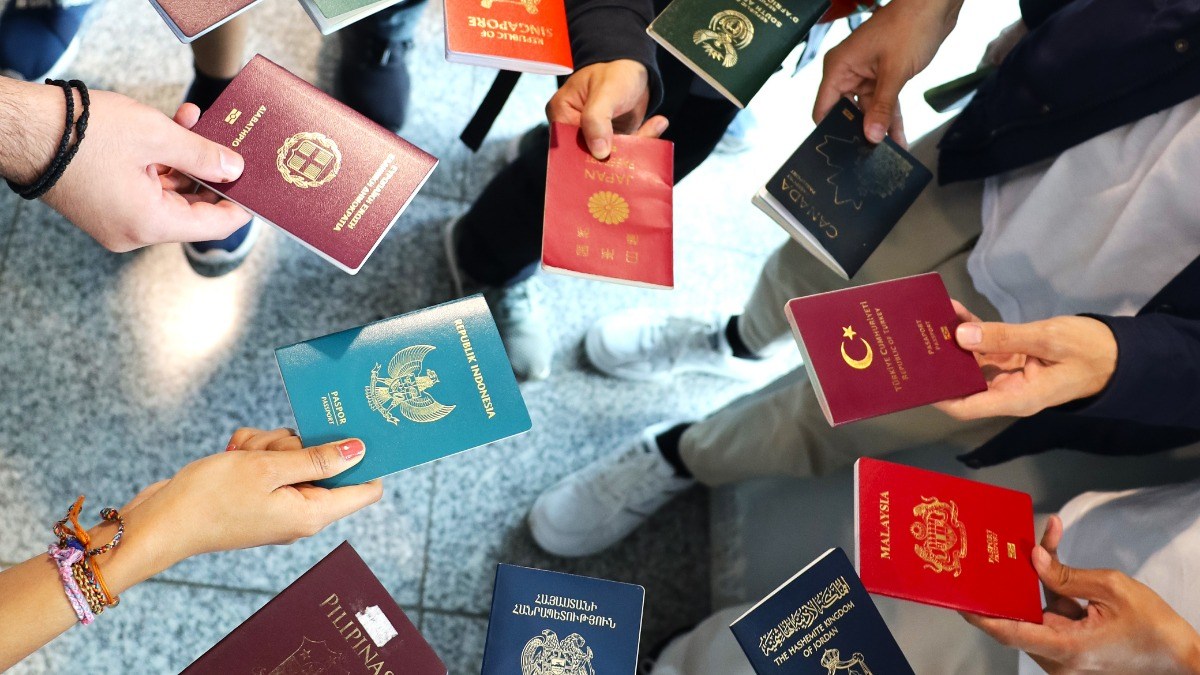

On Friday, a federal judge officially struck down a sweeping Trump administration policy that suspended immigrant visa issuances for applicants from 75 countries. This ruling, handed down by Judge Jeannette Vargas of the Federal District Court in Manhattan, represents a major legal blow to the administration’s ongoing immigration crackdown.
It marks a shift in how the government handles visa processing and questions the authority of the Secretary of State. According to CNN, Vargas concluded that the policy, which was first announced in January, was “patently unlawful” and went far beyond the statutory authority granted to Secretary of State Marco Rubio. The policy in question had aimed to block people from 75 nations, including countries like Brazil, Colombia, Egypt, Haiti, Somalia, and Russia.
The State Department had based the policy on the claim that these individuals would “take welfare and public benefits.” Per reports, the department justified this by pointing to Council of Economic Advisers data and targeted nations where more than 30% of immigrant households received some form of public assistance. However, the judge took issue with the fundamental rationale behind this blanket ban.
A case of discrimination
CNN reported that under current law, an immigrant can only be turned away as a “public charge” if a consular officer conducts an individual assessment. This process is supposed to weigh a person’s specific finances, age, health, skills, and family situation. However, Vargas found that the administration bypassed this requirement by ordering officers to reject visas based solely on an applicant’s nationality.
Per Reuters, she wrote in her ruling, “The Policy, which categorically prohibits the issuance of immigrant visas based upon the nationality of the applicant, represents a direct abrogation of this statutory scheme.” According to the outlet, the evidence presented in the case included a cable sent by Rubio to every diplomatic and consular post. This document directed officers to refuse applicants even if they could prove they were financially stable.
Per CNN, Vargas wrote, “The outcome is predetermined. The visa will be refused.” She ruled that this approach violated a 1965 law designed to prevent discrimination by nationality in the granting of visas. Furthermore, she pointed out that the law denies the Secretary of State the authority to dictate how consular officers make decisions in individual cases.
It is interesting to note that the administration did manage a minor win. The judge reportedly agreed that the policy did not constitute a formal rule, and thus did not require a public comment period before implementation. However, this did little to save the broader policy.
CNN reported that the administration had attempted to lean on a 2018 Supreme Court decision that upheld a previous travel ban. However, Vargas distinguished the two cases. She clarified that while the president has broad power to decide who enters the country, this specific case focused on whether a visa could be issued at all, which is a different legal question entirely.
The impact of this ruling is widespread. The ban had affected permanent-residence visas for those joining family members or starting jobs in the US. It had not applied to tourist or student visas. It should be noted that the administration also recently announced that legal Green Card applicants have to return to their home countries to complete their application for the same.
Per Reuters, this specific lawsuit had been filed by various groups, including the Catholic Legal Immigration Network and African Communities Together, alongside individual plaintiffs. These included US citizens trying to sponsor family members from countries like Ghana, Jamaica, Guatemala, and Ethiopia, as well as Colombian applicants who had been denied job-based visas.
Looking ahead, the situation remains fluid. While some denials based on other legal grounds will stand, the total number of reversals from this order is currently unclear. Vargas, who was an appointee of former President Joe Biden, has given both sides until September 11 to propose a path forward for the remainder of the case. The administration retains the option to appeal the decision.






Published: Aug 22, 2026 12:45 pm