


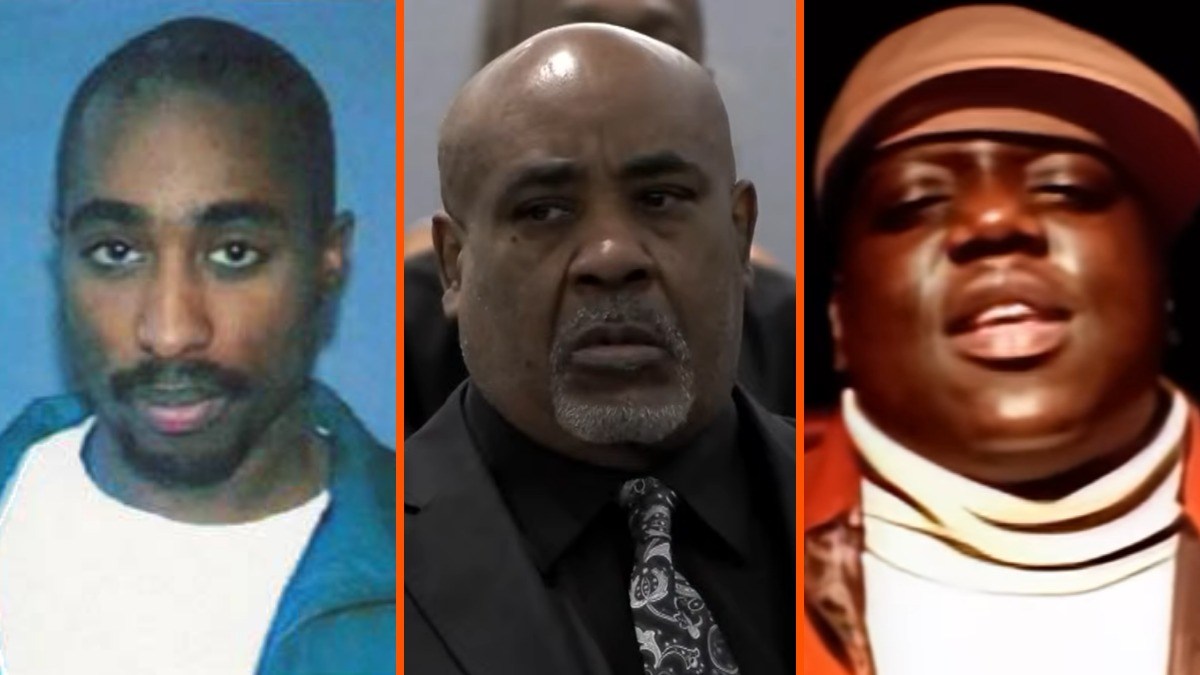

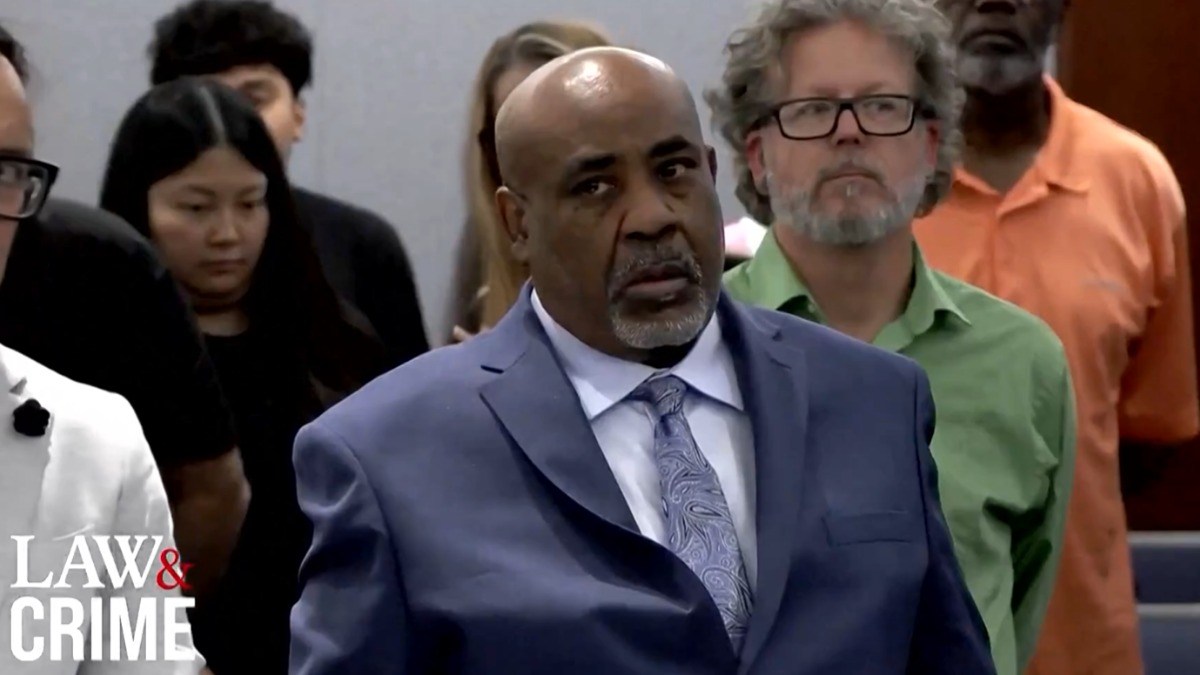
The high-profile murder trial of Duane Keffe D Davis is set to head into closing arguments this coming Monday. It will be a significant moment in a case that is 30 years old. However, while the proceedings in Las Vegas are centered on the allegation that Davis orchestrated the 1996 killing of Tupac Shakur, the shadow of another legendary figure in hip-hop has loomed large over the entire hearing.
The name Christopher Wallace, better known to the world as Biggie Smalls or The Notorious B.I.G., has been a constant presence throughout the testimony. Per CNN, the connection between these two deaths has been a source of intense speculation and frustration since the late 1990s. Prosecutors mentioned his name within the first hour of opening statements. Additionally, two witnesses called to testify were originally assigned to investigate his death, not Shakur’s.
These two killings are often the face of a bicoastal hip-hop war, a feud that escalated from lyrical barbs to lethal violence. Six months after the murder of Shakur, Wallace appeared to be exhausted. In a March 1997 interview with San Francisco radio station KYLD, he said, “I’m just getting over – you know what I’m saying – this whole situation with this East Coast-West Coast thing, you know? That’s just game over, you know what I’m saying? I’m trying to, like, basically squash it.”
When one investigation opens the door to another
Tragically, Wallace’s hope was short-lived. CNN noted that just four days later, Wallace was killed in a drive-by shooting. It is ironic that the same feud that made them incredibly wealthy also potentially killed them. According to the Los Angeles Times, the two killings have long been linked in popular culture, but the current trial in Las Vegas has provided a rare, granular look at how the investigations into these two men collided.
Per the outlet, the LAPD had struggled for years to make headway in the Wallace case. It wasn’t until 2006 that the department, under then-chief William Bratton, established a dedicated task force to find his killer. This push was largely driven by a 2002 federal lawsuit filed by the Wallace family, which alleged that police officers were responsible for the murder and had failed to investigate leads to protect their own.
The city reportedly denied these claims, and the lawsuit was eventually dismissed. However, it did force the city to pay $1.1 million in legal fees and, more importantly, set into motion the very interviews that eventually led to a breakthrough in the Shakur investigation.
In the first week of the trial, former LAPD detective Daryn Dupree testified about how investigators finally got Davis to talk. According to CNN, they had been looking into Wallace’s murder and had identified Davis as a potential person of interest, largely because he was known to drive a Chevrolet Impala, which matched eyewitness reports of the vehicle used in the Wallace shooting.
“Everybody was a suspect at that time,” Dupree explained. “We knew that Mr. Davis was the man with all the money in their ‘hood.” CNN reported that investigators found the leverage for information when they caught Davis with a significant amount of drugs. In that 2008 sit-down with the task force, Davis denied any involvement in Wallace’s death.
“He said, ‘No, we didn’t have anything to do with that one,’” Dupree testified. When pressed for clarification, Davis reportedly responded, “We did the other one.” It was a shocking moment for the investigators, who were entirely unprepared for a confession regarding the murder of Tupac Shakur. “We didn’t ask him any questions about Tupac. He offered that on his own,” Dupree said.
In subsequent interviews, Davis laid out a timeline of the Shakur shooting. According to the LA Times, he claimed it was retaliation for a beating his nephew, Orlando Baby Lane Anderson, received at the hands of Shakur’s crew at the MGM Grand earlier that night.
Davis reportedly told detectives that he obtained a gun and intended to strike back at a nightclub owned by Suge Knight, but when they spotted Shakur and Knight in a car. They then pulled up alongside and opened fire. Davis claimed he handed the gun to Deandre Smith, who lost his nerve, before Anderson took the weapon and fired the fatal shots.
While this testimony has been central to the current trial, it has done little to provide closure for the family of Christopher Wallace. CNN noted that the LAPD’s investigation into the Notorious B.I.G. remains unsolved, and the department has not provided updates on any active investigation. The closing arguments will only provide some closure regarding the death of Tupac Shakur.
In that same KYLD interview, Wallace’s words now sound like a heartbreaking epitaph for a peace he never lived to see: “It’s all over with.”

Published: Aug 30, 2026 12:30 pm