


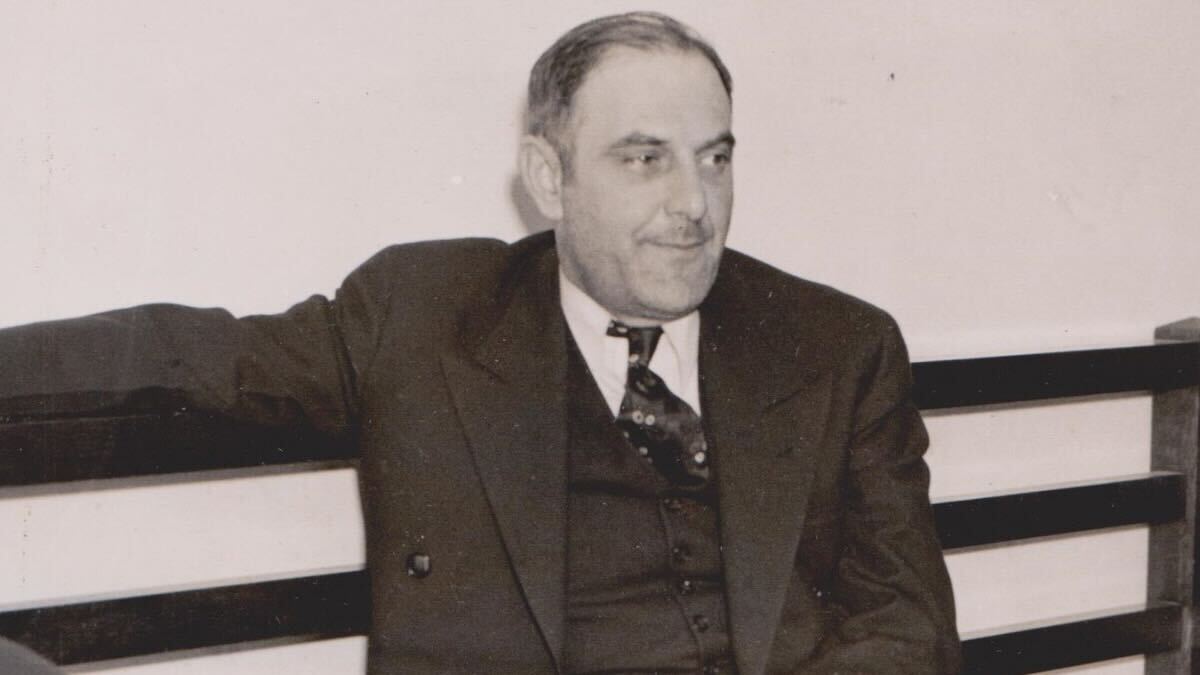

In 1925, a charming con artist named Victor Lustig convinced Paris that its most iconic landmark was for sale. He got the money, escaped, and came back to do it again months later,
In the spring of 1925, Paris buzzed with gossip about the city’s most famous landmark, the Eiffel Tower. The iron giant was rusting, costly to maintain, and many thought it had outlived its purpose. Into that chatter, Victor Lustig saw a chance to make thousands. He was a smooth-talking, Czech-born con man with a gift for scamming.
Reading about the tower’s mounting repair costs in the newspaper, Lustig had an idea so absurd it could only work in France. He decided to sell the Eiffel Tower for scrap and crafted a perfect plan. He first forged official stationery from the French Ministry of Posts and Telegraphs and mailed invitations to five of Paris’s top scrap metal dealers.
The ‘confidential’ meeting
To complete the illusion of official work, Victor Lustig rented a suite at one of the city’s most prestigious hotels, the Hôtel de Crillon. He arrived in a limousine flanked by a fake assistant and introduced himself as the Deputy Director-General of the Ministry of Posts and Telegraphs.
When his guests arrived, he convinced them that the meeting had to be “strictly confidential” to avoid public outrage over plans to demolish the 1,000-foot monument. He confided to his targets that the Tower’s removal was imminent, and discretion was essential. And the dealers were convinced. After all, who wouldn’t want the honor (and profit) of owning France’s most prestigious construction?
The man who bought the Eiffel Tower from Victor Lustig
As the dealers sent their bids to Victor Lustig for the Eiffel Tower’s scrap rights, he set his eyes on his ideal target. A man named André Poisson was a newcomer to Paris’s business elite, desperate for legitimacy. Lustig played him perfectly and dropped hints that a small personal consideration might help finalize the deal. Seeing this as a chance to rise in his circle, Poisson paid 70,000 francs to Lustig.
But days later, the conman vanished to Austria, leaving Poisson humiliated. But like he anticipated, Poisson was too embarrassed to inform the French police of the ordeal. This boosted Lustig’s confidence in his scam, and he returned to France once again to carry out the same scheme. The second round, however, ended abruptly when one of his new prospects grew suspicious and called the police.
Victor Lustig’s capture, trial, and death
Lustig fled to the U.S. before they could catch him and began another series of scams. There, he swindled mob boss Al Capone, sold “money-printing boxes,” and eventually became one of the most notorious counterfeiters in the country. The Secret Service only caught the Lustig after his mistress, Billy May, tipped them off in vengeance.
When the feds finally caught him in 1935, his forged $100 bills were circulating in every major U.S. city. Victor Lustig was finally arrested on May 10, 1935, and was charged with counterfeiting. But a day before his trial, he escaped the detention facility, only to be recaptured 27 days later. The man then gave up and pleaded guilty.
He was sentenced to fifteen years in prison on Alcatraz Island, California, for his original charge, and further five years for his prison escape. Lustig died on March 9, 1947, due to pneumonia, but his famous scams live on. He saw Paris for the first time at the age of seven, but instead of wanting to steal the beautiful tower, he sold it.





Published: Nov 6, 2025 12:05 pm