


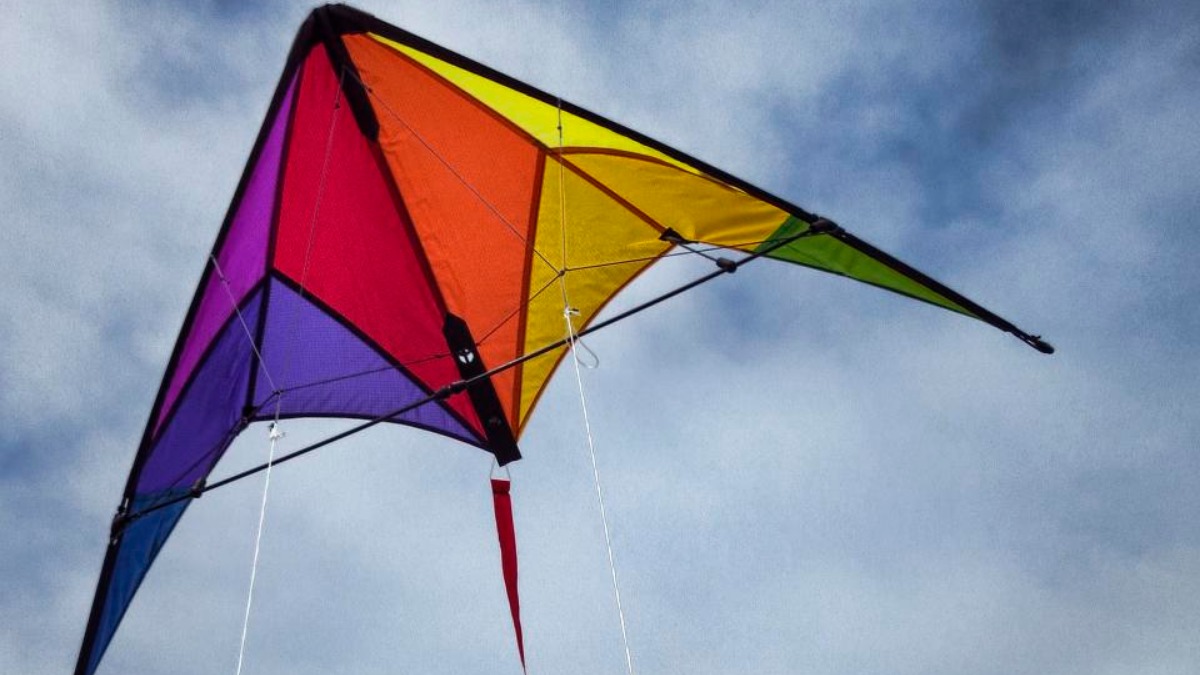

A tragic incident in northern Brazil has claimed the life of a construction worker while he was riding his motorcycle. The 39-year-old man, Cleuson Andrade Viana, died after a kite string coated in a dangerous adhesive substance wrapped around his neck while he was traveling through the Paraíso neighborhood of Santana.
According to PEOPLE, the Municipality of Santana confirmed the death in a post on Facebook post on Wednesday, July 1. Local reports indicate that the incident occurred at around 6:20 p.m. local time on June 30. The kite string was reportedly coated with a substance known as cerol, which is a mixture of glue and abrasives used in competitive kite fighting. Images from the scene showed Viana sitting on a curb, attempting to stop the bleeding from his neck after the accident.
His wife, Lenice Moreira, described her husband to local outlet G1 as an exceptional guy and a loving father. She shared that her husband “left for work happy,” but he never made it back home to his family.
The problems with kites aren’t new
Moreira expressed her frustration regarding kite fighting, stating, “I have a 16-year-old son and I don’t let him fly kites because I know it’s not healthy. Other parents need to have the same attitude. Today, my children lost their father, my mother-in-law lost her son, my siblings lost their brother.
She added, “We are experiencing a grief that hurts, wounds, and hurts everyone’s hearts.” Viana’s mother had demanded justice for her son, whom she described as a hardworking family man.
According to the Associated Press, Kite Fighting is a persistent and deadly issue across Brazil. It involves using sharp lines to slash the lines of other kites, and has a long history in the country, particularly in low-income neighborhoods known as favelas. While many people view kite flying as a harmless, light-hearted activity, the use of these razor-sharp, glue-coated lines creates a massive safety risk.
When these lines drift across busy roads and highways, they can be nearly invisible to motorists. The outlets note that motorcyclists are frequently struck by the lines, leading to severe lacerations or even death.
In 2024, AP News reported that a bill was moving through Brazil’s Congress seeking to prohibit the manufacture, sale, and use of these razor-sharp lines nationwide. Had this bill been passed, violators would have faced one to three years in prison and significant fines. However, the bill did not get the votes needed.
The outlet noted that some areas, including Rio, already have local bans in place, but they struggle with enforcement. So, some motorcyclists have taken matters into their own hands by installing thin, antenna-like posts on the front of their bikes to intercept and cut wayward lines before they can strike the rider.
PEOPLE reported that Lieutenant Ângelo Silva of the military police noted that it is prohibited to fly kites within 200 meters of electrical networks, but the law is often ignored. “We advise motorcyclists to wear shirts with higher collars, always wear a helmet, even for those riding mopeds or electric bicycles,” Silva stated. “It’s important to use protective antennas; some motorcycles have double antennas, others only one. The key is to always focus on prevention.”
The debate over these lines continues to divide communities. While many advocate for a total ban to protect lives, others reportedly argue that competitive kite fighting is a sport that can be practiced safely in designated areas, or kitedromes, far from public roads. Paulo Telhada, the sponsor of the federal bill, remains firm in his stance, telling the Associated Press, “Between life and sports, I’m in favor of life.”
Brazil has its share of rarer troubles outside of deadly kite lines. Earlier this year, a family who thought they were adopting a 12-year-old, discovered that she was an indicted 37-year-old. Last year, a Brazilian farmer went viral after his cat delivered a cyclops kitten.









Published: Jul 3, 2026 12:06 pm