


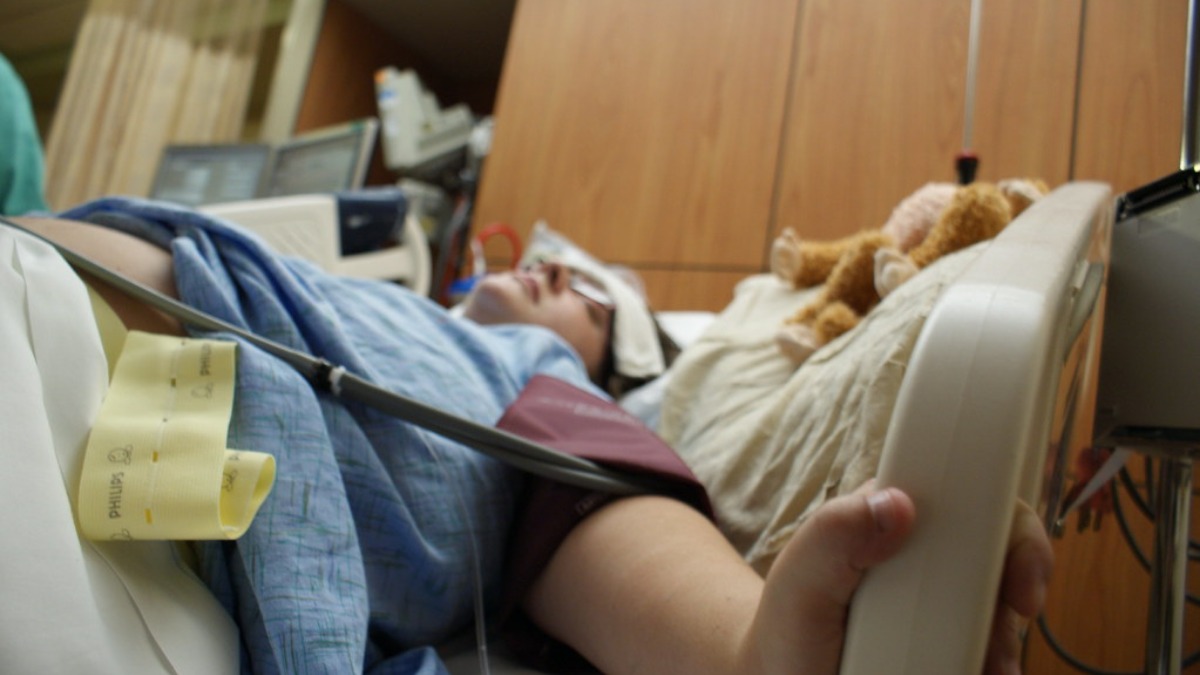

A Florida woman at the University of Florida Health Hospital found herself in a virtual court hearing, literally in active labor, after she refused to consent to a C-section. Cherise Doyley, a pregnant mother of three and a professional birthing doula, had arrived at the hospital in labor with a clear birth plan: she wanted to try for a natural delivery.
Doctors, however, were concerned about the risk of uterine rupture, which could lead to severe abdominal pain, vaginal bleeding, and fetal distress. It only happens in about 1 in 300 deliveries, but it’s more likely when someone attempts a vaginal delivery after a previous C-section.
Per People Magazine, Doyley, who had undergone C-sections before, understood the risk to be less than two percent. She told the doctors she wanted to try for a vaginal delivery first. Hours later, while Doyley was still in the throes of labor, nurses entered her hospital room. They placed a tablet in front of her bed and informed her that she was being taken to court over her decision.
It was a decision she had thought about
Doyley had argued that recovery from her previous C-sections had serious complications, including a hemorrhage that sent her back to the hospital. Beyond the physical toll, she worried about her ability to care for a newborn, alongside her other three children, while simultaneously recovering from major surgery.
In a recording of the court hearing, Doyley called it “the craziest thing I’ve ever seen,” especially since Doyley had no legal representation. Judge Michael Kalil informed Doyley that the state had filed an emergency petition to grant an emergency C-section. Doctors voiced their concerns about the baby’s welfare and the risks associated with a vaginal birth. Doyley, in turn, testified that she felt there was little concern for her own well-being.
“I still have rights as an American citizen and as a patient that I am allowed to decide what goes on with me and my body and my baby,” she stated in a powerful testimony. “If it’s between them choosing whether I have to live or the baby has to live, I did tell them that I want to live. I have other children out here in the world that need me. And that is my right because at the end of the day, if I die from a C-section, nobody on this call is going to take care of my children.”
Doyley emphasized her love for her unborn child but firmly believed her situation was not an emergency that necessitated immediate surgery. She just wanted the chance to try for a vaginal delivery. After three hours, the judge ruled that the hospital could perform the surgery without her consent if an emergency arose. When doctors observed a drop in the baby’s heart rate, Doyley was rushed into surgery to deliver her baby girl, Arewa.
Today, Doyley continues to feel violated by the hospital’s actions: “When we use the courts to basically strong-arm, bully someone into an unnecessary medical procedure against their will, it’s akin to torture, in my eyes,” she told a news outlet.
Per Cornell Law School, mentally competent patients in the United States have a right to refuse medical procedures that a doctor recommends, a principle upheld by the American Medical Association. However, in some states, hospitals can seek a court order if a pregnant patient refuses a recommended intervention, arguing that the fetus has separate rights.
Doyley’s experience serves as a deeply concerning example of this ongoing struggle for bodily autonomy in a healthcare setting. Bioethics experts suggest that these situations reflect a “deep understanding of women as the incubators,” and bring to light the potential for policies to diminish a woman’s agency over her own body.
Cases like Doyley’s have become more prevalent following the overturn of Roe v. Wade. Nearly 30 states have since passed laws allowing hospitals to invalidate a pregnant patient’s advance directives, effectively stripping away some of their control over their medical care during pregnancy. It has allowed teams like ICE to move raped children to detention centers where the babies will be protected. Or the insane case where a dead woman was kept alive for her fetus.









Published: Apr 6, 2026 06:30 am