


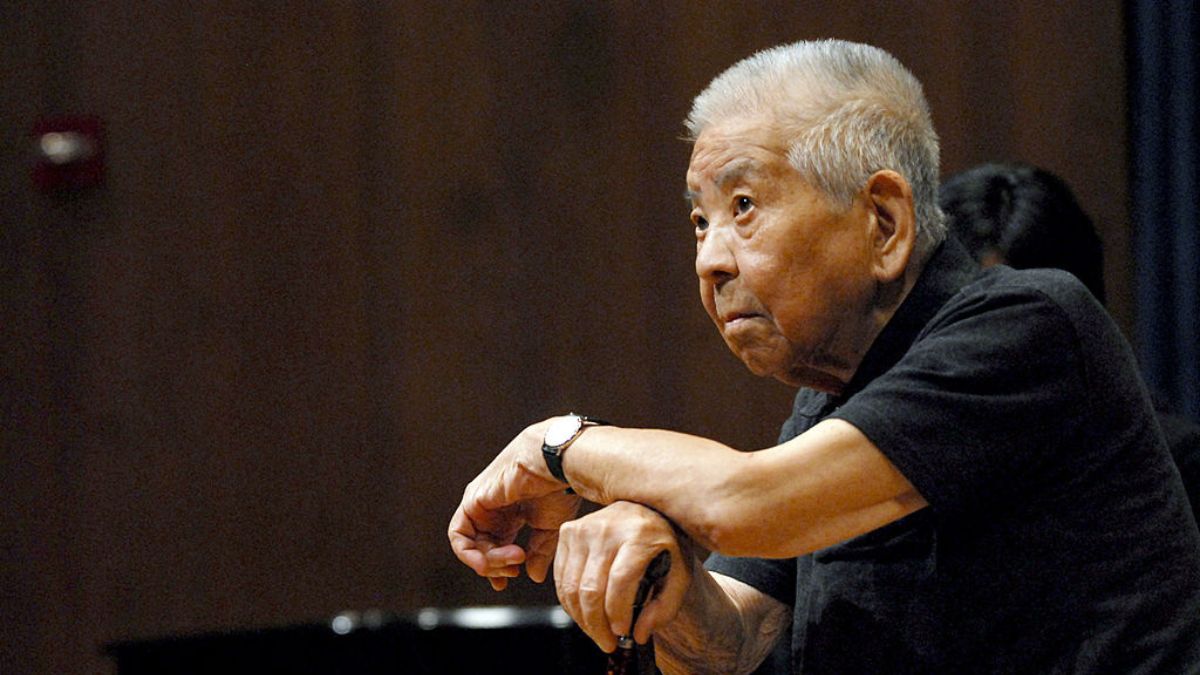

Tsutomu Yamaguchi has a story that no one would ever want. He is the only person officially recognized by the Japanese government as surviving both atomic bombings in World War II. The 29-year-old engineer was in Hiroshima on a work trip for Mitsubishi Heavy Industries when the first atomic bomb hit on August 6, 1945. It was his last day in the city before going home to his wife and baby son in Nagasaki.
That morning, Yamaguchi was walking to the docks when he saw an American B-29 bomber flying above. He watched the plane drop a small object hanging from two parachutes. All of a sudden, the sky lit up with what he said looked like the lightning of a huge magnesium flare. Using his naval air raid training, Yamaguchi threw himself to the ground, rolled into a nearby ditch, covered his eyes with his fingers, and stuck his thumbs in his ears. The blast threw him into the air and left him with burst eardrums, temporary blindness, and serious burns on his arms and face. He was less than two miles from where the bomb went off.
Even though he was hurt, Yamaguchi made the hard trip back to Nagasaki the next day. Still injured and wrapped in bandages, he showed up to work on August 9. While telling his boss about the Hiroshima bombing, the area outside suddenly lit up in bright light. “Suddenly, the same white light filled the room,” he later said, according to Biography. “I thought the mushroom cloud had followed me from Hiroshima.”
The second atomic bomb had been dropped on his hometown. The city’s hills and a strong stairwell kept the meeting room safe, where Yamaguchi and his coworkers were sitting. After just hearing his story, his coworkers took cover the same way he did in Hiroshima, which helped save their lives.
Life after surviving two atomic explosions
The bombings killed about 140,000 people in Hiroshima and 70,000 in Nagasaki. Yamaguchi ran home after the second blast and was happy to find his wife and son alive, though his wife had been hit by radioactive black rain. In the weeks after, he got high fevers, lost most of his hair, threw up all the time, and had other signs of radiation sickness. He lost hearing in his left ear for good and dealt with radiation problems his whole life, including eye cataracts and a serious blood cancer.
For many years, Yamaguchi did not talk publicly about what he saw. He worked as a translator for American forces after the war and later became a teacher before going back to his engineering job at Mitsubishi. He and his wife had two more daughters in the 1950s. But all three of their children had serious health problems their whole lives. His wife died in 2008 from kidney and liver cancer, and his son died of cancer in 2005.
In his last years, Yamaguchi spoke out strongly against nuclear weapons. He gave a speech at the United Nations in 2006 and appeared in documentaries about atomic bomb survivors. “The reason that I hate the atomic bomb is because of what it does to the dignity of human beings,” he told Military History Magazine. In January 2009, the Japanese government officially called him a double survivor. “My double radiation exposure is now an official government record,” Yamaguchi said. “It can tell the younger generation the horrifying history of the atomic bombings even after I die.”
Yamaguchi died of stomach cancer on January 4, 2010, at the age of 93. In his final years, he believed his survival happened for a reason. “Having experienced atomic bombings twice and survived, it is my destiny to talk about it,” he said.







Published: Oct 8, 2025 11:20 am