


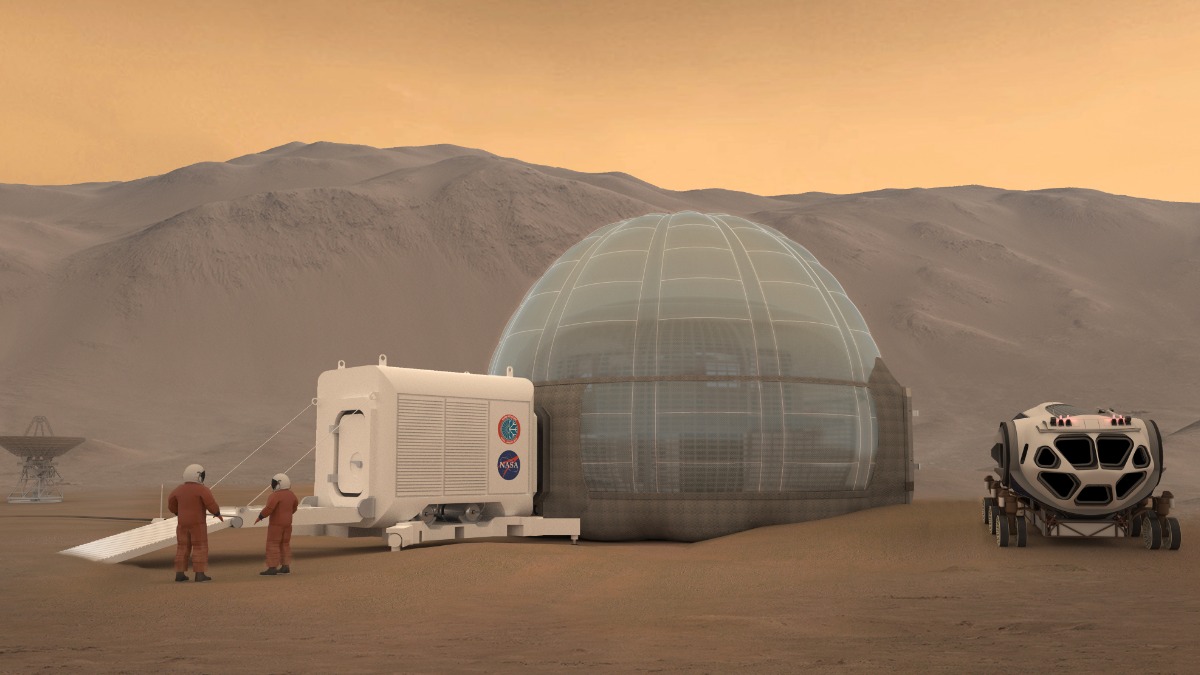

NASA is deep into its Artemis mission, which serves to take astronauts on increasingly difficult missions till they reach Mars. With private companies like SpaceX also planning habitats on Mars, there is a lot of international interest in deep space exploration. One NASA partner, Adelaide University, Australia, has been conducting important research into reproduction off-world.
After all, how are we to conquer space and propagate civilization without population growth, aka babies? It’s so important that, evidently, Elon Musk offered his sperm to help colonize Mars, which is just gross; no one wants more Musks. However, according to The Guardian, our intrepid researchers have confirmed one predictable but funny fact which will throw a massive wrench into any human plans to settle on Mars or the Moon.
Researchers at Adelaide University discovered that when sperm are placed in microgravity, they just tumble around, much like an astronaut who’s lost their tether. A definite concern for the usual tenacity of these swimmers. Dr. Nicole McPherson, one of the researchers, explained that microgravity “causes them to flip around, to go upside down… they don’t really know which way is up or down,” nor “which direction they’re going in.”
In case you didn’t get it, sperm gets lost in space
Ah… wondering how they even tested this? Researchers from the university’s Robinson Research Institute took sperm samples from humans, mice, and pigs. They put these samples into the 3D clinostat machine, which mimics zero gravity, and then into a simulated maze designed to resemble the female reproductive tract.
The results were pretty stark: sperm exposed to microgravity really struggled to navigate the maze. They found about a 40% reduction in the number of human sperm that made it through the maze compared to the control group, which is a significant drop-off.
Microgravity didn’t just mess with sperm navigation; it also affected how pig and mouse embryos developed. McPherson, who was the senior author on the study, noted that this research is the first to show just how important gravity is for sperm’s ability to navigate. However, despite the negative effects, healthy embryos were still able to form.
Interestingly, this research is also important in understanding how microgravity impacts fertilization and food growth. Something we need to know not just for food sources in space, but also to support human space settlements. Did you ever think that sperm can help plant growth?
Space has always been an area that has encouraged studies into fringe science, like telepathy. However, studies into reproduction aren’t surprising because, as a species, we are obsessed with babies and, well, having more of them now that birth rates are dropping. Trump’s stand on it is so stringent that once he won, experts and stars like Sally Field came out to support abortion.
Ultimately, scientists are calling for more research into reproductive health in space, urging international collaboration to fill the knowledge gaps and establish ethical guidelines for our future among the stars. Until they figure that out, you now have some new information for trivia night.








Published: Mar 27, 2026 02:26 pm