


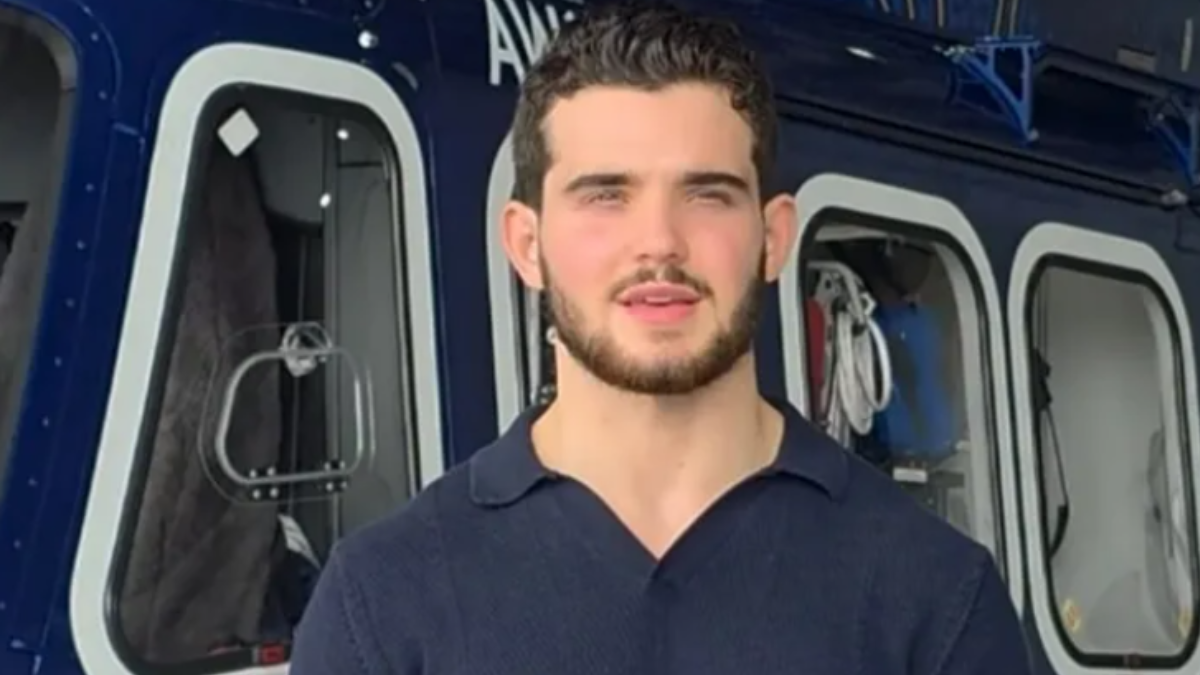

Jake McCollum, 18, is an active young Australian real estate agent whose life was almost cut short when he fell more than 200 feet down a mountain in Australia. Luckily for him, a combination of his high-tech backpack, Bluetooth headphones, and his loving mother made sure he was saved.
The fall was not easy on McCollum’s body — he fractured his spine, suffered broken ribs, internal bleeding, and a serious head injury from the fall. He told ABC, “The wind was knocked out of me and I remember thinking it was probably all over for me. I didn’t really think it was survivable.” With survival, it’s not just about how fast the response is — in hilly areas, rescue teams sometimes find the terrain too complex to locate a missing person.
McCollum was taking on Mt. Walsh in Queensland, hiking solo near the peak on Nov. 30. When he lost his footing, he fell 262 feet to the ground with very little canopy to break his fall. The bad thing was that the same canopy went on to hide his body, and he was dressed in black, face down — too injured to look up or ask for help. The good thing was that, with all the recent hiking mishaps, McCollum had the forethought to carry emergency materials.
His backpack had a personal locator beacon (PLB). It’s a useful device that’s small enough to fit in a backpack and can send distress calls via satellite in case of emergencies. McCollum had just enough energy to crawl toward his bag and press the PLB, which signaled his parents in Canberra that he was in trouble.
McCollum’s parents tried to reach him at least twice without him picking up. They had no idea why he wasn’t answering, but it was because his phone was broken. Luckily, he had his Bluetooth headphones near him and was able to connect and speak to his mother, Rachel.
Rachel told the press, “I heard really, really faintly: ‘Mom, I’m hurt really bad.’ And I think my heart sank, my knees went — it’s probably the worst news you can ever hear.” But as she stayed on the phone with her son for five hours until the headphone battery died, she was also guiding the rescue team to his location.
Unfortunately, because of the canopy above him, his clothing, and his body position, the helicopter passed over him a couple of times. He would tell his mother, who would then direct the rescue team. Eventually, after careful coordination, the Queensland Police were finally able to locate him.
The rescue crew stayed with McCollum at the site for one hour, giving him first aid care and ensuring he was stable before they ultimately transported him. McCollum spent several days in the hospital before he was finally discharged. Rachel still believes that, were it not for the headphones and the PLB, it would have taken days to find him.
That should serve as a lesson to people the next time they go hiking: get a PLB, and probably some reflective wear too.


Published: Jan 20, 2026 07:47 am