


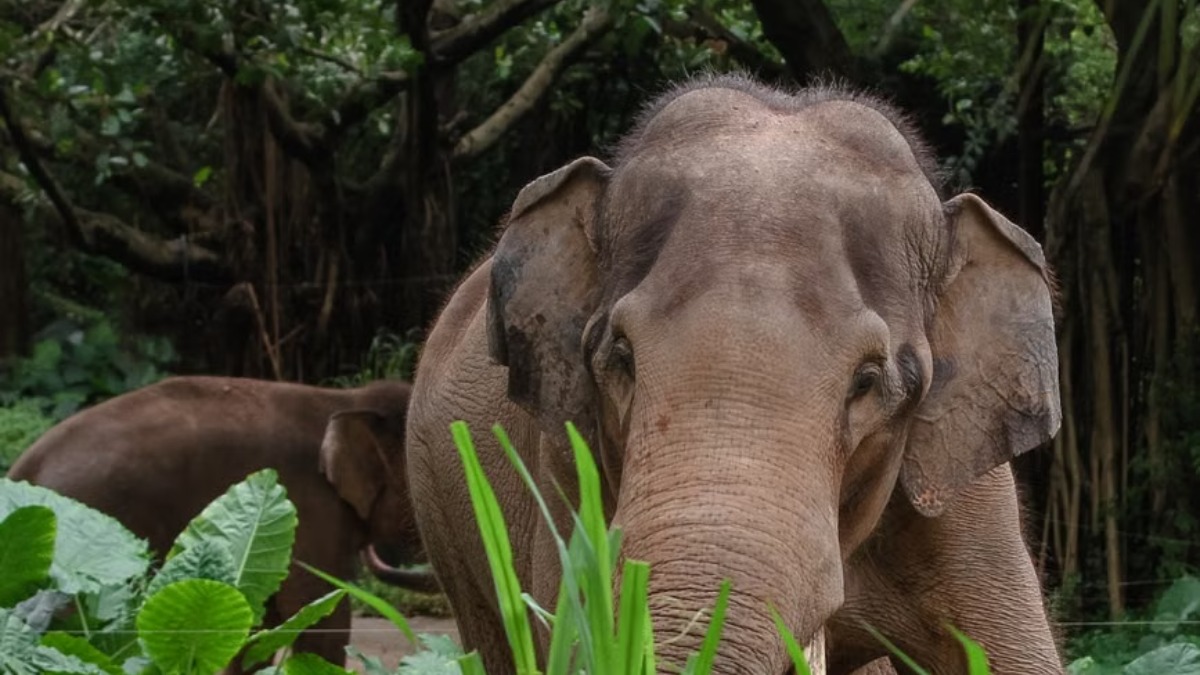

Shanichara Bote lost his father Budhiram and mother Jharali on December 16, 2012, when a wild male elephant named Dhurbe trampled them to death near the Baruwa bazaar in the Madi area of Chitwan, Nepal, according to The Kathmandu Post.
After the attack, Shanichara reportedly sold his home, crossed two major rivers, the Reu and the Rapti, and relocated his family to the Jagatpur region, believing the distance would protect them from the same threat.
It apparently did not. In the early hours of Sunday, July 6, 2026, Dhurbe reportedly broke through the walls of Shanichara’s new home in Jagatpur and killed his 25-year-old daughter-in-law Ashika Bote, and his four-year-old grandson Bharat Bote. Shanichara’s wife, Mangali, reportedly managed to drive the elephant away by setting fire to dry thatch from their porch, which accidentally burned down what remained of their home in the process.
“We believed that moving across the major rivers would keep us safe,” Shanichara told The Kathmandu Post. “But after all these years, the exact same elephant found us again, raided our home, and took my daughter-in-law and my little grandson. There is nowhere left for us to run.”
Dhurbe has reportedly killed at least 25 people since 2010, and satellite data placed him at the scene
Dhurbe is apparently one of the most documented problem elephants in the world and has his own Wikipedia page. Abinash Thapa Magar, information officer and conservation official at Chitwan National Park, told the same outlet that Dhurbe first began attacking human settlements and causing deaths in 2010.
Since then, he reportedly has been directly linked to the deaths of at least 25 people in the region, including two military personnel deployed for park security. VICE reported that a satellite tracking collar confirmed that his location coordinates were pinned directly around the Bote family home on the night of the attack.
Authorities actually tried to kill Dhurbe before. Following the deaths of Shanichara’s parents in 2012, a high-level emergency meeting chaired by the Chief District Officer reportedly issued a formal order to hunt and kill the elephant. A two-week military and conservation operation followed, during which park personnel and army soldiers reportedly shot Dhurbe twice, severely wounding him.
The operation is said to have cost the state over Rs1.6 million, but Dhurbe was never found and was believed dead, until he reappeared in western Chitwan in the winter of 2016. Conservation experts explain that Dhurbe’s behavior follows a known pattern.
Apparently, when young male elephants mature, dominant bulls drive them out of their herds, forcing them into solitary lives on the edges of human settlements. Cut off from the herd and foraging where food is available, these males are the animals most likely to come into fatal contact with people. Dhurbe is said to have followed this path since at least 2009.
Authorities reportedly fitted Dhurbe with a satellite tracking collar in late 2012. When that collar stopped transmitting signals, a second was said to be attached in May 2020, and a third in 2023. The current collar reportedly transmits his location every hour, and park rangers and Nepali Army soldiers are deployed to push him back into the forest whenever his coordinates move toward villages.
Local residents argue the system has not been working. Lal Bahadur Dawadi, chairman of the Ghailaghari Buffer Zone Consumer Committee, told the Kathmandu Post that Dhurbe had been moving around the forest fringes and pushing into human settlements for nine to ten days before the attack. “This animal follows a cyclical path and returns to the villages every single year, meaning his presence was entirely predictable to the park authorities,” Dawadi said.
Keshav Lamichhane, a 72-year-old Jagatpur resident who has lived in the area since 1985, said Dhurbe’s raids tend to peak during the autumn and winter harvest seasons when paddy and corn crops ripen. “When the paddy and corn crops ripen, Dhurbe arrives like clockwork,” Lamichhane said. Similar unpredictable animal attacks have occurred elsewhere, like a cougar attacking a goat in Nanaimo.
Following the latest attack, park authorities reportedly pledged to permanently contain Dhurbe within the Sukhibhar forest sector and to upgrade to real-time satellite tracking. Nine members of Shanichara’s family will likely remain in Jagatpur. Wildlife attacks on humans have made headlines globally in recent months, including an incident in Florida where an alligator ripped off a woman’s arm while her boyfriend tried to free her.








Published: Jul 13, 2026 10:50 am