


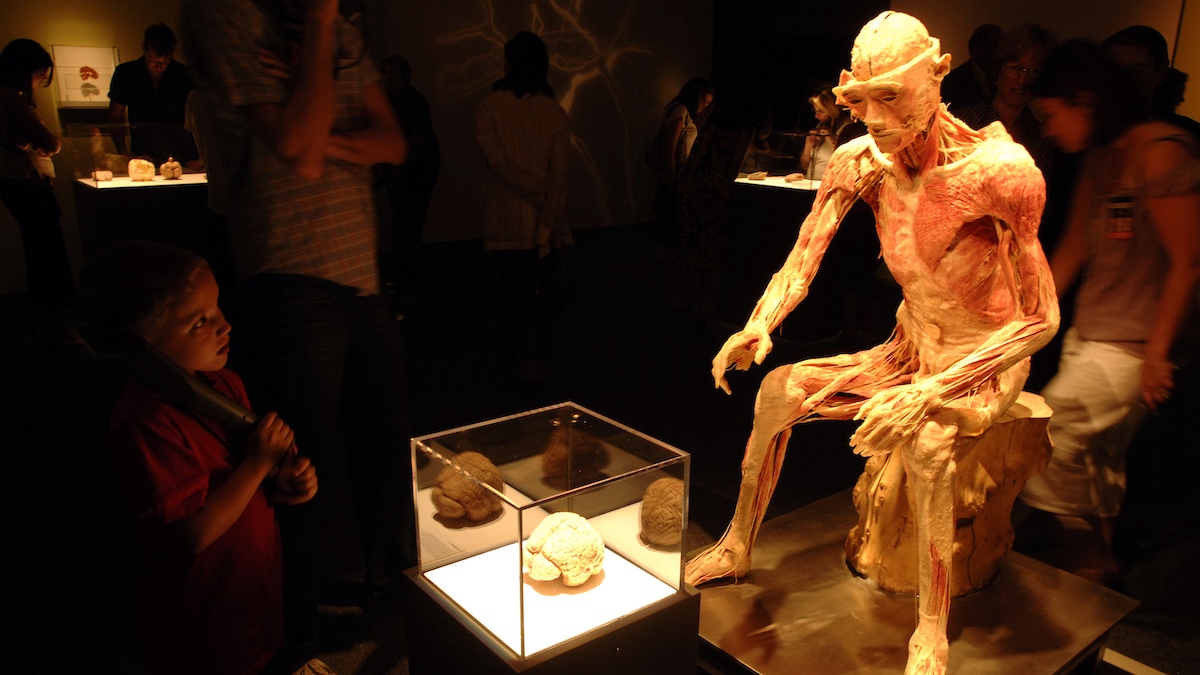

Curators for the Real Bodies human-physiology exhibition say they have conclusively determined that the anatomical figure a Texas mother identified as her son is not connected to him, pushing back against a claim that has circulated widely and reignited a previously closed death investigation.
The dispute centers on Kim Smith (formerly Erick), who believes she recognized the remains of her son, Chris Erick, in a seated, skinless figure known as “The Thinker,” part of the Real Bodies show. Smith says she first encountered an image of the specimen while searching online in 2018. According to her, the figure’s skull bore what she described as a fracture similar to one seen in postmortem photographs of Chris. She also pointed to the absence of tattoos she says her son had, arguing the removal of skin in the plastination process could account for that.
Real Bodies is a touring human-physiology exhibition that displays real donated bodies preserved through plastination, a process that replaces bodily fluids with polymers to create long-lasting anatomical specimens. The show presents full-body figures and dissected organs in lifelike poses to illustrate muscles, nerves, circulation, and other biological systems. It is marketed as an educational science installation intended to give visitors a detailed look at human anatomy that cannot be replicated with models or diagrams.
What happened to Chris Erick?
Smith’s son, Chris Erick, died in November 2012 in Texas at age 23. His death was initially considered medically related, but toxicology results later revealed cyanide poisoning. Investigators reclassified the case, and although Smith has long alleged her son was murdered, a grand jury declined to indict anyone, the manner of death was declared undetermined, and the case was closed.
Since then, Smith has repeatedly argued that photographs taken after his death showed bruising, lacerations, and markings she believes are consistent with a violent struggle. She has also said she was troubled by the handling of his funeral arrangements and questioned whether he was, in fact, cremated as she believed at the time.
Those lingering suspicions resurfaced when she saw the museum images and grew convinced the plastinated figure could be Chris. Smith publicly alleged that her son’s body may have been mishandled or diverted into the international plastination trade without her consent.
She has since pushed for a DNA test on “The Thinker” exhibit, and supporters launched petitions urging authorities and the museum to cooperate.
“Real Bodies” says it’s not Chris
But the curators behind Real Bodies say the claim is impossible based on documentation of the specimen’s origin and exhibition timeline. Imagine Exhibitions, which operates the traveling show, said the seated plastinate has been part of its collection since at least 2004, eight years before Chris. died. The company stated that all plastinated bodies used in the exhibition were acquired legally through established international suppliers and cannot be linked to any named individual.
Independent fact-checking organizations have also reviewed archival images of the exhibition and confirmed that versions of the same figure have been publicly displayed in multiple locations well before 2012. Curators say this record alone disproves the allegation, adding that museum staff have thoroughly re-examined acquisition documents in response to Smith’s claims.
But Smith has not accepted the museum’s findings. She has continued to call for DNA testing and has expressed new theories about what may have happened to her son’s remains, including concerns about unidentified cremated remains recently discovered in Nevada.
Critics have often alleged that bodies used in such exhibits sometimes come from sources with unverified consent, particularly in international markets, which is a major reason why Smith’s allegation was taken seriously by some media and public interest groups.
As of now, no law-enforcement agency has reopened the case, and neither Real Bodies nor its operators has indicated they will authorize genetic testing, citing the age of the specimen and lack of any evidence connecting it to Chris.






Published: Nov 24, 2025 05:22 pm