



The word “deadline” is everywhere in modern life. Whether it’s a work project, a bill payment, or a school assignment, deadlines mark the time limits we live by. But most people don’t know that this common term has dark roots in one of the worst prisoner of war camps in American history.
The word first showed up in different ways throughout the 1800s. The Oxford English Dictionary found early uses that talked about a weighted fishing line that stayed in place. By the early 1900s, printers used “dead-line” to describe a line on printing presses where text would stop printing. But neither of these uses shaped the meaning we know today.
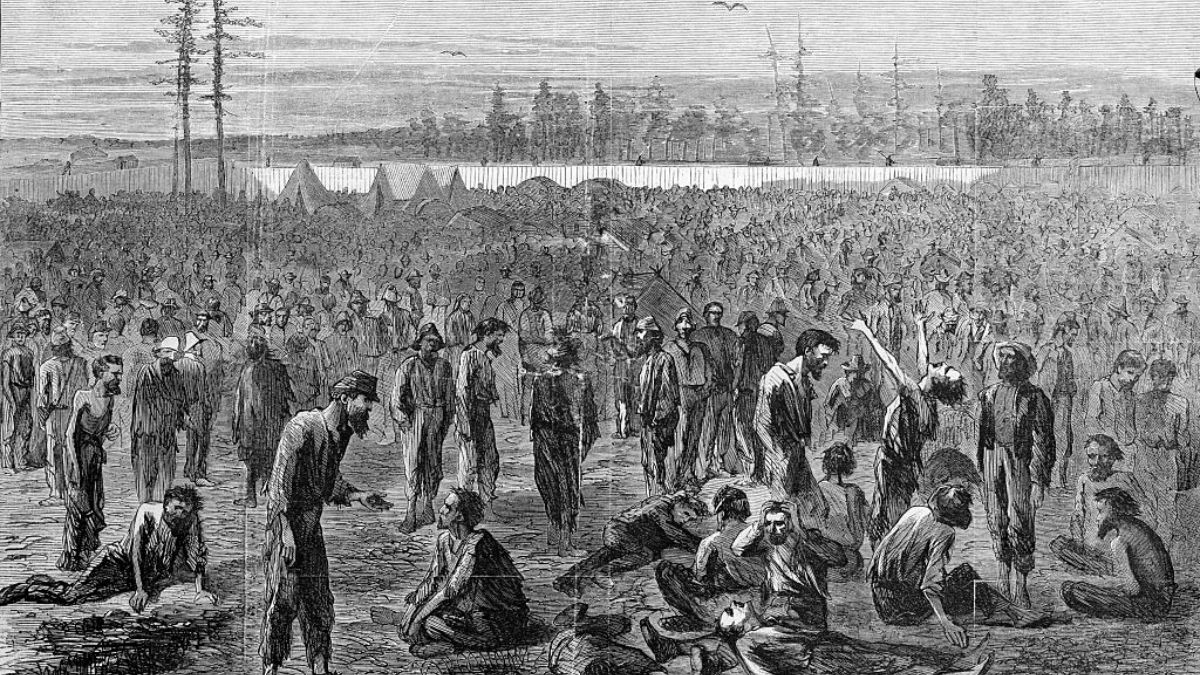
At Andersonville Prison in Georgia, Confederate authorities built a makeshift camp in 1864 to hold captured Union soldiers. The prison was run by Captain Henry Wirz, a Swiss immigrant who had joined the Confederate Army. According to Wikipedia, a light fence known as “the dead line” was placed about 19 feet inside the main wall. Anyone crossing or even touching this line was shot without warning by guards sitting in platforms called “pigeon roosts.”
The horrific conditions at Andersonville Prison
The prison quickly became packed far beyond what it could handle. Built to hold 10,000 prisoners, Andersonville held more than 33,000 Union soldiers at its worst point in August 1864. The National Park Service reports that out of about 45,000 Union prisoners held at the camp during its 14 months of running, nearly 13,000 died from disease, poor sanitation, starvation, overcrowding, or being exposed to the weather.
The camp had almost no basic supplies. A small stream running through the compound became filled with human waste, turning into a disease-filled swamp. Prisoners had no buildings to sleep in and instead built rough shelters from scraps. Food was hard to find for both prisoners and guards as the Confederacy struggled with supply problems late in the war.
Captain Wirz asked for more food and supplies from Confederate leaders many times, according to trial records. He also tried to set up prisoner swaps with the North to ease the crowding. But these efforts didn’t improve things much.
After the war ended in May 1865, Wirz was arrested and put on trial by a military court. He was charged with planning to hurt the health and kill Union soldiers, as well as murder that broke the rules of war. Even though some people questioned how much he was really to blame for the prison’s conditions, Wirz was found guilty and sentenced to death. He was hanged on November 10, 1865. He remains the only Confederate officer put to death for war crimes during the Civil War.
The term “deadline” mostly disappeared from public use after the war and the trials. According to the Online Etymology Dictionary, it suddenly came back in the 1920s in American journalism to describe the very last minute when writing could be sent to the printer. From there, the word spread to everyday use, becoming the time limit term we know today. While modern deadlines may bring stress, they are far less deadly than their Civil War predecessor.









Published: Oct 8, 2025 09:15 am