


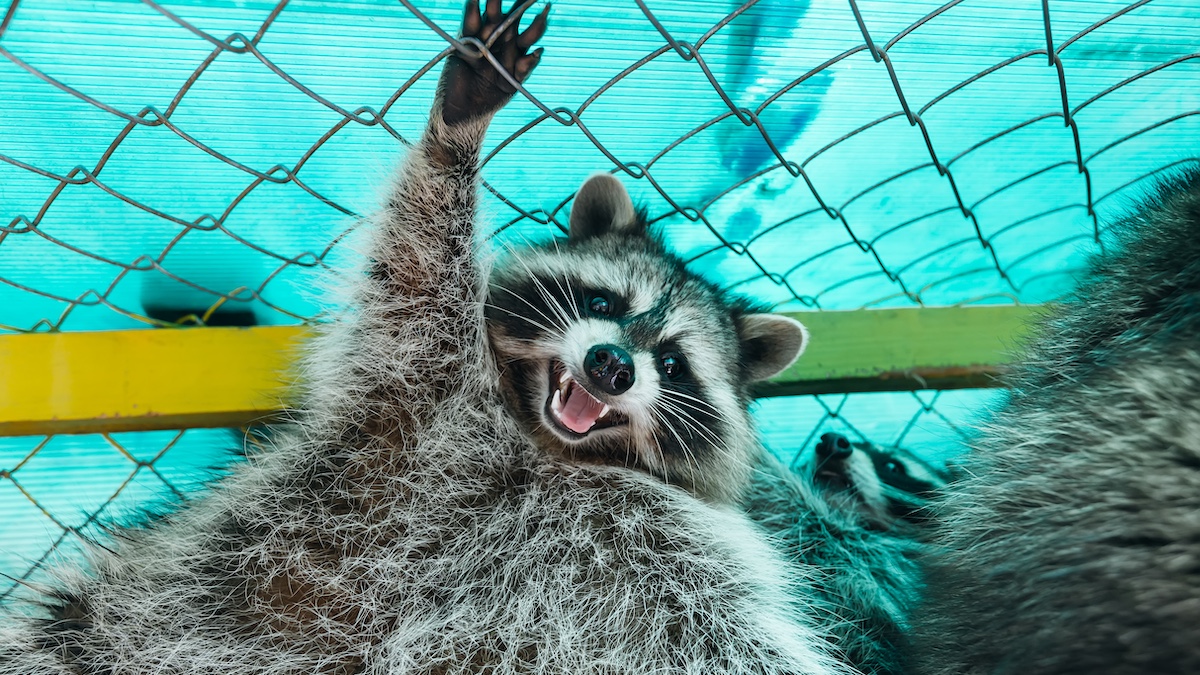

For decades, raccoons have lived in a strange space between beloved backyard friends and notorious trash bandits.
But new research suggests the creatures may actually be taking the first steps toward domesticating themselves, a process that could one day make living with a raccoon a lot less like hosting a furry criminal mastermind and more like sharing space with a dog or cat.
According to a new study published in Frontiers in Zoology in October 2025, researchers examined nearly 20,000 crowdsourced images of raccoons from across the continental United States.
When researchers compared raccoons living in rural areas with those in cities, they found one unmistakable trend: urban raccoons have noticeably shorter snouts than their rural counterparts.
What do ‘shorter snouts’ mean?
Raccoons with shorter snouts might sound like a small detail. However, it’s actually a hallmark of domestication syndrome, a predictable pattern of anatomical and behavioral traits that arise across species as they evolve to function in human-built environments.
Think of the differences between wolves and dogs, or wild boars and domestic pigs. Shorter faces, smaller teeth, smaller brains, and more docile temperaments appear across the animal kingdom when species begin relying on humans — or human-created habitats — for survival.
Shorter snouts may seem cosmetic, but they often correspond to deeper biological shifts, including reduced reactivity, lower aggression, and increased tolerance for novelty. In other words, raccoons may be slowly evolving into animals that behave more like future companions.
Unlike dogs, raccoons are doing it all on their own
But what makes the raccoon findings so remarkable is that, unlike other animals, humans are not intentionally breeding them. No one is selecting for cuteness or friendliness. Instead, the study suggests that urban raccoons face a simple evolutionary equation: individuals that can remain calm, tolerate noise, and forage around people without panicking gain the most food and survive the longest. Over generations, those advantages can subtly reshape the species.
Researchers analyzed images collected from iNaturalist, a citizen-science platform where users upload wildlife photos. After narrowing the dataset to a curated collection of raccoon pictures that clearly showed the animals’ profiles, the team measured snout length relative to skull size. The results were consistent: urban raccoons showed a 3.56% reduction in snout length compared with rural raccoons, even after accounting for climate differences across the country.
Stealing a page from London’s urban fox
Other species have shown similar trends. London’s urban foxes, for example, have shorter muzzles than their rural counterparts. A Swiss study found wild mice living near human structures developed white patches and shorter skulls, both classic traits of domestication. These comparisons help strengthen the raccoon hypothesis, showing the pattern isn’t a fluke but part of a broader ecological phenomenon.
So, does this mean pet raccoons are in our future? Legally, probably not anytime soon. Currently, keeping a pet raccoon is illegal in many U.S. states, strictly regulated with permits in others, and fully legal in a small handful of states that allow ownership under specific conditions.
Add to that, raccoons still have a long way to go before they’re temperamentally ready to curl up on the couch. But the study’s authors note that what we’re seeing could represent the earliest stages of a process that, in other species, ultimately led to the domesticated animals we know today.









Published: Nov 17, 2025 09:09 pm