


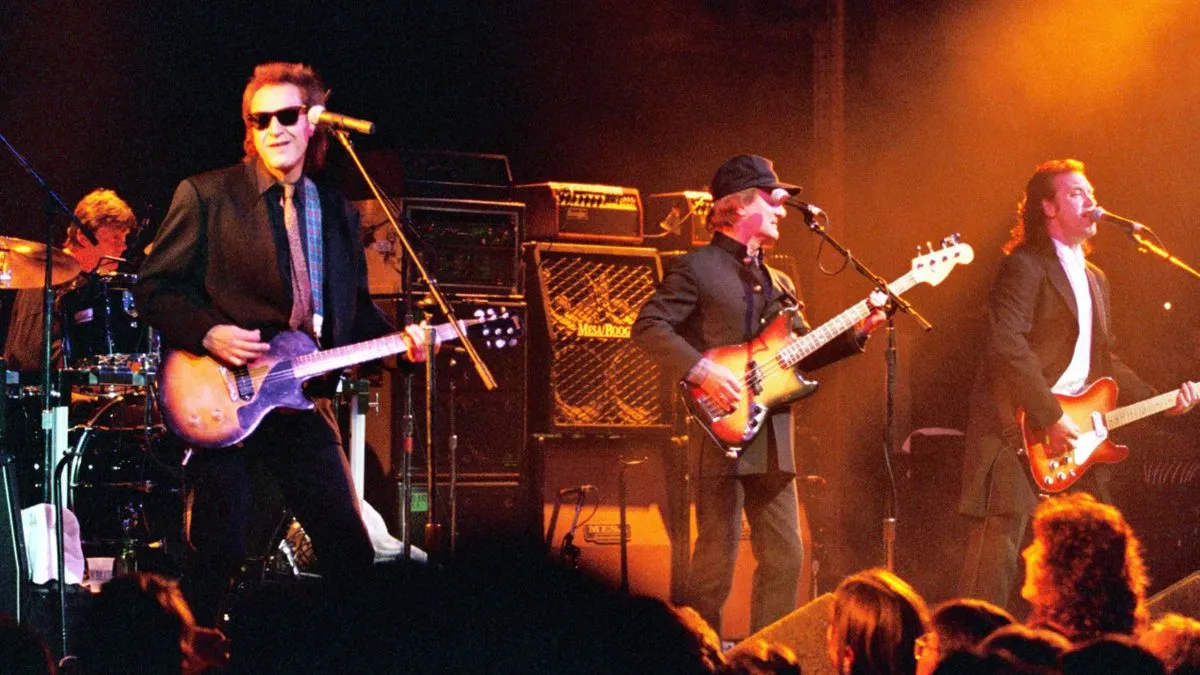

In 1970, English rock band The Kinks recorded and released the song “Lola” as part of their album Lola Versus Powerman and the Moneygoround, Part One, spinning a tale of a young man’s encounter with a transgender woman at a Soho club. And, in 1970, positive trans representation was even more of an endangered species than it is today, so we pretty much took what we could get, even if we had to take a hearty spoonful of patronization with it.
But it’s 2023 now, and we should no longer be afraid to call out well-meaning trans representation when it ends up working against the understanding of trans people, even if most of our energy should go towards stamping out the malignance that permeates the missions of true bad-faith players.
So I’m not here to call out The Kinks, nor am I here to call out “Lola”; I’m here instead to dissect the nuances behind the headlining question, and the more important musings that lie beneath it.
Is “Lola” by The Kinks offensive, or a trans anthem?
Well, by process of elimination, it’s certainly not a trans anthem; if it was, we’d probably get to hear the song from the perspective of the titular lady, rather than the man who spends the whole song becoming sexually fascinated with her. As for whether or not it’s offensive, I see very little value in defining that. What I can tell you for sure, however, is that it’s an unhelpful song.
The lyrics of “Lola” are, by and large, positive; they paint a picture completely void of contempt while only suggesting amiable feelings towards Lola. But, they also have absolutely zero grasp of the trans experience; lyrics like “I’m glad I’m a man and so is Lola” and “boys will be girls and girls will be boys,” while not intentionally harmful, show a complete lack of understanding who Lola, in this case, truly is, and this is only compounded by the fact that the lyricist’s interest in Lola doesn’t seem to go beyond his attraction to her.
Indeed, gung-ho, genial enthusiasm doesn’t amount to much if you’re not willing or capable of understanding who a trans woman is beyond an alternative object of desire; it’s the exact dynamic that births the widespread fetishization faced by so many trans people, to say nothing of how it plays into transmisogyny and the accompanying, perceived targeting of men’s assurance in who they can acceptably deem sexually accessible. And yes, that last sentence is exactly as gross as it sounds.
The real question we should be asking
So, rather than thinking about whether a song like “Lola” is offensive or not, we should instead be thinking about which voices should be the loudest when it comes to crafting a truthful, respectable lens for trans people. If we aren’t sure if “Lola” helps or hurts that endeavor, perhaps we should instead be paying attention to the voices that do trans people the proper justice without question.
It’s ultimately fine in the grand scheme of things if “Lola”‘s songwriter is a bit confused about who Lola is (so long as they make an effort to learn in light of this confusion, of course), but it also means that we probably shouldn’t be listening to them if we’re aiming to understand trans people and the trans experience.
Anyway, go watch Netflix’s 2019 miniseries Tales of the City, call people by their name and pronouns, especially trans youth, and, if you have no voice to turn to despite wanting to understand the trans experience, here’s mine: I’m Charlotte, I chose this name because it’s the feminine name my mother had picked out for me before I was born, I love movies, kombucha, and Spider-Man, and my life began roughly six years ago when I came out as trans, made mincemeat of the dissonance that had plagued my life for so long, and was finally able to comprehend the possibility that I could have a happy life. I really hope that doesn’t get taken away from me.




Published: Jun 5, 2023 10:48 am