


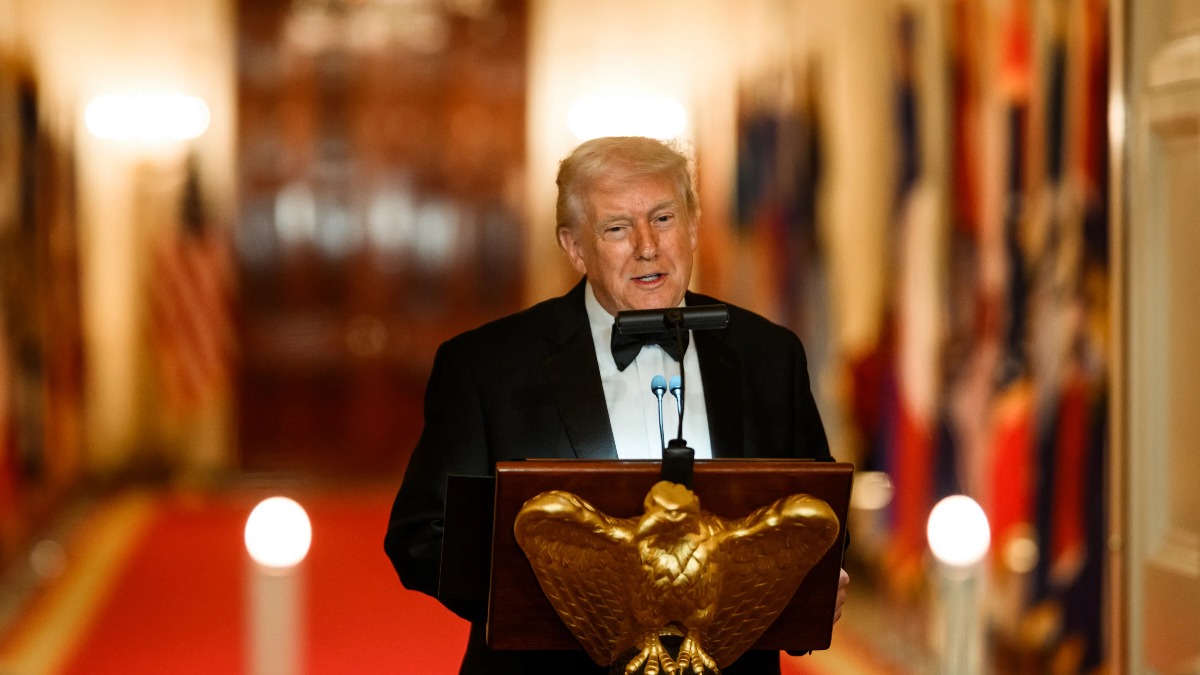

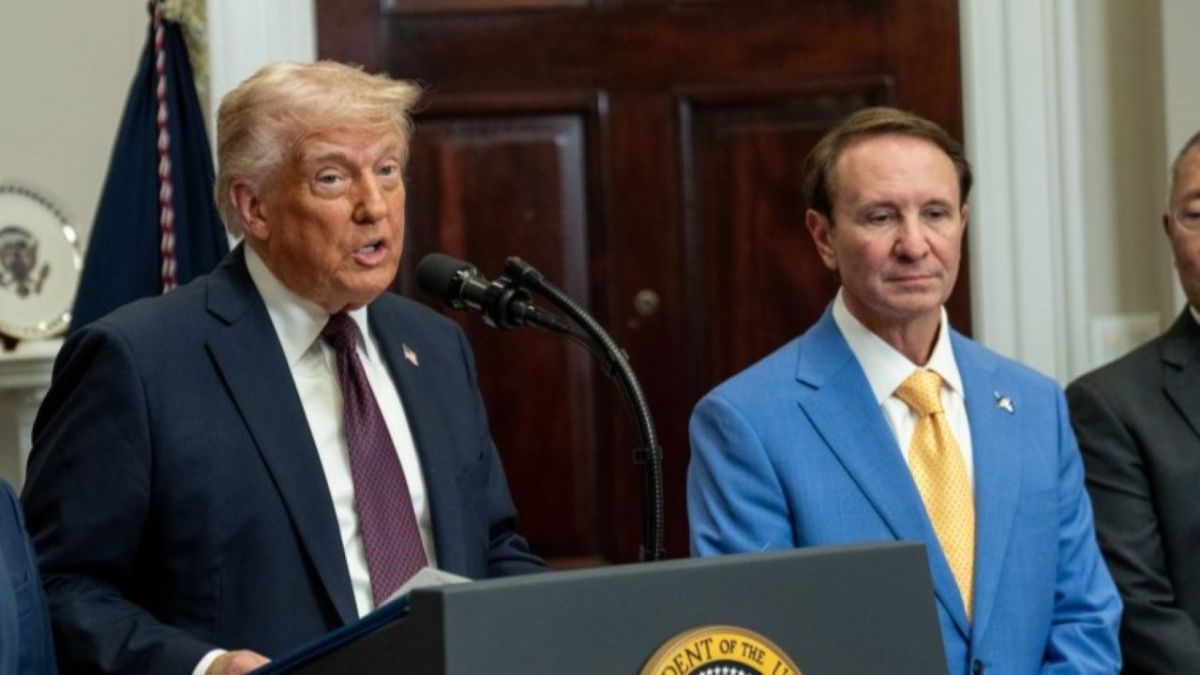
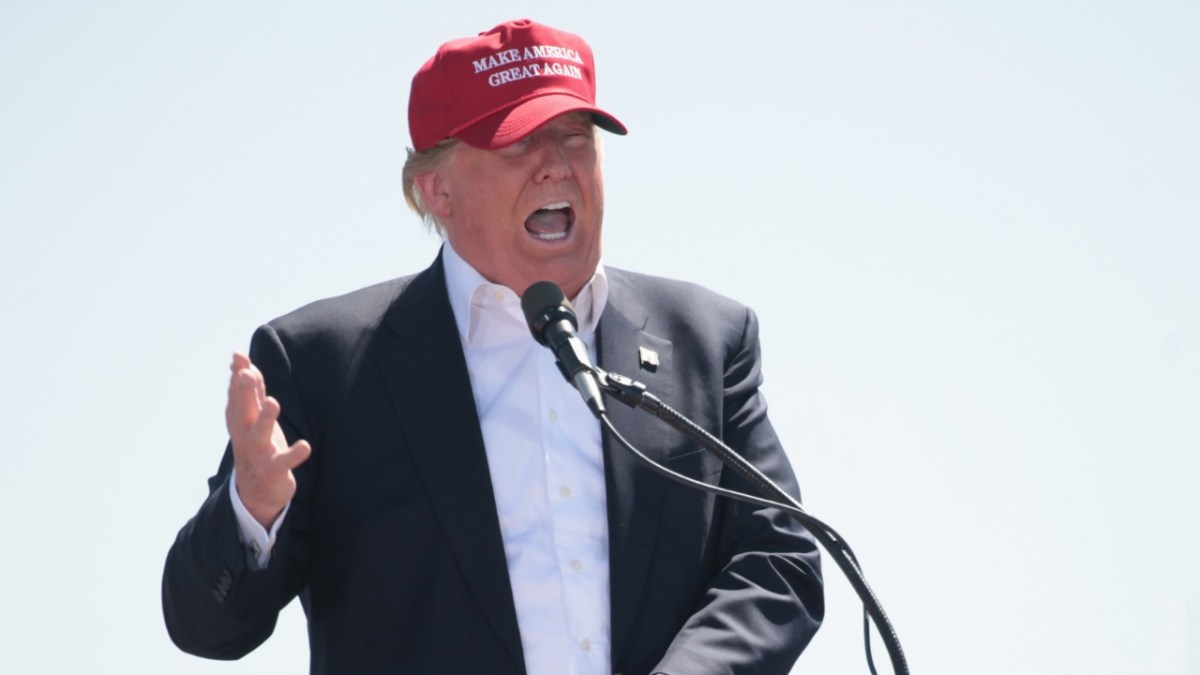
President Donald Trump traveled to Las Vegas to talk about tax cuts. He was there to celebrate what his administration calls the “Great Big Beautiful” tax cut bill. The event featured local workers like casino employees and police officers who spoke about how the tax changes helped them. Trump was joined by Treasury Secretary Scott Bessent, and the mood was upbeat.
The speech was meant to be a straightforward win for Trump. He talked about overtime tax cuts, tips, and Social Security income for seniors. But one moment from the speech quickly took over the internet, and not for the reasons his team would have wanted.
That moment came when Trump said, “A year ago, our country was an embarrassment. All over the world, they laughed at us. And they don’t laugh anymore.” He was clearly trying to criticize the Biden years. But people online were quick to point out a problem: a year ago was April 2025, and Trump had already been president since January of that year. In other words, he was describing his own presidency as an embarrassment.
The Trump administration’s attempt at global bullying often backfired
The reactions came fast. Alt-right commentator Stew Peters wrote “TRUMP: “A year ago our country was an embarrassment. All over the world, they laughed at us.” Trump was the president a year ago…” Democratic House Whip Katherine Clark also clouldn’t resist taking a swipe at the President: “Yeah. You were an embarrassment then, and you still are.” Former U.S. Ambassador Steven Pifer responded simply: “Sadly, they seem to be laughing harder now.”
Trump was trying to point to the Biden era. Just before the now-viral line, he said he wanted to reward Americans “for having to suffer for four years of embarrassment.” But Biden left office in January 2025, so “a year ago” does not point back to Biden. It points to Trump’s own time in office.
The claim that the world is no longer laughing is itself hard to stand by. According to the annual Democracy Perception Index, global perception of the U.S. turned sharply negative during Trump’s second term, with less than half of countries holding a net positive image of the U.S.
The nation’s net global perception rating fell from +22% in 2024 to -5% in 2025, putting it just above Russia. China’s net rating, at +14%, was far higher. A separate Gallup survey found that U.S. leadership approval within NATO countries fell sharply in 2025, dropping 14 percentage points to just 21%.
The Greenland episode did not help matters. Trump threatened Denmark with a 25% import tax unless it handed over Greenland, refused to rule out military force, and even had U.S. influencers hand out dollar bills on the streets of Nuuk in what Denmark called a covert influence campaign.
Greenland’s Prime Minister responded directly: “Greenland does not want to be owned by the United States. Greenland does not want to be governed by the United States. Greenland does not want to be part of the United States.” Trump eventually backed down at the Davos conference in January 2026. Former U.S. NATO Ambassador R. Nicholas Burns said Trump had clearly retreated in the face of tough resistance from the Europeans, and that the episode had damaged U.S. standing in the world.
The tariff war with China followed a similar path. After Trump imposed a 145% tariff on Chinese goods, triggering a stock market crash, he paused the tariffs for 90 days for most countries while keeping China in the crosshairs. But China pushed back hard using its grip on rare earth minerals, and Trump eventually blinked.
As per the Tax Foundation, the average American household ended up paying more in 2026 as a direct result of the tariffs. Meanwhile, the broader economic fallout from collapsed talks and Trump’s priorities has continued to raise questions about the administration’s focus.
The Iran conflict exposed another weak point. When Trump launched a war against Iran alongside Israel, not a single NATO ally joined the fight. Britain, France, and other partners refused to participate, and Trump called his NATO allies “COWARDS” on social media.
British Prime Minister Keir Starmer told parliament: “I’m not going to change my mind. I’m not going to yield. It is not in our national interest to join this war, and we will not do so.” The White House then began openly discussing a possible withdrawal from NATO altogether. The tensions spilled into other areas, too, with JD Vance drawing criticism for lecturing allies on faith and war after warning the Pope not to cross the line on the conflict.
Into this gap, a parade of world leaders made their way to Beijing. Spanish Prime Minister Pedro Sanchez, the leaders of Britain, Canada, Finland, and Ireland all visited China, with Sanchez declaring that Europe and China must forge closer ties to counter threats to multilateralism. China’s decision to help broker a ceasefire in Iran showed it was increasingly taking on the mantle of global leadership once held by the U.S.



Published: Apr 17, 2026 10:51 am