


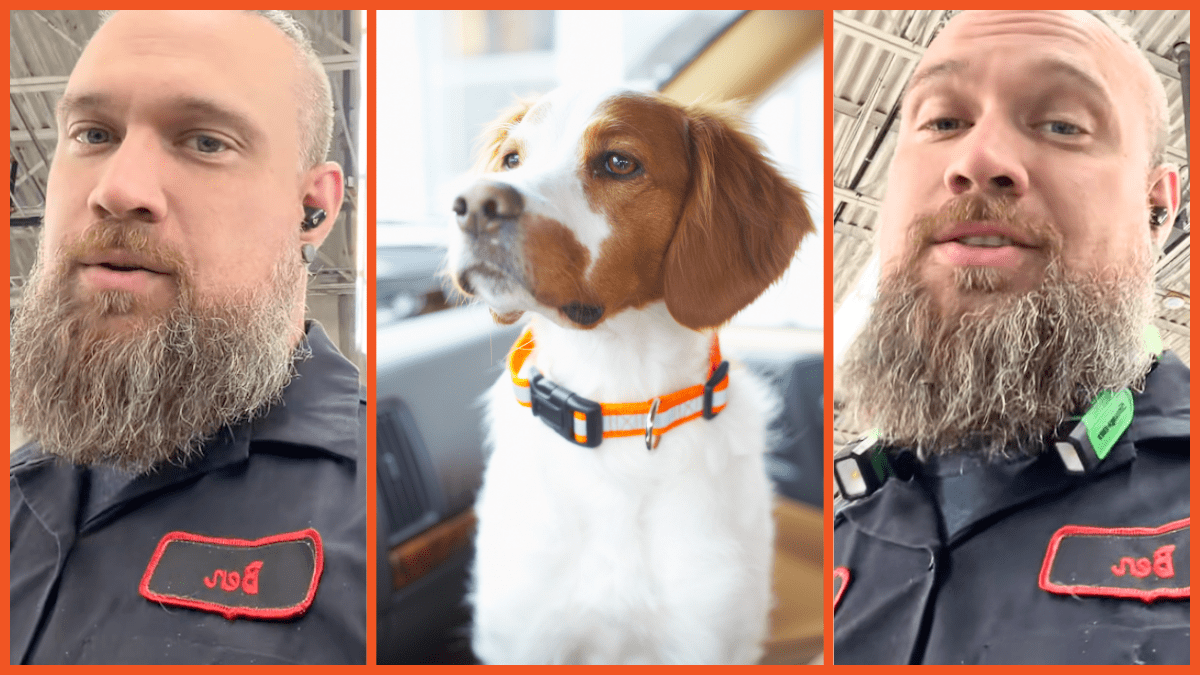

A Toyota mechanic has gone viral on TikTok with a warning for pet owners: keep your dogs away from the floorboards and under-seat wiring in your vehicle, or face costly repairs and potentially dangerous consequences.
In a recent video, TrashPandaDad (@suffer_overcome_recover) walked viewers through a repair job involving chewed wiring and damaged safety systems. “Guys, if you have small dogs, and they seem like they’re spending a lot of time down on the floorboard, there are wires under there,” he said.
The mechanic began by explaining damage to a rear-mounted radar sensor used for cross-traffic alerts and blind spot monitoring, features common in modern Toyota vehicles. “There’s actually a radar sensor in there that is actually calibrated for a certain height,” he said, noting he found trouble codes stored in multiple engine control modules (ECMs).
The bigger issue, he said, was inside the cabin
But after investigating a customer complaint about persistent seatbelt warnings, he discovered four wires under the passenger seat that had been chewed through. “These are the four wires that live underneath the passenger seat,” he said. “That doesn’t seem like much till you realize that that was chewed by, I’m going to say a rodent.” But he surmised it was a dog based on pet treats in the car.
Automotive experts have long warned that animals are attracted to modern vehicle wiring because manufacturers increasingly use soy-based insulation. Soy-based coatings can attract rodents and pets who mistake the material for food. Honda even once sold rodent-deterrent tape infused with capsaicin to address the issue, as reported by outlets including Consumer Reports.
TrashPandaDad explained it this way: “The coating is supposed to be biodegradable. So they use a soybean oil in them. Animals can smell the soybean. They think it’s food. And if it’s a high voltage one, guess what you got: a crispy critter.”
While most under-seat wiring carries low voltage, damaged wiring can still trigger major system faults, including seatbelt sensors, airbag systems, and steering angle sensors, all part of a vehicle’s Supplemental Restraint System (SRS).
In the TikTok case, disconnecting the battery also created new issues. “They disconnected their battery. And because they left it disconnected for long enough, guess what? It deleted the zero on their steering angle,” he said, describing additional diagnostic time required to recalibrate the system.
Airbag dangers for pets in the front seat
Beyond repair costs, the mechanic also warned about other safety risks of letting dogs ride in the front seat. “I know you may want to put your precious Pookie in the front seat,” he said. “But in the event of an accident, guess what doesn’t go off cause they don’t weigh enough? The airbag.”
The National Highway Traffic Safety Administration (NHTSA) advises that children under 13 ride in the back seat due to airbag risks. While federal guidelines focus on children, veterinary safety experts echo similar concerns for pets. The American Veterinary Medical Association (AVMA) recommends restraining pets in the back seat with carriers or pet seat belts to reduce the risk of injury in a crash.
TrashPandaDad put it this way, “Put them in the center seat, in the back row. Center of the vehicle is the best place.”
As TrashPandaDad says, chewed wiring can cost hundreds or even thousands of dollars to repair, especially when safety systems are involved. Damage to SRS components can disable airbags or trigger persistent warning lights that require specialized diagnostic tools.
His solution is simple: “Use a pet hammock in the back seat. Something. Keep them from under the seat. If you like your vehicle to not have check engine lights,” he added, “which can lead to SRS issues, leave little Pookie at home. Or train him better,” he said.




Published: Feb 13, 2026 02:33 pm