


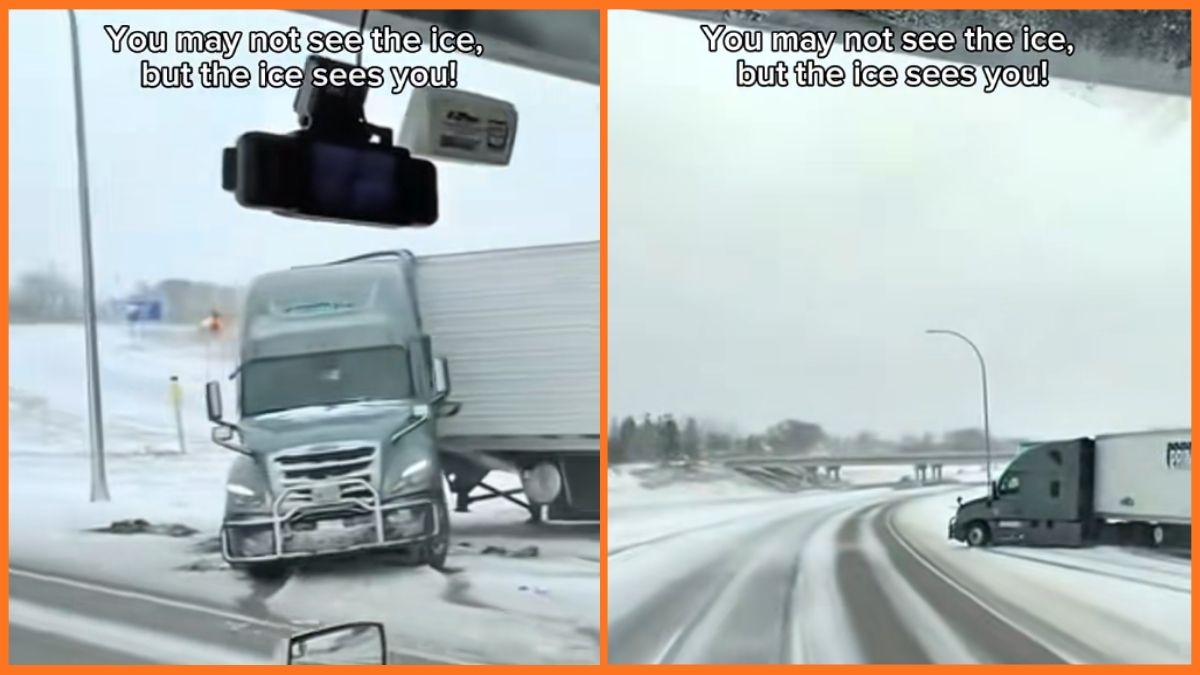

A viral video from an icy Minnesota highway has started a big debate among truckers. The clip shows an 18-wheeler losing control when it hits ice, and the 80,000-pound truck starts sliding uncontrollably. The video has been viewed over two million times and has split drivers into two groups: those criticizing the driver and those who understand how dangerous winter roads can be.
According to Motor1, many people watching from home were quick to make jokes and criticize the driver’s choices. But experienced truckers pushed back against these comments. One driver said, “That can happen to the best driver,” pointing out that even skilled professionals can lose control on icy roads. Several truckers noted that the most important thing is keeping everyone on the road safe.
The incident shows how different big trucks are from regular cars on slippery roads. In a passenger vehicle, you might regain control by easing off the brakes or steering carefully. But semi-trucks work differently and are much harder to control once they start sliding.
Why big rigs struggle so much on ice compared to regular vehicles
Tractor-trailers depend heavily on the grip of their drive axles to keep the trailer lined up properly. Once those drive tires lose traction, the trailer’s weight can swing past the cab and cause a jackknife. This happens very fast and is almost impossible to stop once it starts.
These accidents usually happen when roads have poor traction and the driver is going too fast or makes sudden movements. Even small changes to the gas pedal or brakes can cause big problems when the road has almost no friction. What looks like one bad decision in a video is often caused by several issues happening at once, like the road’s slope, wind, and whether salt or sand was applied.
Truck owners facing mechanical problems might consider swapping their troubled vehicle at dealerships, though that process comes with its own challenges. The way semi-trucks are built makes this problem worse. The Minnesota Department of Transportation says these vehicles are especially at risk because their weight is spread unevenly.
If the trailer is empty or only partially loaded, there’s even less traction, making the trailer more likely to swing out when the driver steers or brakes. This is why jackknifes can happen even at lower speeds on slick spots.
The American Trucking Associations warns that hitting the brakes during a skid can make the drive wheels lose all grip, letting the trailer push past the tractor. Even engine braking, which normally helps, must be used very carefully on ice.
These crashes happen most often in spots like bridges, exit ramps, and shoulders, which don’t get as much attention from plow and salt crews. While some drivers test their vehicles on challenging off-road trails with mixed results, icy highways present dangers that no amount of practice can fully prepare you for.
The National Highway Traffic Safety Administration supports what experienced drivers say: speed is almost always involved in weather-related crashes. They recommend driving well below the posted speed limit, no matter how much experience you have. Many veteran truckers agree that winter driving requires good judgment, not overconfidence. Their advice is straightforward: slow down, don’t use cruise control, and park the truck if conditions get too bad.






Published: Jan 20, 2026 12:27 pm