


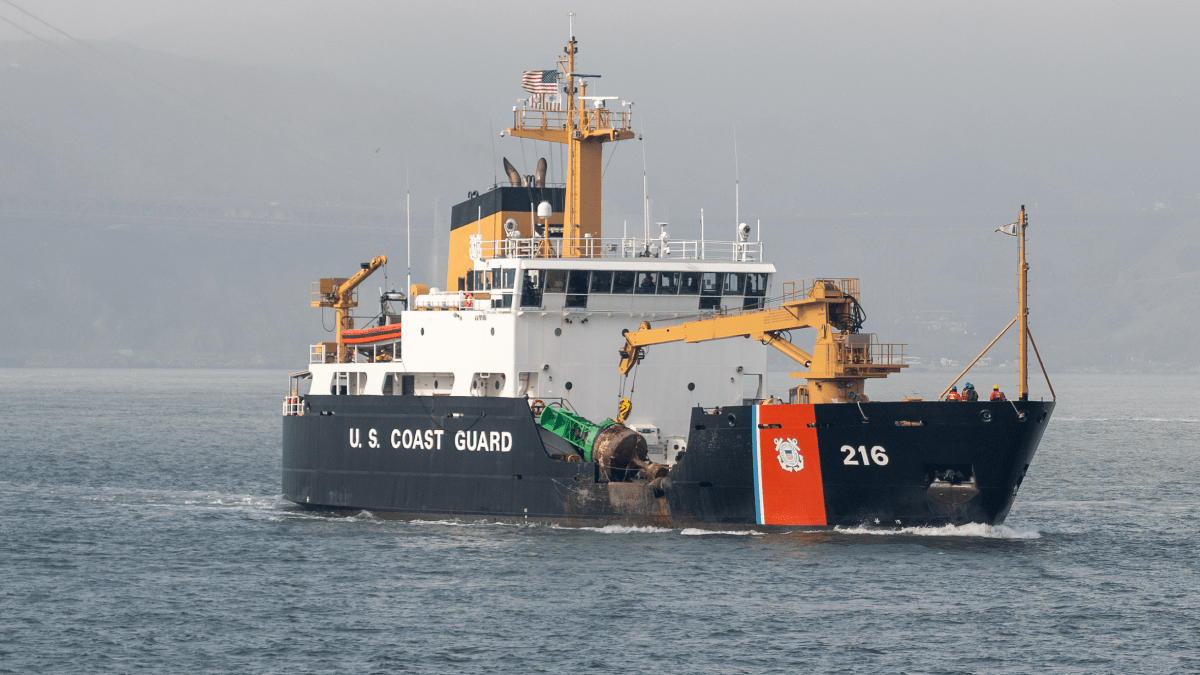

The US Coast Guard is scrambling for new personnel right now, putting out an urgent call to beef up teams responsible for inspecting and repairing oil tankers seized at sea. This massive operational ramp-up is a direct result of President Trump’s aggressive new policy targeting Venezuelan oil exports, and it looks like the seizures will continue for the foreseeable future.
The Coast Guard recently issued a request for more inspectors to travel out to these confiscated tankers after the president abducted the Venezuelan president. Their job is to assess the vessels and quickly fix any serious safety concerns that might prevent the ships from being accepted at U.S. ports. If you’re thinking these are standard cargo ships, think again. Many of the stateless vessels being taken into custody are described as being “beyond substandard.”
You’re not talking about minor dents and scratches here. These ships are often part of a “ghost fleet” that operates using false paperwork and flags, often moving oil under sanction to markets in China or elsewhere, per The Washington Post. These vessels are notoriously neglected. One senior adviser at the Center for Strategic and International Studies, Mark Cancian, pointed out that they tend to be “at the end of their service life, old, in poor condition.”
It seems like there was no planning in advance for the blockade
This sounds awful for the crews who have to board them. It makes total sense that these ships would likely be denied entry into a U.S. port if they don’t meet safety standards or pose a risk of a catastrophic spill.
The message requesting personnel didn’t specify exactly how many people they need, but it did lay out some intense requirements. Anyone eligible for the assignment must be “capable of offshore boardings and long hours aboard the vessel.” Essentially, you’re looking for personnel who can get out there, often far from shore, and “identify and rectify the highest risk deficiencies” on the ships before they are handed off to their temporary ports.
This initiative is the latest sign that the naval blockade, which President Trump announced in mid-December, is taking a significant toll on the Coast Guard’s resources. Since the president declared a “complete blockade” of all Venezuelan oil exports, the Coast Guard has already taken at least three vessels into custody.
The first was the oil tanker Skipper, which is currently being held offshore near the Port of Galveston, Texas. Two other tankers, the Bella-1 and the Sophia, were seized recently. The Sophia was targeted in the Caribbean, while U.S. forces boarded the Bella-1 in the North Atlantic after a weeks-long pursuit.
The Bella-1 is a prime example of the ghost fleet problem. It was hastily renamed and reflagged in an attempt to seek Russian protection as U.S. forces chased it down. The US government has alleged that the sales of this sanctioned oil fund narco-terrorism, which was cited as the justification for the latest seizure.
The political situation is adding to the pressure. Following the capture of Venezuelan President Nicolás Maduro, the Trump administration has indicated that the U.S. will be controlling all aspects of Venezuela’s oil industry, including the sale of its oil. The U.S. is continuing to aggressively enforce this naval blockade, partly to force cooperation from interim president Delcy Rodríguez regarding the administration’s demands.
With the Coast Guard anticipating “an influx” of these decrepit, substandard vessels, it’s clear that this blockade is creating huge operational and safety challenges for the teams responsible for managing the fallout. You can bet that inspection teams are going to be working non-stop to keep these floating hazards from becoming environmental disasters.



Published: Jan 12, 2026 06:41 am