


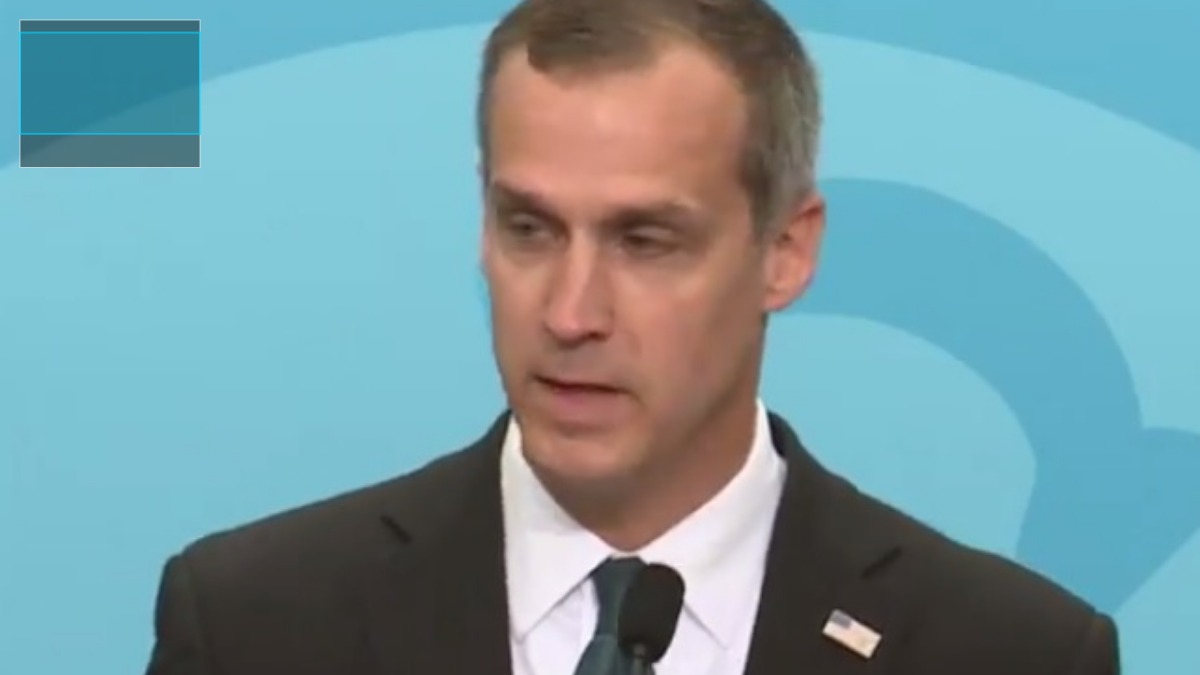

President Donald Trump has started asking questions about Corey Lewandowski‘s alleged involvement in DHS contracting decisions, after congressional hearings where lawmakers questioned Homeland Security Secretary Kristi Noem about the matter. Trump also fired Noem, who will leave her post on March 31. Lewandowski has not confirmed whether he will leave with her.
During the transition period between Trump’s November 2024 election win and his January 2025 inauguration, George Zoley, founder of the private prison company GEO Group, reportedly clashed with Lewandowski. GEO Group stood to benefit greatly from the Trump administration’s mass deportation agenda, which required billions in federal spending. The company already held federal contracts worth over $1 billion annually.
Zoley and his advisors became concerned that getting new government contracts now meant dealing with Lewandowski. According to NBC News, Lewandowski allegedly told Zoley, before officially joining the government, that he wanted to be paid to protect and grow GEO Group’s DHS contracts. Zoley reportedly found the request improper and declined.
Lewandowski’s alleged ‘success fee’ demands point to a wider pattern of pay-to-play pressure across DHS contracting
After the administration took office, Lewandowski took on an unpaid “special government employee” role at DHS, advising Noem and acting as a “de facto chief of staff.” Zoley sought a follow-up meeting with Lewandowski in late February or early March 2025. During this second meeting, Zoley offered a recurring consulting fee, but Lewandowski reportedly rejected it and instead demanded payment tied to GEO Group’s new or renewed DHS contracts, what some call a “success fee.” Zoley declined again.
In the months that followed, two of GEO Group’s federal contracts reportedly shrank, and several of its facilities built to house migrants now sit empty. A source familiar with GEO Group’s thinking believes this is directly connected to their refusal to meet Lewandowski’s alleged demands.
Lewandowski’s alleged influence extended beyond GEO Group. Several other government contracting companies reportedly complained to officials in Trump’s inner circle that Lewandowski sought to personally profit from the DHS contracting process. One senior White House official said they received “a dozen” complaints from at least four companies. Reports also suggest that Lewandowski told people Trump would pardon him no matter what, only to end up being ousted alongside Noem anyway. A senior White House official raised the issue with Trump in October, though the conversation was cut short.
Trump has also asked aides whether Lewandowski personally profited from a $220 million advertising contract featuring Noem, allegedly telling advisors, “Corey made out on that one.” Senator Markwayne Mullin, Trump’s nominee to replace Noem, has committed to cooperating with a Senate probe into this advertising contract and whether Noem or Lewandowski financially benefited from it. Separately, Noem has been dealing with personal scrutiny as well, with reports about how Kristi Noem’s husband is responding to her alleged affair drawing public attention.
A marketing firm new to federal contracting reportedly dropped plans to pursue two DHS contracts after receiving requests to indirectly pay Lewandowski. A representative from Salus Worldwide Solutions, a company that won a fast-tracked DHS deal worth nearly $1 billion, allegedly told the marketing firm owner that hiring a Lewandowski-linked consultant was required to win a $20 million subcontract.
When the owner refused, the deal collapsed. A second offer, worth $40–50 million, came with the condition that $20 million would go to the marketing company and the rest to a Lewandowski-tied firm. The owner declined both. Lewandowski’s spokesperson called these claims “patently false,” and a lawyer for Salus denied both accounts as “entirely false.”




Published: Mar 19, 2026 03:42 pm