


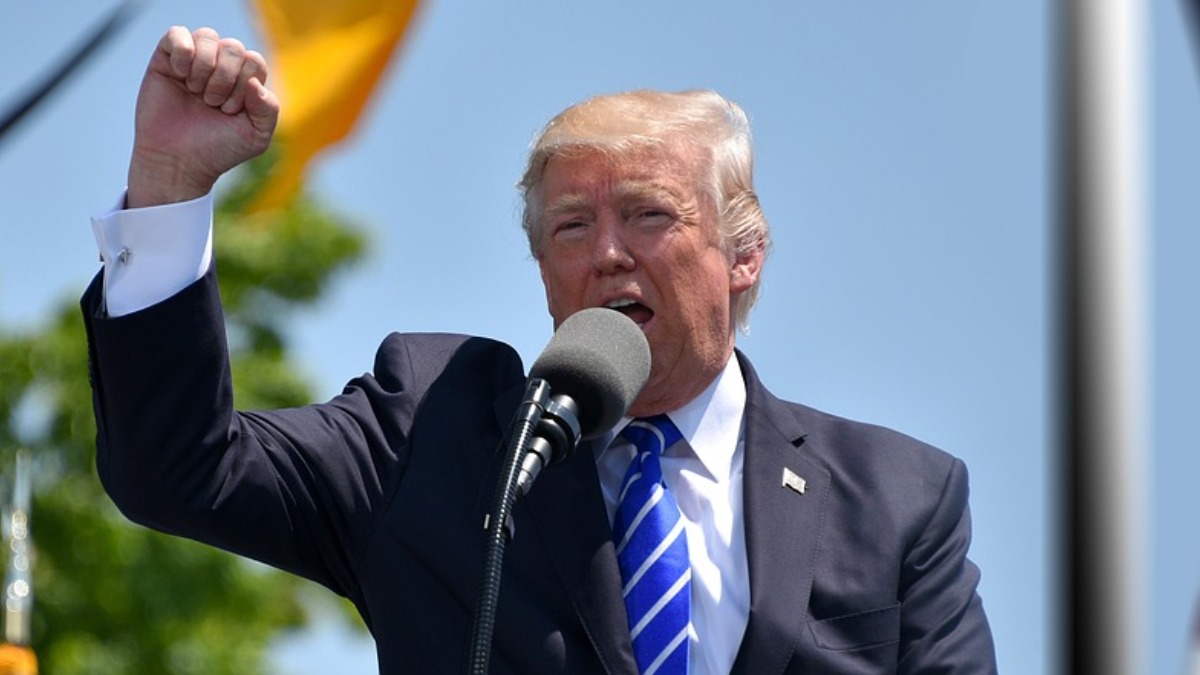

President Trump personally spoke with leaders from Iraq‘s two main Kurdish factions, Masoud Barzani and Bafel Talabani, just one day after the bombing campaign against Iran began. These calls came after five Kurdish dissident groups quietly formed a military coalition to fight Iran, days before the war started.
According to Axios, the calls were described as “sensitive” by a source close to the situation, who could not share details of what was discussed. These conversations were the result of months of behind-the-scenes lobbying by Israeli Prime Minister Benjamin Netanyahu. Israel has had close security, military, and intelligence ties with Kurdish groups across Syria, Iraq, and Iran for decades.
Netanyahu has been described as “relentless” in pushing for strikes and regime change in Iran. One official noted that when Netanyahu met with Trump, “you would have thought Netanyahu had it all figured out.” The official added, “He had the successor planned out. He had the Kurds all figured out: Two sets of Kurdish groups here and there. This many people are going to rise up.”
The Kurdish coalition and its role in the conflict could prove to be a significant factor
White House press secretary Karoline Leavitt declined to give specifics on Trump’s calls with the Kurdish leaders, saying only that “President Trump has been in contact with many allies and partners in the region throughout the past several days.” The war has stirred strong emotions across the country, with some Americans voicing anger at Trump’s military decisions in recent days.
On Sunday, the Kurdistan Freedom Party, a Kurdish-Iranian opposition group based in Iraq’s Kurdistan region, accused Iran of launching missile and drone strikes against them. This came after five dissident Kurdish groups, also sheltering in Iraq, officially formed the “Coalition of Political Forces of Iranian Kurdistan” six days before the war began, with the stated goal of fighting Iran.
The Kurds are a large ethnic minority in both Iraq and Iran, and are often called the largest ethnic group in the world without their own country. Their ancestral lands stretch across southeastern Turkey, northern Syria, northern Iraq, and northwestern Iran. Their fighters, known as “peshmerga,” which means “those who face death,” have decades of combat experience from conflicts in Iraq and against ISIS in Syria.
Having experienced fighters like the peshmerga involved would add a ground dimension to the U.S.-Israeli bombing campaign. This mirrors the approach used in the 2001 Afghanistan War, where U.S. air support helped local ethnic minority fighters on the ground ultimately topple the Taliban. Meanwhile, back home, Defense Secretary Pete Hegseth has been pushing a new direction for the U.S. military that has drawn significant attention.
However, there are complications. The Kurds have a hostile relationship with Turkey, which is a U.S. and NATO ally. The same source noted that “the president is talking to everyone. He’s talking to the Kurdish leaders.
He’s talked to [Turkish President Recep Tayyip] Erdoğan.” The formation of the new Kurdish coalition has also already caused tensions with another Iranian exile group led by former Iranian crown prince Reza Pahlavi. While some U.S. policymakers believe Netanyahu may have overestimated how many Kurds would take up arms against Iran, one official put it simply: “it’s not nothing.”



Published: Mar 3, 2026 04:14 pm