


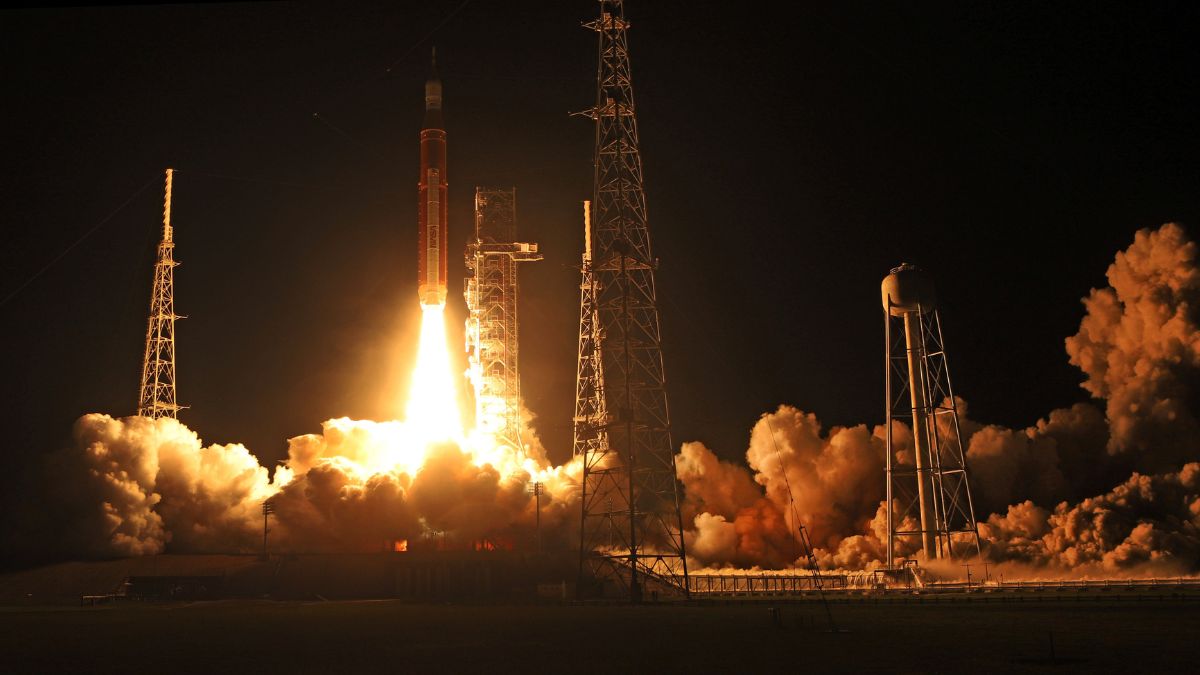

Europe is seriously considering mining the moon to solve its energy security issues, a plan laid out in a new report from the European Commission. The EU’s sixth annual Strategic Foresight Report, published this week, argues that the fracturing world order means Europe can no longer rely on non-EU countries to supply the raw materials needed for green energy technologies.
Due to this, the report suggests a “growing emphasis on … advanced mining technologies including space mining, starting with the Moon” might be necessary to secure its future. This might sound like something straight out of a sci-fi movie, but it’s a very real discussion happening at the highest levels of the European Union.
The core issue is that many of the essential materials for renewable energy and electric vehicles, like lithium, copper, nickel, and rare earths, are barely mined within the EU’s borders, per Politico. The Commission is genuinely concerned that other countries with large reserves of these metals could form a cartel, similar to OPEC, to manipulate supply and drive up prices. The report specifically warns that this could “restrict access to essential materials, posing a serious challenge to the EU’s strategic autonomy and clean energy transition.”
collecting Solar energy sounds crazy to some, but we’ll go to the moon, no problem
On the other hand, the idea of mining the moon is not entirely new. Other government agencies, such as NASA in the United States and JAXA in Japan, have long been promoting the concept. In fact, a small EU country, Luxembourg, has already positioned itself as Europe’s hub for space mining, with a focus on using robots to mine the moon and asteroids. These celestial bodies are believed to be rich in useful metals like aluminum, titanium, and manganese, as well as precious ones such as gold and platinum.
The European Commission itself has previously estimated that the “space economy,” including resource mining, could be worth up to €170 billion between 2018 and 2045. To be fair, industrial-scale space mining is still a very distant dream. Practical solutions for getting the materials back to Earth are in their infancy, so it’s not like they can just snap their fingers and get a shipment of moon rocks next week.
What makes this worse is that the EU can’t rely on the US, so there needs to be another solution. Maybe the next president won’t be so worried about pleasing Russia and will care about energy for everyone.
The EU has a serious problem right here on Earth, too, which is that it has fallen behind in establishing its own critical raw material supply chains. The energy transition is sending demand for these materials through the roof. For example, some experts believe that to meet the Paris climate agreement goals, we’ll need to mine as much copper in the next 25 years as has been mined throughout all of human history.
When it comes to lithium, which is essential for EV batteries, the Commission expects EU demand to be 12 times higher by 2030 than it was in 2020, and 21 times higher by 2050. At the moment, Europe doesn’t mine any lithium at all. The EU’s small, densely populated landmass and strong environmental protections make it difficult to open new mines, even when resources are discovered. People don’t exactly like having a mine in their backyard, a problem that mining giant Rio Tinto faced when it tried to open a lithium mine in Serbia.








Published: Sep 9, 2025 04:08 pm