


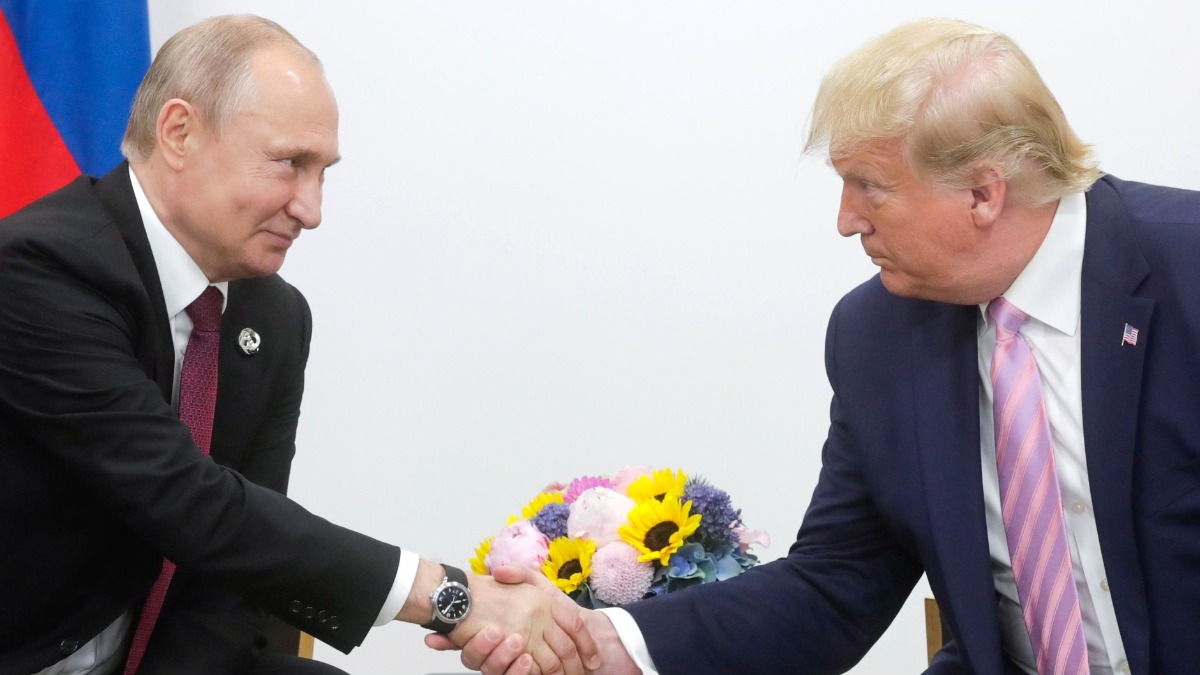

President Donald Trump and Russian President Vladimir Putin had their first phone call of the year on Monday. While it began with talks about the war in Iran, it quickly moved to Ukraine, leaving Kyiv on edge. A key topic that came up was the possibility of the U.S. reducing oil sanctions on Russia, which could have a big effect on global energy markets.
The call happened just hours after Putin warned about a coming global energy crisis. He pointed out that the U.S.-Israeli attack on Iran had already caused the biggest jump in oil prices since Russia’s 2022 invasion of Ukraine. With Gulf producers cutting output after the closure of the Strait of Hormuz, Putin warned that oil production depending on that route could soon stop.
He also noted that Russia is ready to re-engage with European customers for long-term energy cooperation. According to Reuters, Trump confirmed he had “a very good call with President Putin” from his Florida golf club, adding that Putin seemed eager to help with the Iran situation. However, Trump was direct with Putin, saying, “I said, ‘You could be more helpful by getting the Ukraine-Russia war over with. That will be more helpful.'”
Easing oil sanctions on Russia could weaken the West’s ability to cut off funding for the war in Ukraine
The Trump administration is reportedly considering easing oil sanctions on Russia to boost global oil supplies, disrupted by the expanding Middle East conflict. Meanwhile, Trump’s approach to Iran continues to draw scrutiny, with some questioning how Trump’s decisions on the Iran strike reflect his broader thinking. However, easing sanctions could also make it harder to cut off the revenue Russia uses to fund its war in Ukraine.
These discussions also include more targeted options, such as allowing specific countries like India to buy Russian oil without facing U.S. penalties. Last week, the U.S. already gave India a temporary pass to buy Russian crude oil that was already on tankers at sea, as a direct response to Middle East supply cuts.
Concerns about the human cost of the conflict remain high, as Trump’s escalating military posture toward Iran has already drawn widespread criticism following significant civilian casualties.
Kremlin foreign policy aide Yuri Ushakov described the call as “very substantial” and said it is “likely to have practical significance for further work between the two countries.” He also shared that Trump believes it is in the U.S. interest to see a “rapid end to the conflict in Ukraine with a ceasefire and a long-term settlement.”
Ushakov added that the ongoing advance of Russian troops in Ukraine should push Kyiv to seek a negotiated end to the conflict. This signals that Russia sees its battlefield position as strong enough to set the terms of any future deal. Both sides appear to be looking for some kind of resolution, but their expectations are clearly very different, and Ukraine finds itself caught in the middle of these conversations.



Published: Mar 10, 2026 03:28 pm