


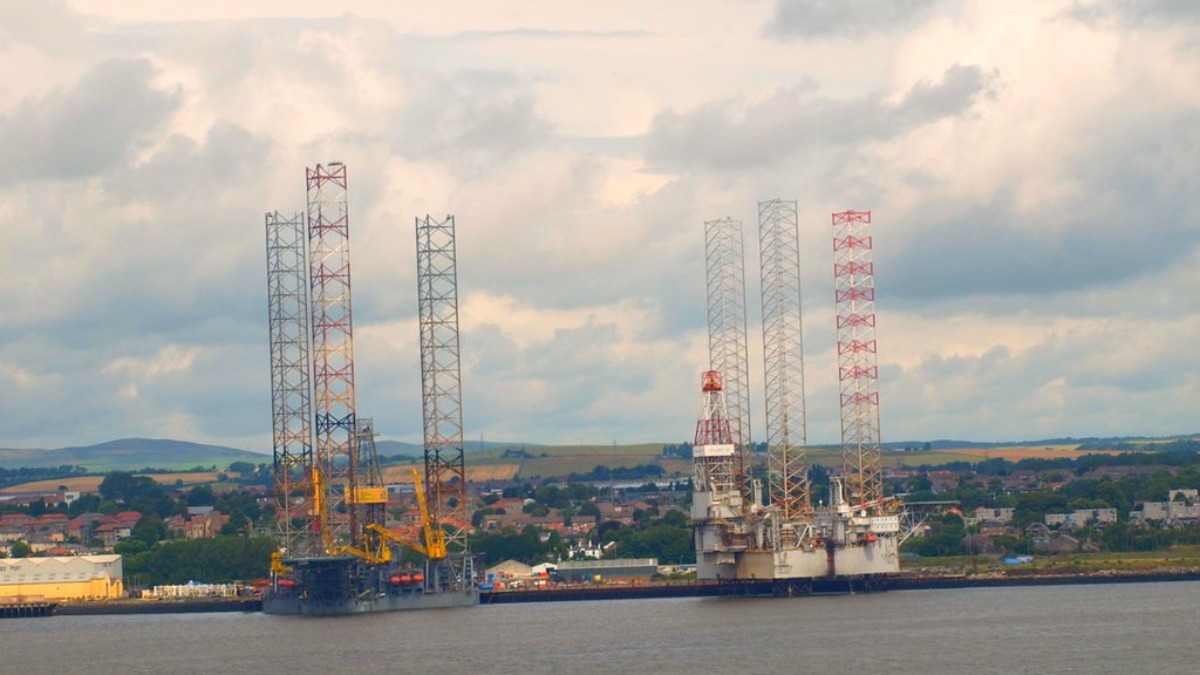

Oil prices surged after U.S. and Israeli strikes on Iran killed its supreme leader. When trading opened, U.S. crude oil shot up by more than 10%, and Brent, the international oil benchmark, rose by 13%. Both were still up over 5% later that night, with U.S. crude jumping by more than $3 per barrel.
For every $1 increase in crude oil prices, retail gas prices tend to go up by about 2.5 cents. With that kind of jump, drivers could be looking at nearly a 10-cent-per-gallon increase very soon. GasBuddy analyst Patrick De Haan said, “I fully expect that by Monday night, you could credibly say that gas prices are being impacted by oil prices having gone up.” He also clarified it “won’t be a spike,” but gas stations will likely start passing along higher costs this week.
Even before this weekend’s escalation, oil prices were already up 17% this year. According to NBC News, this earlier rise was largely due to President Trump’s increased rhetoric against Iran and his administration’s decision to ramp up sanctions on the country in recent months.
Iran’s control over a key oil shipping route makes this situation far more serious than its production share suggests
Iran’s oil production accounts for less than 5% of the world’s total output, with most of it going to China due to U.S. sanctions. However, Iran holds major influence over the Strait of Hormuz, a crucial passageway for more than 20% of the world’s daily oil demand. A closure or restriction of this strait could quickly destabilize the global oil market.
At least six major cargo shipping companies announced over the weekend that they were halting or diverting ships scheduled to sail through the waterway. Analysts have also raised concerns about Trump’s unclear strategy in the ongoing Iran conflict, which is adding to market uncertainty.
Market reactions went beyond oil. Stock futures dropped sharply, with S&P 500 futures down nearly 0.8% and Nasdaq 100 futures sliding 1%. Dow futures fell more than 400 points, and Russell 2000 futures declined by over 1.1%.
Meanwhile, the U.S. Dollar Index rose 0.3%, and gold jumped nearly 2.5%, or more than $120, as investors moved toward safe assets. Jorge León, head of geopolitical analysis at Rystad Energy, noted that “The scale [of Iran’s retaliation] has been a big, big surprise,” adding that “This is a totally different world from what the market was anticipating.”
To calm markets, eight OPEC+ nations announced on Sunday that they plan to increase production by over 200,000 barrels per day starting next month. However, analysts say prices will only come down if tensions ease. JPMorgan Chase analysts outlined four key factors that will shape oil prices going forward: how much supply is disrupted, how long any disruption lasts, whether other sources can quickly fill the gap, and what happens next in the conflict.
Andy Lipow also pointed out that Qatar is the world’s second-largest exporter of liquified natural gas (LNG) after the U.S. He wrote that “LNG tankers are also being diverted away from the region,” warning that “A disruption in LNG would result in higher natural gas prices, especially in Europe.”
Natural gas prices already rose about 2% in evening trading. Adding further complexity to the situation, reports indicate that Iran has been receiving Russian military equipment as geopolitical tensions with the U.S. continue to escalate.







Published: Mar 2, 2026 04:55 pm