


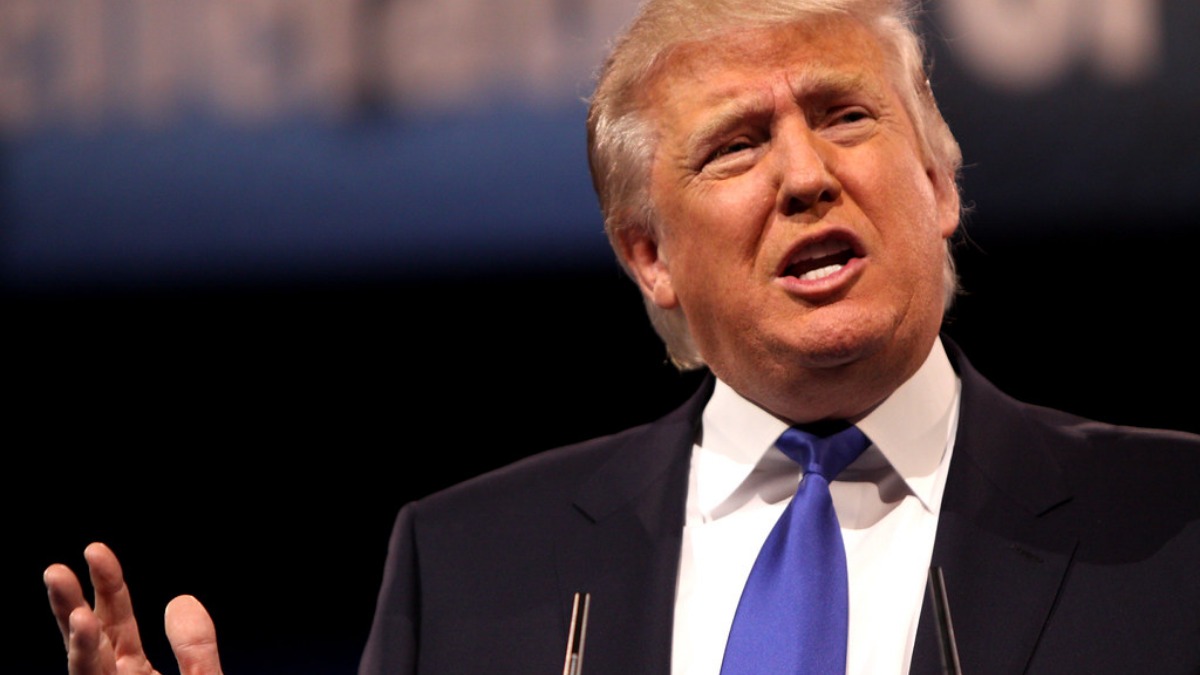

President Donald Trump was so worried about leaks that he actually lied to his own staff about calling off a military operation against Iran. This came out in a report that detailed the extreme steps the president took to keep the operation secret before the recent military actions against Iran. His concern about leaks grew after a report revealed that the U.S. was preparing for military action in Iran.
According to Time, Trump reportedly “exploded” at his aides, firing off “a string of profanities” in response. After that, he began using what were described as “head fakes”, deliberately misleading both the public and his own team to prevent information from getting out. One of these happened the day before Operation Epic Fury was launched. Trump had traveled to Mar-a-Lago, where a makeshift Situation Room had been set up.
He “bristled” at the number of people present, feeling the group was “too big” and included people he didn’t know well enough. He then “snapped” that the operation was off and that he would keep deliberating, but this was a deliberate misdirection. He had already decided to strike that night. Once the room cleared, he called back a smaller, more trusted group to be with him as the first bombs fell.
Trump privately seeks an exit from the conflict even as he makes public threats against Iran
Operation Epic Fury launched on February 28, resulting in the deaths of Supreme Leader Ali Khamenei and dozens of other key members of Iran’s leadership. Despite the aggressive military action, Trump has privately been looking for an “off-ramp” from the conflict. White House Chief of Staff Susie Wiles has voiced concerns that aides might be “telling Trump what he wanted to hear instead of what he needed to hear” regarding public sentiment about the war.
Just a day before the report came out, Trump addressed the nation and said the U.S.’s military objectives were nearly complete. He pledged to keep striking Iran for weeks and said the country would be sent back to the “stone age.” At the same time, the U.S. State Department said Washington remains open to diplomacy with Tehran.
Deputy State Department Spokesperson Tommy Pigott said in a TV interview that Trump pursued talks with Iran before the war began, though he also accused Iran of continuing to pursue a nuclear weapon. Pigott said, “The president is always open to diplomacy, but he’s also been clear we will see his objectives be fulfilled here.”
The U.S. and Israel launched the current war against Iran on February 28, just days after a round of negotiations in Geneva that Omani mediators and Iranian officials had described as positive. Before this, the U.S. bombed Iran’s three main nuclear facilities in an operation called “Midnight Hammer.” Pigott said that after the June 2025 attack, “the door for diplomacy was opened yet again, and yet we saw the Iranian regime continue in that pursuit of a nuclear weapon.”
However, Iran consistently denies seeking a nuclear weapon. Trump’s own intelligence chief, Tulsi Gabbard, told lawmakers last year that “Iran is not building a nuclear weapon.” Earlier this month, Gabbard also said there “have been no efforts” by Iran to rebuild its enrichment capacity after the U.S. strikes, directly contradicting Trump’s claims that the strikes had “obliterated” Iran’s nuclear program.
Iran has consistently insisted on its right to enrich uranium and has ruled out negotiations over its missile program and its support for groups like Hezbollah and Hamas. In his Wednesday address, Trump did not give details on how the conflict would end or any plans to reopen the Strait of Hormuz, whose closure by Tehran has sent global energy prices soaring.
He threatened to destroy Iran’s power plants and suggested the U.S. could target the country’s water desalination stations. According to Al Jazeera, he also shared footage of a U.S. attack on a major civilian bridge in Iran and posted on Truth Social: “IT IS TIME FOR IRAN TO MAKE A DEAL BEFORE IT IS TOO LATE, AND THERE IS NOTHING LEFT OF WHAT STILL COULD BECOME A GREAT COUNTRY.”
Legal experts have noted that attacking civilian infrastructure amounts to collective punishment and is prohibited under international law. Barbara Slavin, a distinguished fellow at the Stimson Center, suggested that Trump is “scrambling” to find a way to end the war. Reports also suggest that Trump’s handling of key cabinet figures behind closed doors tells a similar story of a president who says one thing publicly and does another privately.
Slavin believes he is “looking for a way to end the war without it being an abject failure,” and is therefore “clutching at various straws at this time,” potentially trying to escalate before seeking an exit.




Published: Apr 3, 2026 03:42 pm