


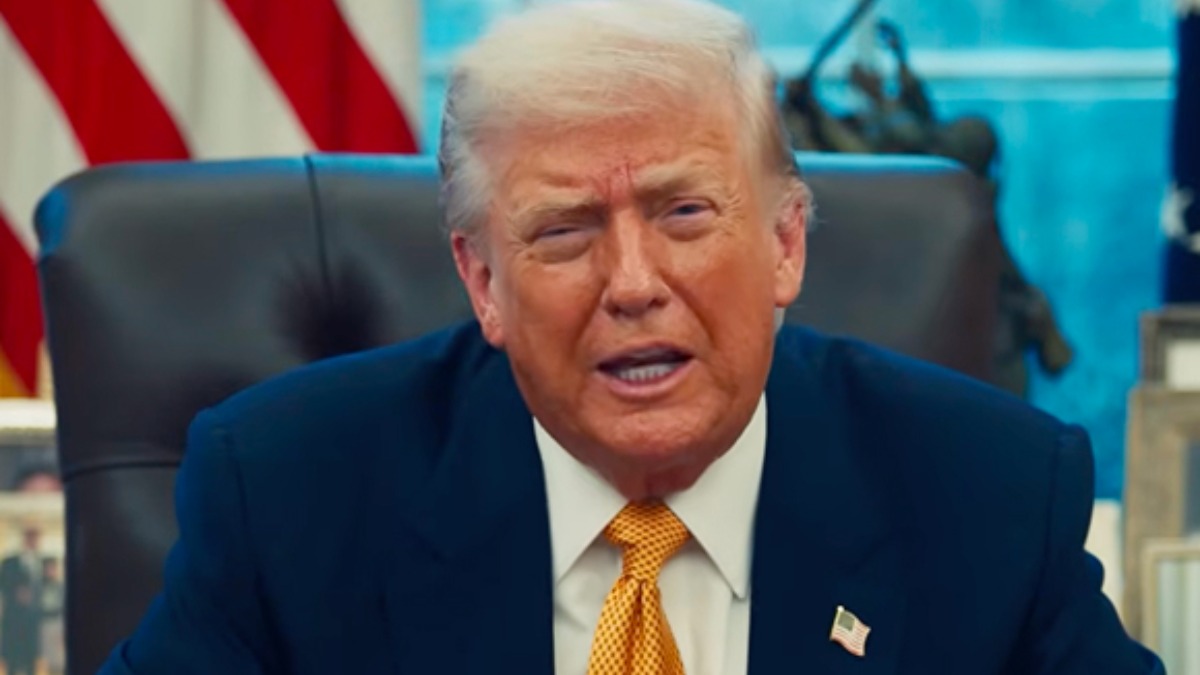

Donald Trump took the stage last night to deliver what was supposed to be a celebration of the US economy. He pointed to record stock market highs, falling inflation, and jobs numbers that he claimed were the best in history. But in the middle of all that bragging, he said something that told a very different story.
“We have an economy, people aren’t seeing it yet,” Trump said. A line that stood out sharply against everything else he had just said about America’s thriving economy. It directly contradicts his claim that the US is “winning” and that the economy has never been stronger. The admission was hard to miss.
The bigger problem is that Trump’s comments reflect what many Americans are actually feeling. Inflation last month hit 3.8 percent, its highest level in three years, driven largely by sharply higher fuel prices. The Iran war has added to the pressure, pushing thirty-year Treasury yields to their highest point since 2007 as investors grow anxious about rising oil prices and ongoing instability in the Middle East.
Trump’s own words are making it harder to sell his economic message
While the stock market has stayed near record highs and unemployment has remained relatively low, the economic damage from the Iran war is becoming harder to ignore. The war, now in its third month, has repeatedly stalled ceasefire efforts despite Trump’s early promise that it would be short-lived.
That prediction has not held up, and Trump’s handling of key political decisions has drawn sharp criticism from commentators and lawmakers alike.
Trump’s approval numbers on the economy reflect the public’s frustration. Only about a third of Americans approve of how he is handling the economy, while 62 percent disapprove, according to a recent AP-NORC poll. For a president who has long leaned on his economic record as a political strength, those numbers are a serious concern.
In an attempt to shift attention away from the economy, Trump framed the Iran war as a necessary move to stop Tehran from getting a nuclear weapon. But with the war now stretching into its third month and costs rising, that framing has done little to ease concerns at home. Americans are still dealing with higher prices at the pump and growing uncertainty about what the conflict means for their wallets.
With midterm elections approaching, the pressure is mounting on the administration to show that the economy is working for ordinary people, not just on paper. Trump’s own admission – that people are not seeing the economy yet – has made that job harder.
It is difficult to run on economic strength when the president himself has acknowledged that the public is not feeling it. This pattern of Trump pressuring Senate leadership over key appointments has only added to the sense of instability around his administration.
The core issue is straightforward: rising costs tied to the Iran war are hitting Americans in real and visible ways, and the numbers back that up. Inflation at a three-year high, Treasury yields at levels not seen since 2007, and a war with no clear end in sight are not the ingredients of the economic success story Trump wants to tell. Whether the administration can turn that around before voters head to the polls remains an open question.






Published: May 20, 2026 09:53 am