


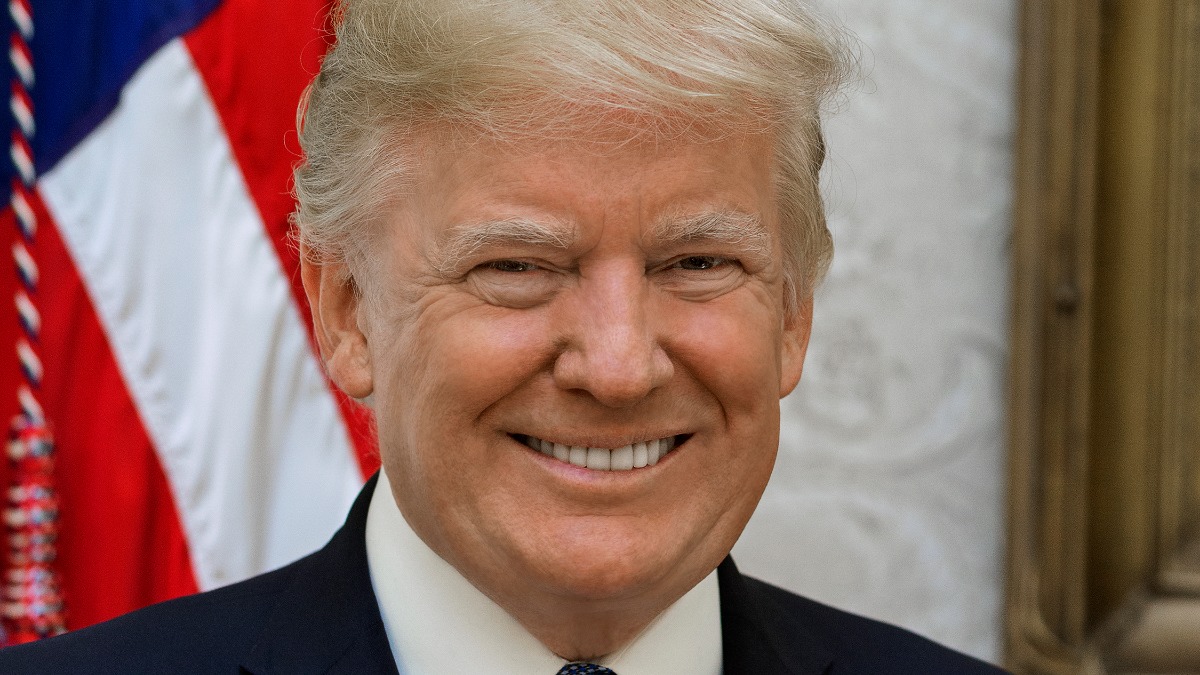

Pentagon officials are raising serious questions about President Donald Trump‘s recent declaration of victory in Iran, with anonymous sources openly skeptical about what the U.S. has truly accomplished. While the military has dominated on the battlefield, broader political and strategic objectives remain unclear.
Trump announced a two-week ceasefire with Iran and declared that Iran would reopen the Strait of Hormuz. However, Iran has continued to restrict travel through the strait, directly contradicting the president’s claim, with the ongoing Israeli invasion in Lebanon further complicating the situation. “I don’t know how the genie goes back in the bottle without the U.S. massively redefining our strategic objectives,” Politico quotes a Pentagon official.
He added, “I can’t imagine what the U.S. could offer or threaten Iran with at this point that generates a satisfying outcome.” Another defense official said, “POTUS is right that we’ve largely destroyed the navy, and most, but clearly not all, of their ballistic missile and drone capability,” but noted, “that won’t actually change anything. Unless of course there’s a major uprising inside of Iran … but I’m not seeing that happening.”
The U.S. and Iran are telling their people very different things about the ceasefire deal
Both governments have given their populations contradictory information about the ceasefire agreement. A major point of dispute is Iran’s claim that the deal includes an Israeli ceasefire in Lebanon, which the Trump administration denies. Iranian Foreign Minister Abbas Araghchi posted on X, stating, “The world sees the massacres in Lebanon. The ball is in the US court, and the world is watching whether it will act on its commitments.”
Pakistan’s prime minister, whose country mediated the deal, had also initially suggested it applied “everywhere, including Lebanon and elsewhere.” Trump has maintained a firm stance, stating on Truth Social that U.S. forces will remain in the Gulf region until the agreement is “fully complied with.” He warned, “If for any reason it is not, which is highly unlikely, then the ‘Shootin’ Starts,’ bigger and better and stronger than anyone has ever seen before.”
He also insisted Iran would not build nuclear weapons and that “the Strait of Hormuz WILL BE OPEN & SAFE.” White House press secretary Karoline Leavitt called the renewed closure of the strait “completely unacceptable” and reiterated Trump’s “expectation and demand” that it be reopened immediately.
Iranian parliament speaker Mohammad Bagher Qalibaf said planned talks with the U.S. were “unreasonable” because Washington had broken three of Tehran’s ten conditions for ending the fighting, reports Euro News. He specifically objected to ongoing Israeli attacks on Hezbollah in Lebanon, an alleged drone incursion into Iranian airspace after the ceasefire, and the U.S. refusal to accept any Iranian uranium enrichment in a final deal.
Meanwhile, Lebanon’s situation has escalated sharply. Despite the ceasefire agreement, strikes in Lebanon have continued to threaten the fragile peace deal. Lebanese authorities reported that Israeli strikes on Wednesday killed 182 people, the highest single-day death toll in the Israel-Hezbollah conflict, bringing total fatalities to 254.
Lebanese Prime Minister Nawaf Salam accused Israel of escalating precisely when officials were trying to negotiate, condemning the targeting of civilian areas as an “utter disregard for the principles of international law and international humanitarian law.”
The Israeli military called Wednesday’s actions its largest coordinated strike of the war, claiming to have hit over 100 Hezbollah targets within ten minutes across Beirut, southern Lebanon, and the Bekaa Valley. Residents and local officials denied the targeted buildings were military sites.
Lebanon’s health ministry said Wednesday’s strikes wounded at least 890 people, bringing total casualties to 1,739 killed and 5,873 wounded in just over five weeks. The hardliners who have ruled Tehran for nearly five decades remain firmly in power, Iran still holds its stockpile of highly enriched uranium, and it can now claim growing dominance over the Strait of Hormuz.
Separately, Trump’s administration has also drawn criticism on other fronts, including his decision to eliminate the last surviving ocean giants. An Asian diplomat offered a blunt take on the situation: “Declaring victory by saying he will attack Iran some more seems like losing.”





Published: Apr 9, 2026 10:17 am