



Content warning: This article discusses suicide. Please take care while reading.
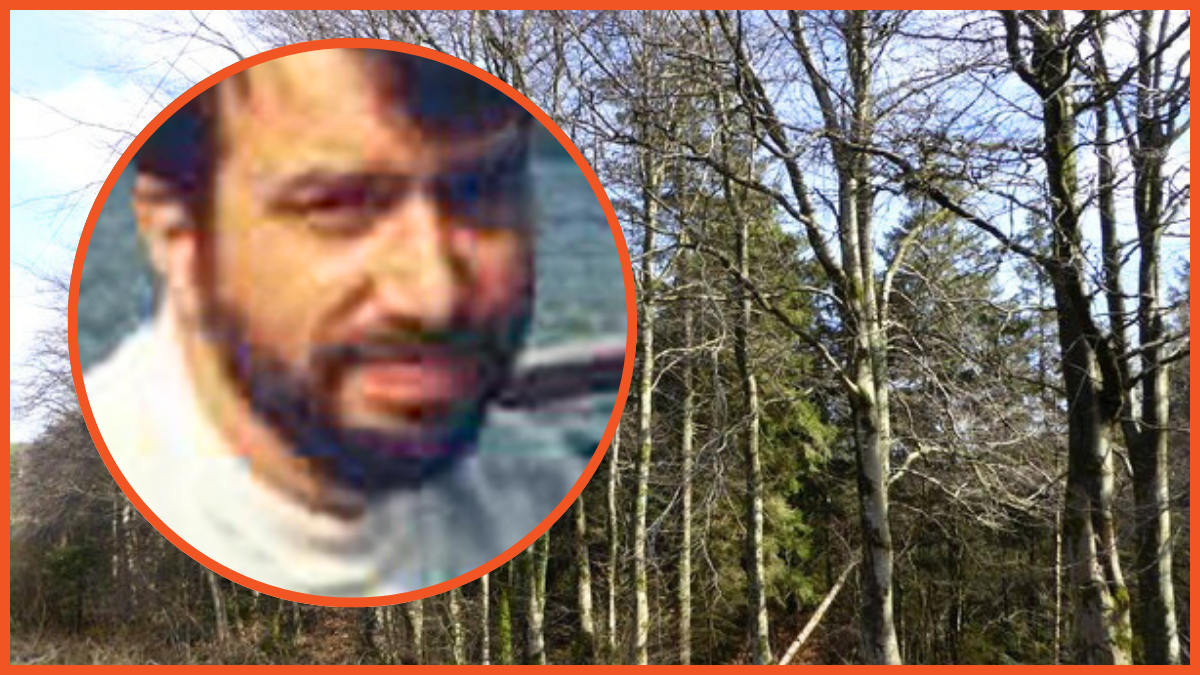
In March 2002, Richard Sumner, a British artist who lived with schizophrenia, entered Clocaenog Forest in Denbighshire, Wales, and handcuffed himself to a tree. His skeletal remains were not discovered until 2005. To this day, many wonder: Was this a deliberate act of surrender, or did Sumner struggle and attempt to free himself?
Self-imposed captivity in the woods
According to the BBC, Sumner, who was 47 when he died, is believed to have locked himself to the tree and then thrown the key “out of reach.” For years, no one knew what had happened, and his disappearance remained a mystery until a walker and her dog stumbled upon his skeletal remains in 2005.
After Sumner’s bones were recovered, investigators noted scuff marks on the bark around his wrists. These marks align with the possibility that, once chained, he tried to drag or twist sideways, consistent with someone trying to reach the key or break free and save his life.
Sumner’s mental heath history
Sumner had a history of mental illness. He reportedly experienced suicidal ideation. Some sources claim he had attempted suicide multiple times before his disappearance. His sister stated that he had “tried to commit suicide three times” before the final act, including once when he handcuffed himself to a tree. That time, though, he successfully broke free.
There is no public record of another person being implicated in his death, and no criminal case ever moved forward in court. The coroner considered the possibility that his death was not strictly self-inflicted, given the struggle evidence.
However, the fact that he discarded the key suggests a premeditated plan, and the physical evidence of struggle indicates last-minute hesitation. Even still, the inquest recorded an open verdict, not a verdict of suicide, primarily because the struggle evidence introduced a degree of doubt as to whether his death was his final intent.
If you or someone you know is struggling or in crisis, help is available. Call or text 988 or chat at 988lifeline.org. A list of international crisis resources can be found here.









Published: Oct 16, 2025 03:35 pm