


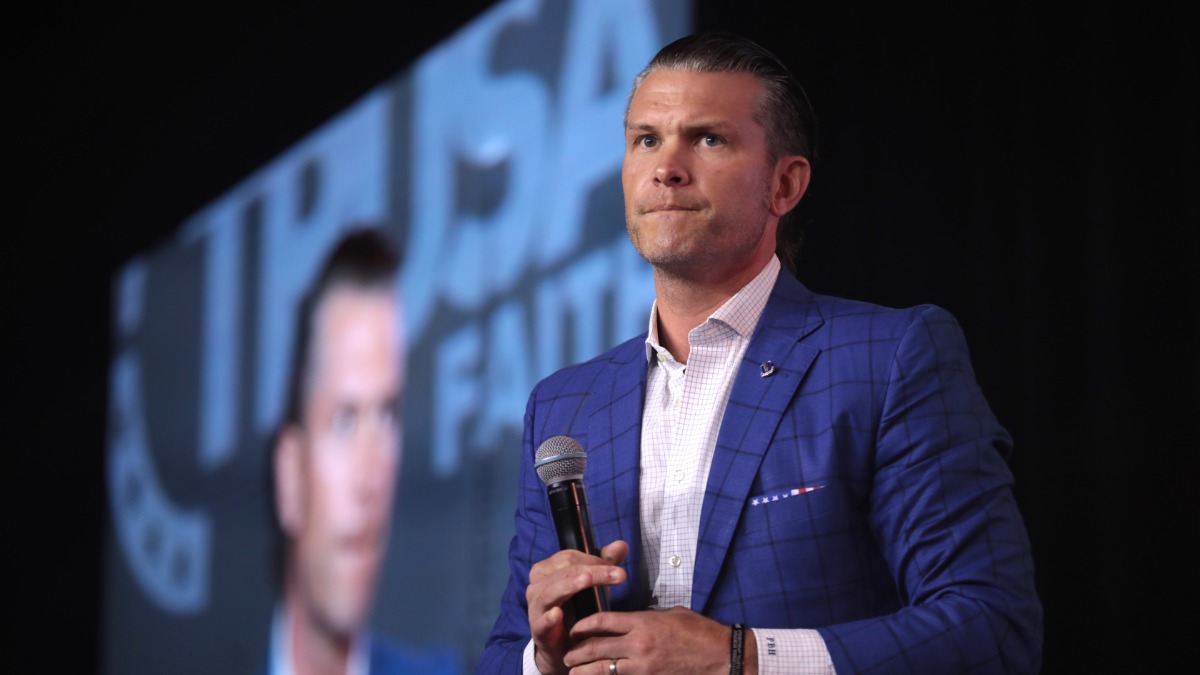

Defense Secretary Pete Hegseth has criticized news coverage of U.S. service members killed in the ongoing war in Iran, saying it mainly serves to make “the president look bad.” His role has become central to the administration’s communication strategy for the war, as the conflict reaches a critical point.
Before the first bombs dropped on Iran last month, Trump met with a small group of advisors to consider military options. Sources familiar with the discussions say Hegseth supported moving forward and downplayed the risks of the conflict getting out of control. No one in that meeting emphasized the potential dangers of starting the war.
While sources tell CNN that Hegseth did not push the war on Trump, he quickly became one of its biggest supporters once the president made his decision. Most of the actual military planning comes from Chairman of the Joint Chiefs of Staff Gen. Dan Caine, with Hegseth mainly expressing strong confidence in military strength.
Hegseth’s public role has grown significantly since the Iran war began
Trump chose Hegseth for this public role partly because of his comfort on television, given his background as a former Fox News anchor. The White House wanted the Pentagon to be the administration’s main communicator once combat operations began.
A senior White House official confirmed, “The president wants Pete to be who he is, which is his combative, patriotic and outspoken nature. The president appreciates that about him and wants him to keep doing that.”
Hegseth has stood alongside General Caine at a series of press briefings over the war’s first four weeks, attacking press outlets and touting military progress. A White House official commented on their joint appearances, saying, “They’ve done those briefings together, which we felt have been very good for feeding the narrative and getting the facts out on military operations.”
The two men present very different styles – Hegseth is outgoing and forceful, while Caine is quiet and reserved. However, justifying the conflict has become harder as the weeks go on. Iran has shut off the Strait of Hormuz, through which about 20% of the world’s oil and liquefied natural gas usually passes, sending global fuel prices rising sharply.
Trump also continues to weigh the use of ground troops, despite the significant risk of U.S. casualties and the possibility of a long-term war in the Middle East. Diplomatic talks appear to be in early stages, with Iran denying any discussions are taking place. Critics of the administration, including those calling out Trump’s pattern of broken promises, argue that the war’s growing complexity fits a familiar pattern.
Amid these challenges, Trump and Hegseth have called on allies to “step up” and secure the Strait of Hormuz. Trump told countries on social media to “go get your own oil,” adding that “the U.S.A. won’t be there to help you anymore.” Hegseth echoed this during a news conference, saying it was not solely the U.S. job to secure “a critical waterway.” He also called for the UK’s “big, bad Royal Navy” to get involved, despite the UK stating it won’t be “dragged into” the war.
According to the BBC, Hegseth observed, “A lot has been laid bare. A lot has been shown to the world about what our allies would be willing to do for the United States of America… the president is pointing out you don’t have much of an alliance if you have countries that are not willing to stand with you when you need them.”
While Hegseth did not initially list reopening the Strait among his war objectives, he later described it as “the goal.” Prominent voices outside the administration have been challenging Trump’s narrative on the war, pushing back on what they describe as a misleading picture of events.
Hegseth’s position within the administration has also strengthened since the war began. He has held more press briefings at the Pentagon than during his entire previous time in the role. One source familiar with his mindset described him as “very trigger happy,” adding that he believes military action is the best way to keep his job.
A senior White House official pushed back on that, stating, “The president is very pleased with him, and was before the Iran situation.” The war’s timeline has also shifted, with Hegseth now saying the conflict could last six to eight weeks, up from the earlier four-to-six-week estimate.






Published: Apr 1, 2026 10:56 am