




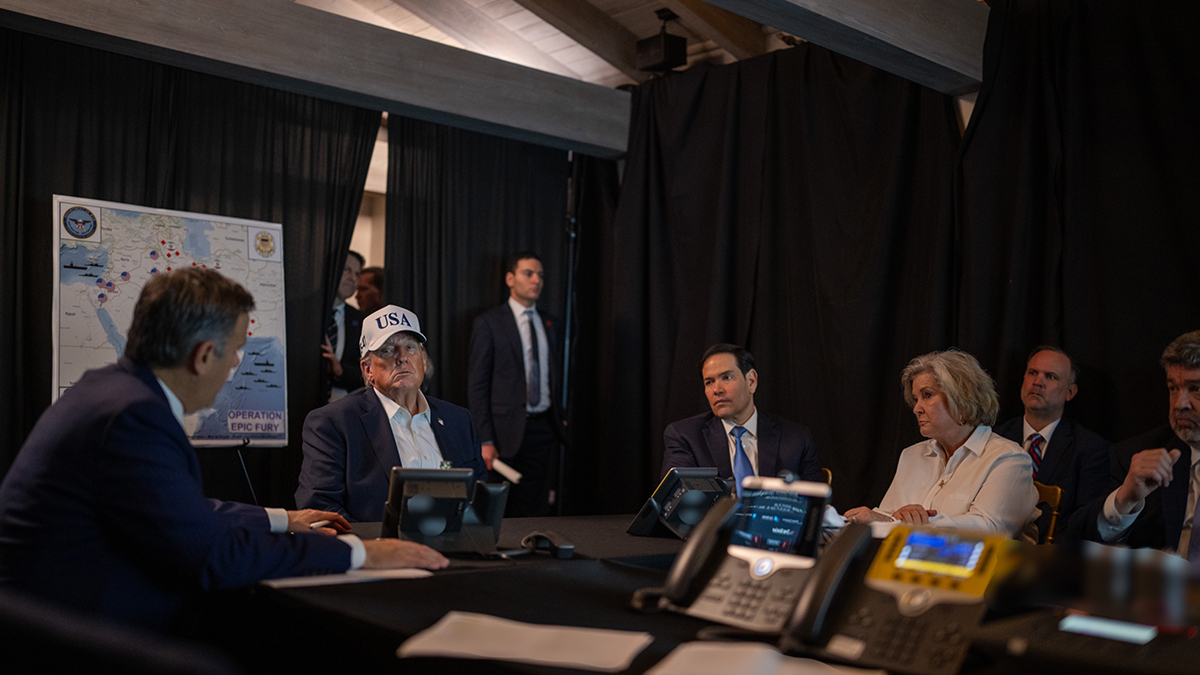
President Trump has reportedly been warned that America’s stockpile of missiles and interceptors could run dry if the conflict with Iran goes on for too long. Military officials cautioned the President about the risks of a long, resource-heavy war with Iran, warning that if Iran’s missile and drone capabilities are not destroyed quickly, the US could end up in a vulnerable position.
Following major strikes on Tehran and other Iranian cities, insiders warned that the US needs to destroy Iran’s missile force before its own interceptor supplies run out. A senior official reportedly said Trump’s decision to launch strikes first was specifically to weaken Iran’s ability to hit back with missiles and drones.
The exact size of the US missile and interceptor stockpile is classified, but experts are raising concerns. According to the Wall Street Journal, one expert who previously taught at the Air Command and Staff College warned that these weapons can deplete very quickly, and the US is currently using them faster than they can be replaced.
The US missile shortage extends well beyond the Iran conflict and threatens readiness for a possible war with China
Among the most important weapons in the US arsenal are THAAD anti-missile systems, which are stationed around the world to track and intercept incoming fire. Keeping THAAD stocks high is critical, especially since these systems are also deployed in South Korea and Guam to deter threats from North Korea and China.
Restocking Patriot and Standard Missile (SM) weapons has also become a top priority, with only SM-3 missiles capable of intercepting ballistic missiles above Earth’s atmosphere. Meanwhile, the CIA has also been recruiting spies amid rising tensions with Iran, using social media to expand its intelligence network in the region.
Concerns go beyond air-defense interceptors. The US is also rapidly using up its Tomahawk cruise missiles and other aircraft-launched weapons. The Trump administration has been firing Tomahawk Land Attack Missiles (TLAMs) at a high rate across multiple operations, including against Iran, Yemen-based Houthi militants, and even in Nigeria on Christmas Day.
When military experts run wargames simulating a US-China conflict, TLAMs are often among the first munitions to be used up within the opening week. This means that current spending on the Iran conflict could directly affect the US military’s readiness for any future large-scale war.
President Trump has indicated he believes the conflict could last about a month. He stated on social media that it will “continue, uninterrupted throughout the week or, as long as necessary to achieve our objective of PEACE THROUGHOUT THE MIDDLE EAST AND, INDEED, THE WORLD.” US Central Command announced that three US servicemen were killed in the strikes on Iran, the first American casualties of Trump’s second term.
Trump paid tribute to them as “great people” and said, “we expect that to happen, unfortunately. Could happen continuous – it could happen again.” Not everyone in Washington has supported the decision to strike, with MTG criticizing Trump’s choice to attack Iran as another foreign war that serves foreign interests.
The killing of Ayatollah Ali Khamenei has added uncertainty to the conflict, with sources indicating that Iran’s leadership is “open” to negotiations. While US forces reported largely successful efforts to block Iranian strikes, some did manage to get through defenses in neighboring countries.





Published: Mar 2, 2026 04:25 pm