


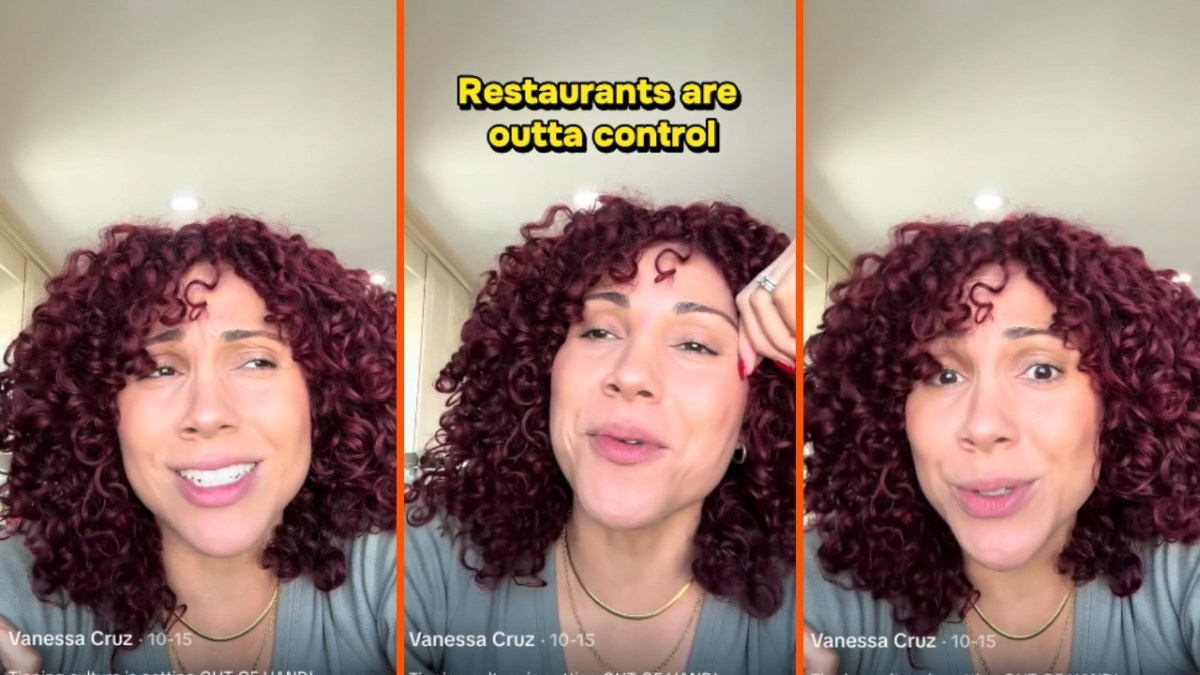

A family dinner in New Jersey reportedly turned into a bit of a bill dispute for a mother when she spotted an automatic 18% gratuity added to her check (which was in the region of $300). She says the gratuity was added even though her party didn’t meet the headcount on the menu.
Diner Vanessa Cruz reportedly went viral on TikTok with a video of herself holding up her receipt with the full itemised breakdown of the bill, quite clearly showing the mandatory 18% service charge. Vanessa said she had checked the menu and was well aware of the restaurant’s policy on service charges for large parties. Vanessa defiantly said in her video, “How dare you tell me how to be generous?”
She says she was still charged the service charge even though she only had five in her party and is now in two minds about the restaurant’s arithmetic and the transparency of the menu. Cruz has reportedly put the blame squarely on the restaurant for what she sees as a very dodgy menu policy.
Some customers felt that these hidden fees destroy customer trust
She reportedly vented her anger about it all over social media. In the video, she claimed that the waiteress hadn’t provided the best service they’d ever had, but they were still going to tip. She added, “We understand the economy.” The only issue is they didn’t understand where the 18% on their bill was coming from.
When they decided to call the waiteress over, she said they were told that the restaurant automatically added the charge when the bill exceeded $200. Eventually, the creator claims to have spoken to the manager, who then told her that she was right and that the restaurant appreciated the feedback. The clip appears to be part of a wider trend of consumer anger at surprise surcharges, large-party minimums and the general lack of transparency around restaurant bills.
A lot of restaurants reportedly have an automatic gratuity (generally 18-20% on parties of six or more) in place to protect their staff when they’re looking after larger parties. There’s been a fair bit of complaint of late from customers about the apparent inconsistency with which restaurants apply those automatic gratuities.
Those in favour of Cruz reportedly argued that if the menu states a certain number of guests as the trigger for an automatic gratuity, then applying that gratuity to a table of five is effectively a bait and switch. They argued that this, in turn, destroys the trust customers have built up over the course of the meal.
Hospitality staff and those who defend the service charge have argued that, in some instances, venues automatically calculate gratuities based on the total check amount, split checks and even count young children as part of the headcount. Whether they always make this clear is another conversation entirely.
There’s a difference between a tip and gratuity
An essential aspect of these types of disputes is how federal tax and consumer rules treat automatic gratuities as opposed to voluntary tips. Under IRS rules, an automatic gratuity (e.g. a 15% or 18% charge on a large party) is classified as a mandatory service charge rather than a tip, as the customer has no choice as to the amount.
Meanwhile, the FTC’s consumer protection guidance states that mandatory fees must be disclosed clearly and conspicuously prior to the point of purchase. That’s one of the reasons why the rather opaque menu language around headcounts can still be the cause of consumer outrage when the bill arrives.







Published: Nov 20, 2026 02:15 pm