


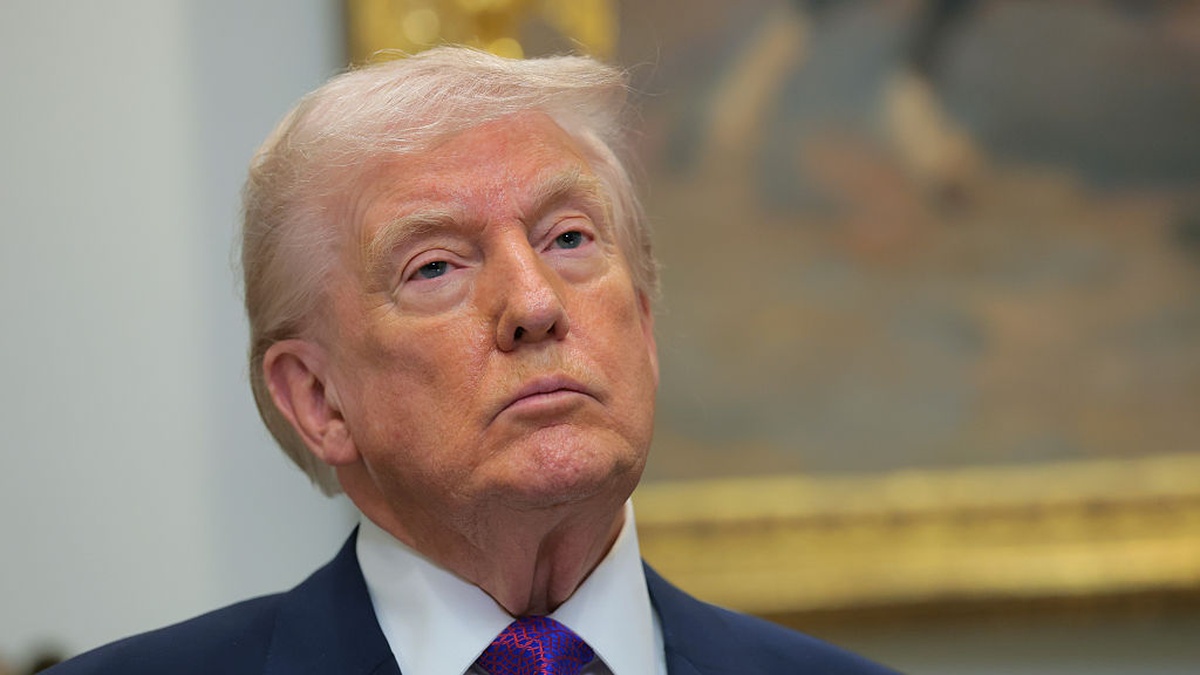

President Donald Trump issued a stern warning to Iran just before high-stakes nuclear talks began this week in Geneva. Speaking to reporters on Air Force One, Trump said he plans to be “indirectly” involved in the negotiations and cautioned Iran’s leaders about “the consequences of not making a deal.” He also referenced the US military strikes on Iran’s nuclear sites last June, saying, “We could have had a deal instead of sending the B-2s in to knock out their nuclear potential. And we had to send the B-2s.”
According to The Miami Herald, those strikes involved over 125 aircraft hitting three Iranian nuclear sites, including seven B-2 stealth bombers armed with 30,000-pound bunker-busting bombs. The US government claimed the attack had “obliterated” the facilities, though some experts questioned the extent of damage to deeply buried sites. Iran later retaliated by targeting the US Al Udeid Air Base in Qatar, though no US personnel were harmed.
While Trump expressed hope that Iran would be “more reasonable” this time, Tehran is not backing down. Iran’s Supreme Leader Ayatollah Ali Khamenei responded publicly, saying that even the strongest military “can sometimes be struck so hard that it cannot even get back on its feet.” He also called the US aircraft carrier a “dangerous piece of equipment,” but warned that “more dangerous than the carrier is the weapon capable of sending it to the bottom of the sea.”
Iran and the US are both talking and preparing for war at the same time
The formal negotiations began in Geneva on Tuesday, focused on limiting Iran’s nuclear development. The US delegation includes special envoy Steve Witkoff and Jared Kushner. Iranian Foreign Minister Abbas Araghchi, who met with the head of the International Atomic Energy Agency (IAEA) on Monday, said he came to the talks “with real ideas to achieve a fair and equitable deal.” However, he was clear that “what is not on the table: submission before threats.”
Iranian Deputy Foreign Minister Majid Takht-Ravanchi also said the ball is “in America’s court to prove that they want to do a deal,” suggesting the US needs to ease its sanctions first. The US has maintained it will not accept a nuclear-armed Iran but has indicated it may lift “biting” sanctions if a deal is reached. Iran insists its nuclear program is peaceful, though international experts had previously warned that Iran’s stockpiles of highly enriched uranium were close to weapons-grade levels.
The current standoff traces back to the 2015 Joint Comprehensive Plan of Action (JCPOA), which eased sanctions in return for limits on Iran’s nuclear activities. After Trump withdrew the US from that deal during his first term, Iran openly abandoned parts of the agreement.
Secretary of State Marco Rubio acknowledged that reaching a new deal would be “very hard to do,” adding that the US had built up military assets near Iran because Tehran “has shown the willingness and the capability to lash and strike out at the United States presence in the region.” Iran has also responded to US pressure with chilling billboards in Tehran, making its defiance very public.
On the military front, Trump confirmed that the USS Gerald R. Ford, the world’s largest aircraft carrier, would join the USS Abraham Lincoln already stationed in the Middle East. Trump had earlier posted about US warships and fighter jets as tensions with Iran were rising.
Meanwhile, Iran’s Islamic Revolution Guards Corps conducted its own naval drills in the Strait of Hormuz on Monday, a critical shipping lane between Iran and Oman that is vital for global oil exports. Both sides appear to be preparing for the worst, even as diplomats try to find common ground at the negotiating table.

Published: Feb 17, 2026 03:15 pm