



A site that the Trump administration called a “narco-terrorist supply complex” was actually a cattle and dairy farm, according to a recent report. This finding relates to joint military operations between the U.S. and Ecuadorian forces that began in early March.
The Trump administration had expanded its bombing campaign against vessels allegedly carrying drugs off the coast of Latin America. On March 3, the U.S. Southern Command released a vague announcement about the first of these joint operations, stating: “Together, we are taking decisive action to confront narco-terrorists who have long inflicted terror, violence, and corruption on citizens throughout the hemisphere.”
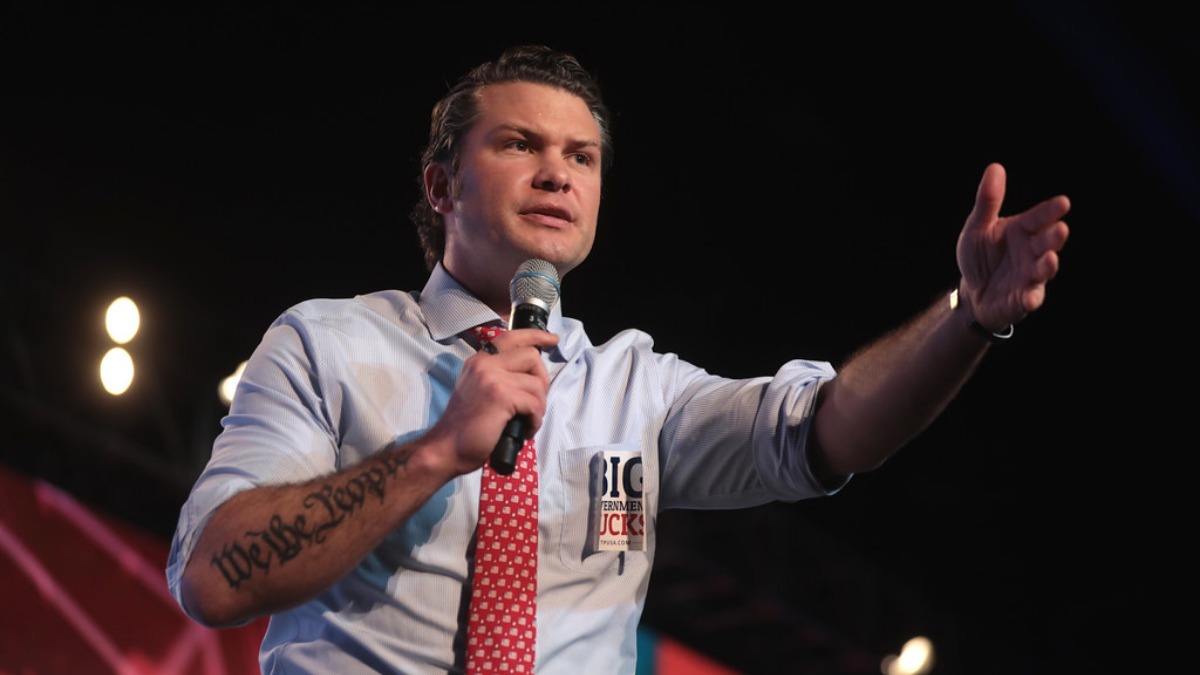
Three days later, Sean Parnell, the assistant to the Secretary of Defense for public affairs, posted a video of another operation showing a bombing and the completely destroyed remains of a structure. Secretary of Defense Pete Hegseth then reposted the video, declaring that the U.S. was “bombing Narco Terrorists on land as well.” But now, the New York Times reports the “narco hub” had cows, not cartels.
The farm’s owner, workers, and villagers all say the bombed site had no links to illegal activity
An investigation into the incident tells a very different story, based on interviews with the farm’s owner, employees, and nearby residents. These people described events that began on March 3, when Ecuadorian soldiers helicoptered in, covered structures with gasoline, and set them on fire. Four workers were allegedly beaten with the butts of guns, and one worker repeatedly passed out after being dunked into a barrel of water.
The workers also claimed that after being taken to a second location for questioning, they were subjected to electric shocks. They were held overnight before being released. Residents said that while the initial burning happened on March 3, helicopters returned to the already destroyed farm three days later, when explosives were dropped and Ecuadorian soldiers recorded the footage that Parnell later posted online.
Villagers were firm that the farm had no links to illegal activity. This is not the first time Hegseth’s public statements have faced scrutiny, as his claims about Army families and the Iran war were also directly challenged.
The Ecuadorian military did release a statement saying the site was used by drug traffickers, based partly on U.S. “intelligence and support,” and claimed soldiers found guns and other “evidence of illicit activity” on the property.
However, the Ecuadorian military typically publishes photos of drugs and weapons seized during such operations, but offered no visual evidence for these specific claims. Ecuador’s President Daniel Noboa did not respond to a detailed list of questions. A former director of intelligence for Ecuador’s Army, Mario Pazmiño, claimed that senior military officials told him the property was used by the leader of a trafficking group called the Commandos.
However, a representative for the Commandos told the investigation by phone that the group had not used the farm, directly contradicting the military’s claim. U.S. officials told the investigation that the U.S. military deployed a helicopter to assist with the operation, but said U.S. personnel were not directly involved in the actual bombing.
Hegseth has also drawn attention for other reasons recently, including a U.S. flag code violation on 60 Minutes that undermined his intended message. Pentagon press secretary Kingsley Wilson stated only that the strike was conducted “jointly” with Ecuador and could not be discussed in detail “due to operations security.”



Published: Mar 25, 2026 03:39 pm